【 The Concept 】
A cast-iron boar caught at the one moment when nothing touches the ground. The forelegs are thrown forward, the hind legs are stretched flat behind, the tail flicks up, and all four hooves are in the air. The entire animal — a kilogram and a half of iron — is airborne, and it is held there by a single point: a base of bamboo grass, cast in openwork beneath the belly, out of which the boar appears to have just exploded.
The base is the quiet trick of the piece. It is not a pedestal. It is undergrowth — leaves and stems cut clean through the iron, so that light and the surface of the desk show through the gaps. The boar is not mounted on something. It is bursting out of somewhere, and the somewhere is part of the sculpture. Look at it from the front and you see an animal in flight; look underneath and you see the thicket it came from, still attached to its belly, as if it left too fast for the landscape to let go.
In Japan the boar is the twelfth and final animal of the zodiac, and its reputation is a single compound word: chototsu-moushin — headlong, straight-ahead, unstoppable. The phrase is sometimes used as a caution, about people who charge without looking. As a figure kept on a desk, it means the opposite of a caution. It is momentum, resolved and committed: the animal that has picked its direction and is already in the air.
【 The Function 】
1.510 kilograms, 21 centimeters long, 12 centimeters tall, 6 centimeters wide. Solid cast iron, and it does not pretend otherwise — this is the heaviest animal in the archive, heavier than the bronze ram, heavier than the celadon dragon, heavier than anything except the devotional figures it outweighs anyway. Objects of this type were made as paperweights in the most serious sense: a mass of iron set on documents, on unrolled paper, on anything the wind or a passing sleeve might disturb. The low, forward-leaning form and the broad oval foot of the base keep the weight planted and impossible to tip in the direction it leans.
The boar is also the zodiac animal of health. Its meat was once eaten as winter medicine, and from that association the animal itself came to stand for robustness — a body that does not get sick, a household that gets through the cold months intact. An iron boar is that wish made permanent in the one material that shares its constitution.
【 The Texture 】
The whole surface carries the fine, granular roughness of sand casting — the texture the iron takes from the mold itself, matte and dry, drinking light rather than reflecting it. Over this dark iron-black ground, the raised surfaces have been rubbed or finished to a dull metallic warmth: the ridge of the spine, the crown of the head, the flat of the snout, the leading edges of the legs all show a brownish gold-bronze glow, while the deep places — the grooves of the coat, the undercut of the belly, the gaps of the bamboo-grass base — stay near black. The contrast does the drawing. Every muscle reads through the difference between a bright ridge and a dark channel.
The coat is not rendered hair by hair. It is carved as movement — long, streaming grooves that run from the shoulders back along the flanks, part fur and part wind, so that the stillness of the metal carries the streaked look of speed. The snout is blunt and flat, the ears pinned back, the tusks clearly visible at the corner of the jaw. Nothing about the surface is polished, and nothing about it is rough by accident.
【 Presence 】
The archive has one other charging animal: CARVED CHARGE, the wooden bull. The two make an instructive pair, because they charge differently. The bull is planted — head down, legs braced, all of its violence still in the future. It is the moment before. This boar is the moment during. Its feet have left the ground. The decision is behind it, the landing is ahead of it, and the sculpture lives entirely inside the interval between the two.
That interval is what a desk gets out of it. A paperweight is, by definition, an object whose job is to stay still — and this one stays still in the shape of something that could not possibly be still. The papers underneath it are held down by an animal in mid-air. It is the heaviest object in the room pretending to be the fastest, and the pretense is carried off so completely, with such momentum in the iron, that the eye keeps granting it. It has been mid-leap for fifty years. It has not landed yet. There is no reason to think it ever will.
Sourced from a private collection in the Shikoku region, Japan.
【 The Concept 】
A cast-iron boar caught at the one moment when nothing touches the ground. The forelegs are thrown forward, the hind legs are stretched flat behind, the tail flicks up, and all four hooves are in the air. The entire animal — a kilogram and a half of iron — is airborne, and it is held there by a single point: a base of bamboo grass, cast in openwork beneath the belly, out of which the boar appears to have just exploded.
The base is the quiet trick of the piece. It is not a pedestal. It is undergrowth — leaves and stems cut clean through the iron, so that light and the surface of the desk show through the gaps. The boar is not mounted on something. It is bursting out of somewhere, and the somewhere is part of the sculpture. Look at it from the front and you see an animal in flight; look underneath and you see the thicket it came from, still attached to its belly, as if it left too fast for the landscape to let go.
In Japan the boar is the twelfth and final animal of the zodiac, and its reputation is a single compound word: chototsu-moushin — headlong, straight-ahead, unstoppable. The phrase is sometimes used as a caution, about people who charge without looking. As a figure kept on a desk, it means the opposite of a caution. It is momentum, resolved and committed: the animal that has picked its direction and is already in the air.
【 The Function 】
1.510 kilograms, 21 centimeters long, 12 centimeters tall, 6 centimeters wide. Solid cast iron, and it does not pretend otherwise — this is the heaviest animal in the archive, heavier than the bronze ram, heavier than the celadon dragon, heavier than anything except the devotional figures it outweighs anyway. Objects of this type were made as paperweights in the most serious sense: a mass of iron set on documents, on unrolled paper, on anything the wind or a passing sleeve might disturb. The low, forward-leaning form and the broad oval foot of the base keep the weight planted and impossible to tip in the direction it leans.
The boar is also the zodiac animal of health. Its meat was once eaten as winter medicine, and from that association the animal itself came to stand for robustness — a body that does not get sick, a household that gets through the cold months intact. An iron boar is that wish made permanent in the one material that shares its constitution.
【 The Texture 】
The whole surface carries the fine, granular roughness of sand casting — the texture the iron takes from the mold itself, matte and dry, drinking light rather than reflecting it. Over this dark iron-black ground, the raised surfaces have been rubbed or finished to a dull metallic warmth: the ridge of the spine, the crown of the head, the flat of the snout, the leading edges of the legs all show a brownish gold-bronze glow, while the deep places — the grooves of the coat, the undercut of the belly, the gaps of the bamboo-grass base — stay near black. The contrast does the drawing. Every muscle reads through the difference between a bright ridge and a dark channel.
The coat is not rendered hair by hair. It is carved as movement — long, streaming grooves that run from the shoulders back along the flanks, part fur and part wind, so that the stillness of the metal carries the streaked look of speed. The snout is blunt and flat, the ears pinned back, the tusks clearly visible at the corner of the jaw. Nothing about the surface is polished, and nothing about it is rough by accident.
【 Presence 】
The archive has one other charging animal: CARVED CHARGE, the wooden bull. The two make an instructive pair, because they charge differently. The bull is planted — head down, legs braced, all of its violence still in the future. It is the moment before. This boar is the moment during. Its feet have left the ground. The decision is behind it, the landing is ahead of it, and the sculpture lives entirely inside the interval between the two.
That interval is what a desk gets out of it. A paperweight is, by definition, an object whose job is to stay still — and this one stays still in the shape of something that could not possibly be still. The papers underneath it are held down by an animal in mid-air. It is the heaviest object in the room pretending to be the fastest, and the pretense is carried off so completely, with such momentum in the iron, that the eye keeps granting it. It has been mid-leap for fifty years. It has not landed yet. There is no reason to think it ever will.
Sourced from a private collection in the Shikoku region, Japan.


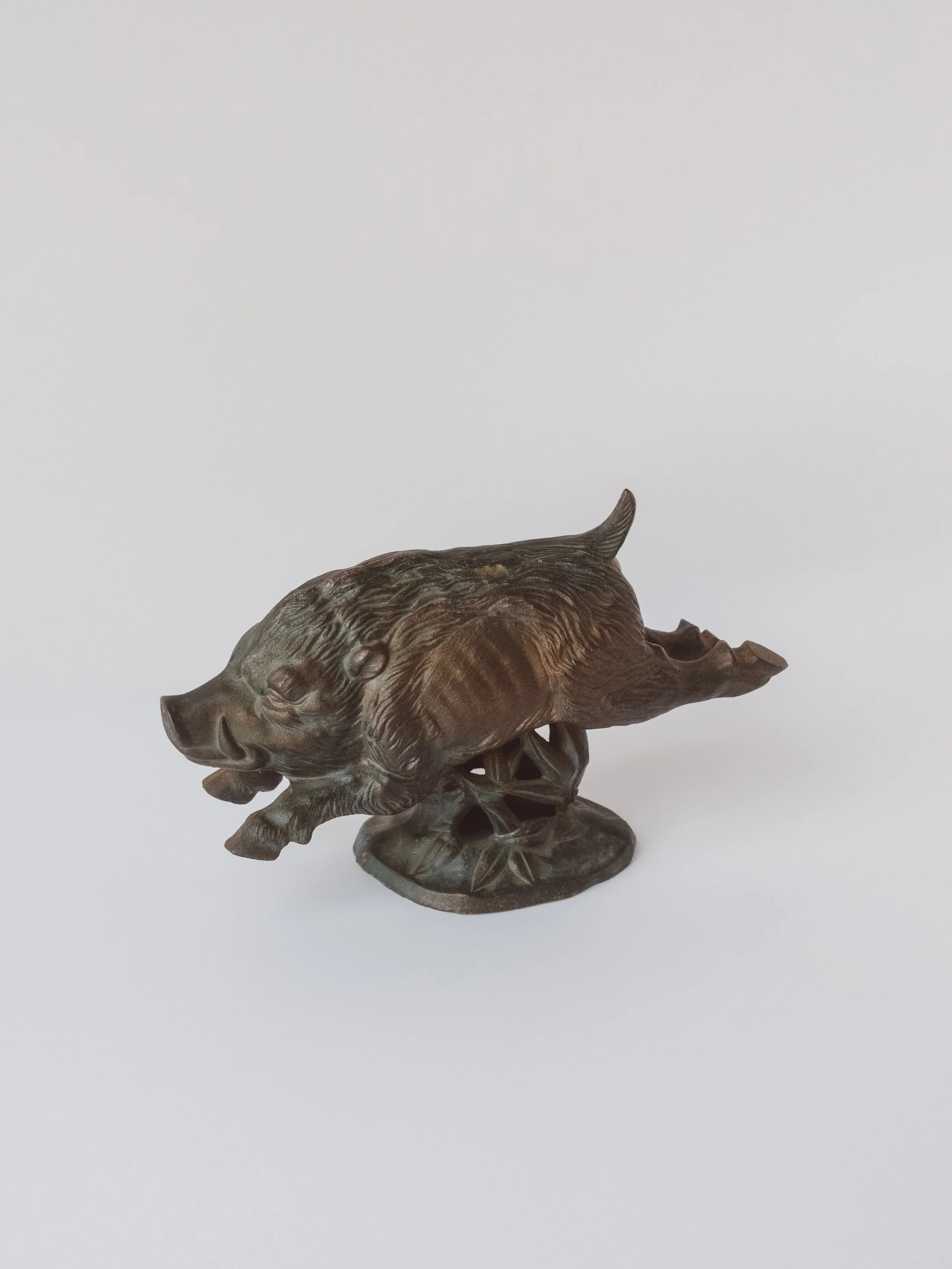 Image 1 of 8
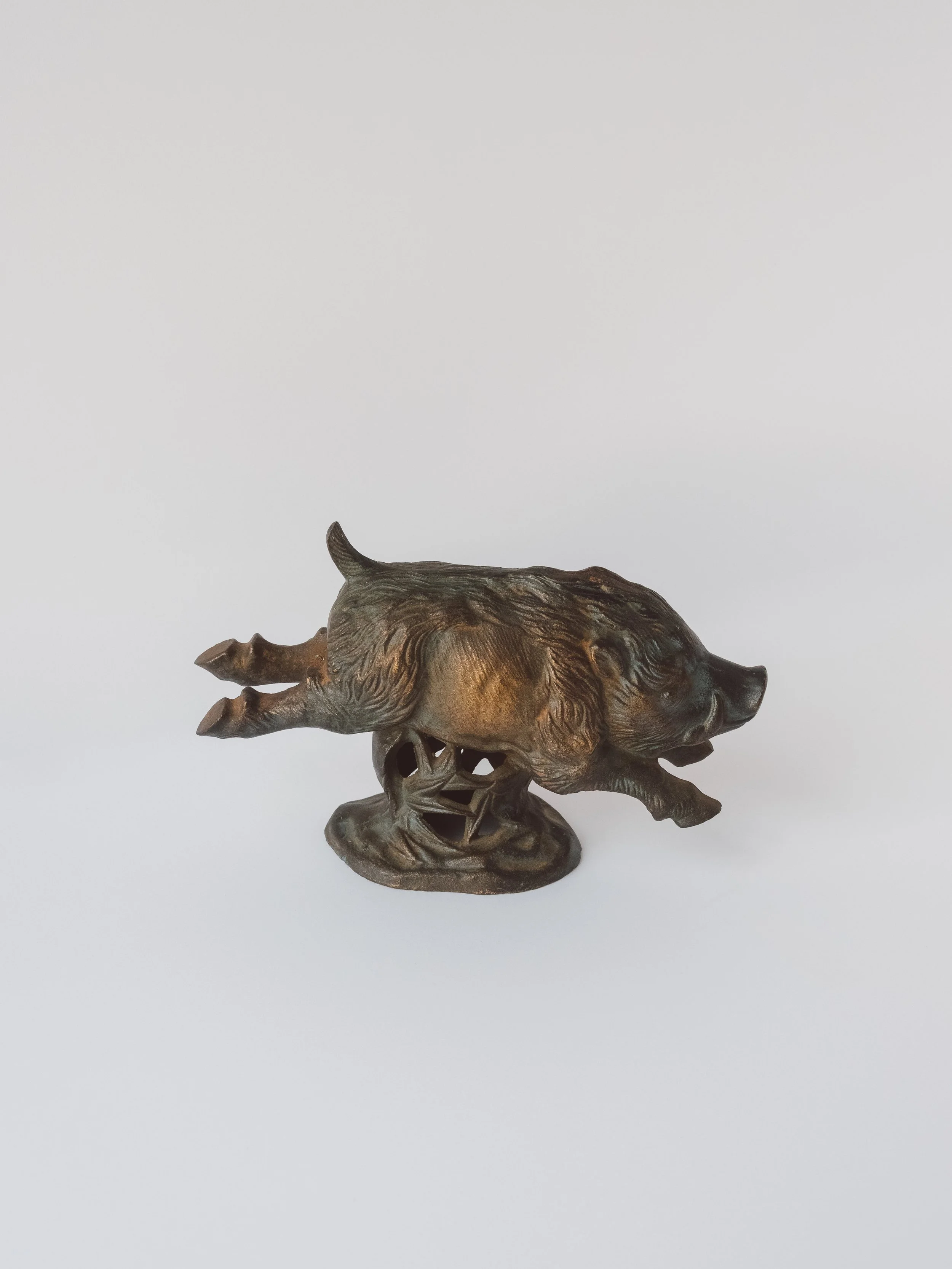 Image 2 of 8
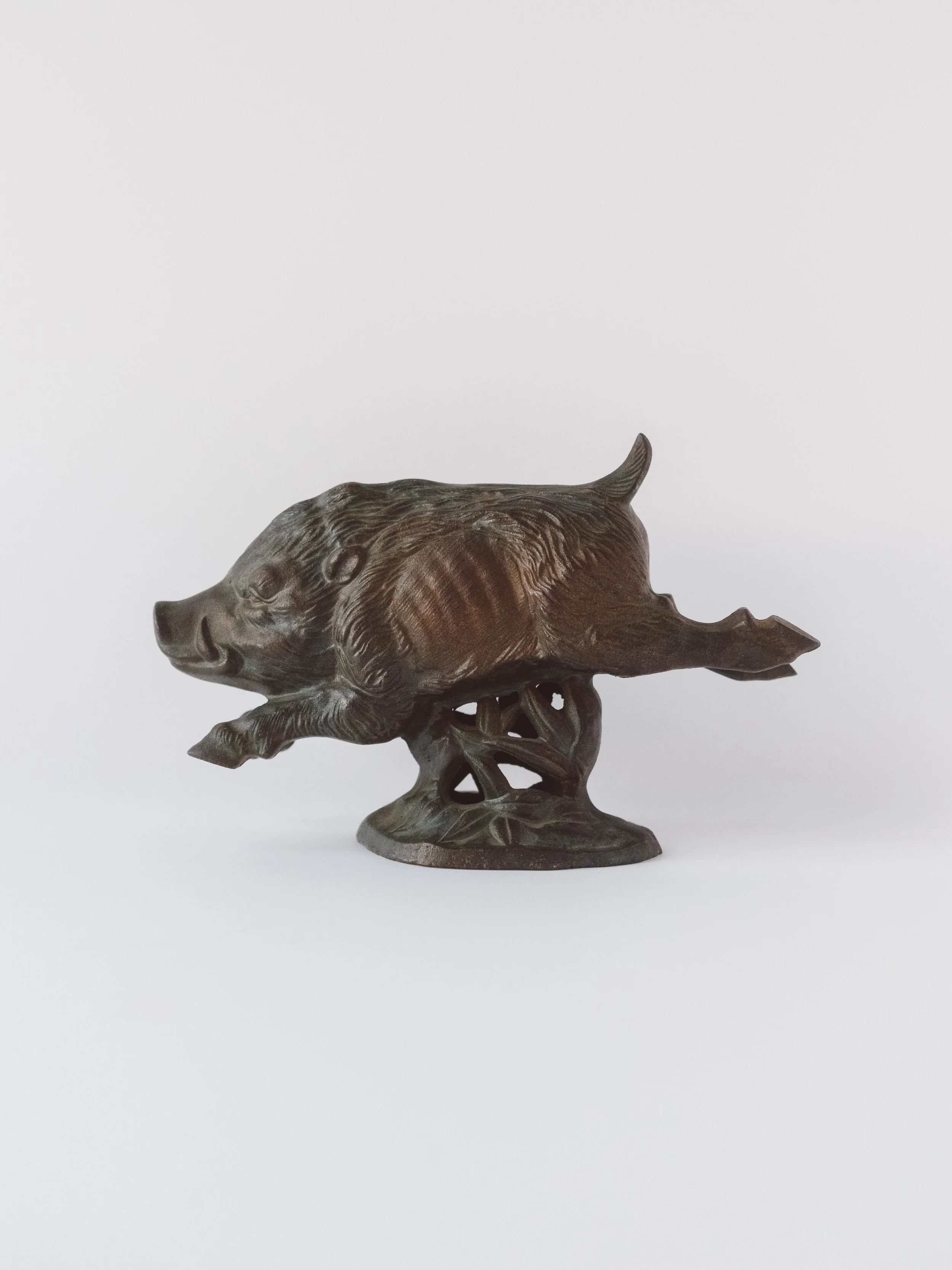 Image 3 of 8
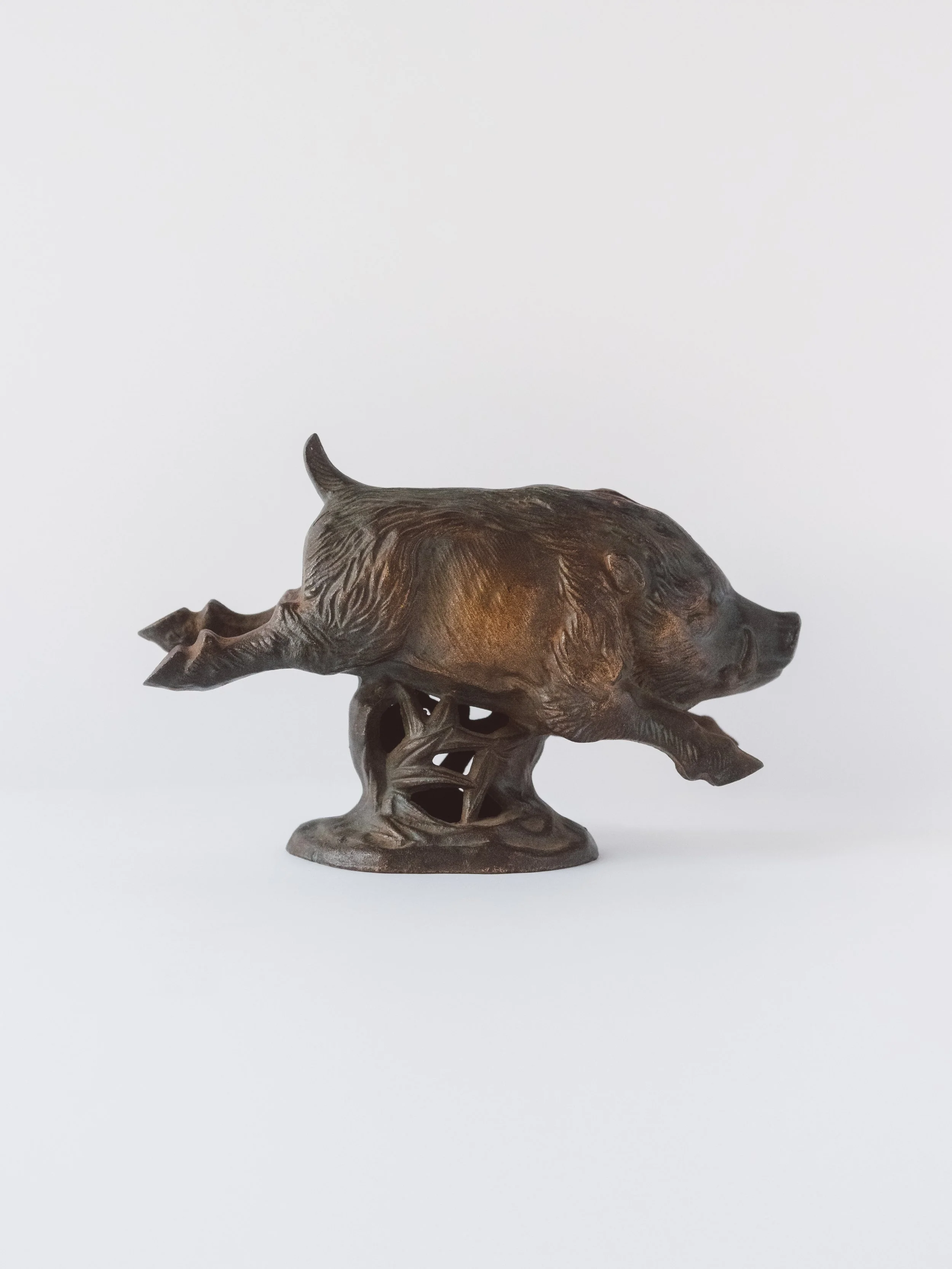 Image 4 of 8
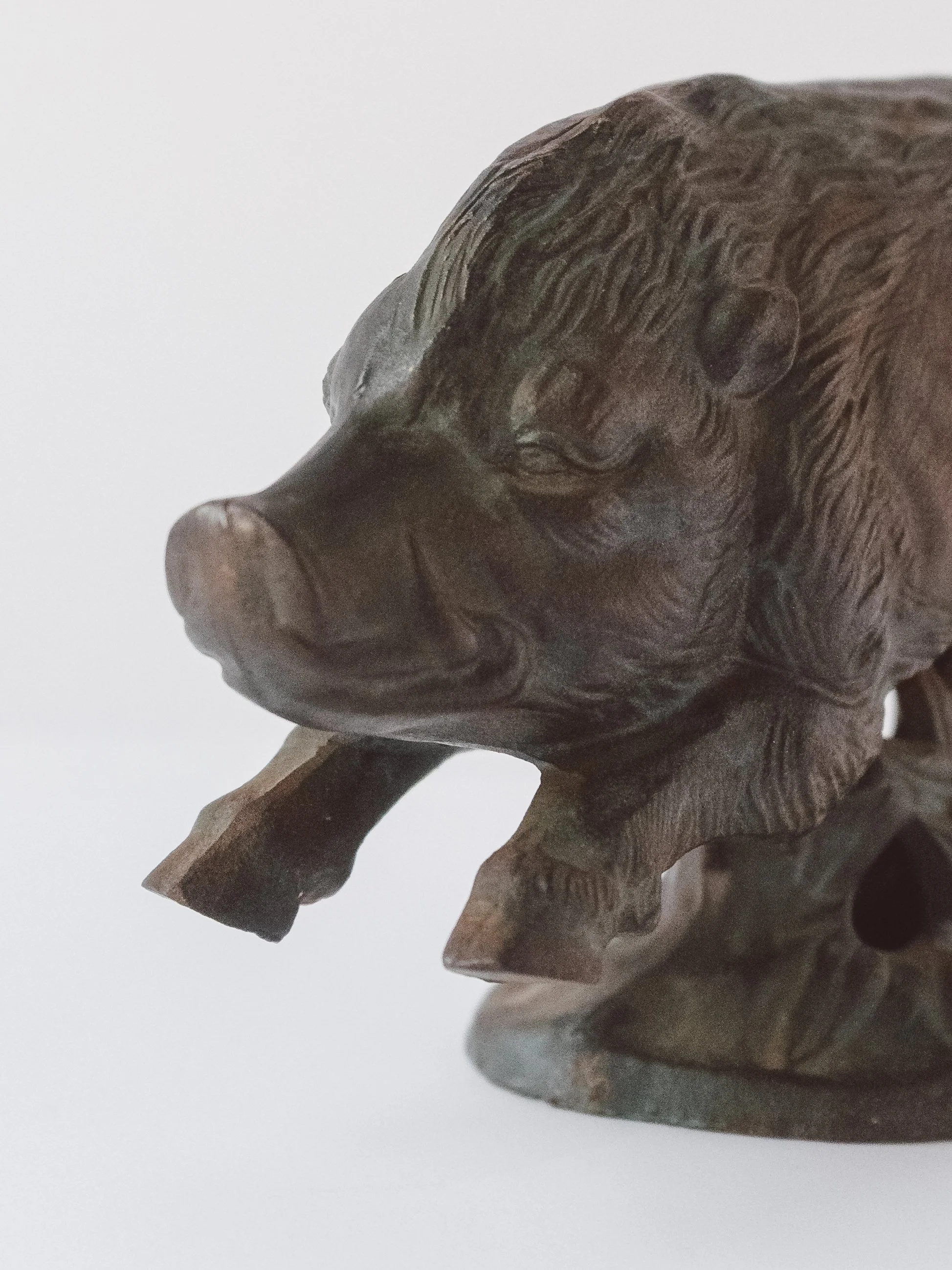 Image 5 of 8
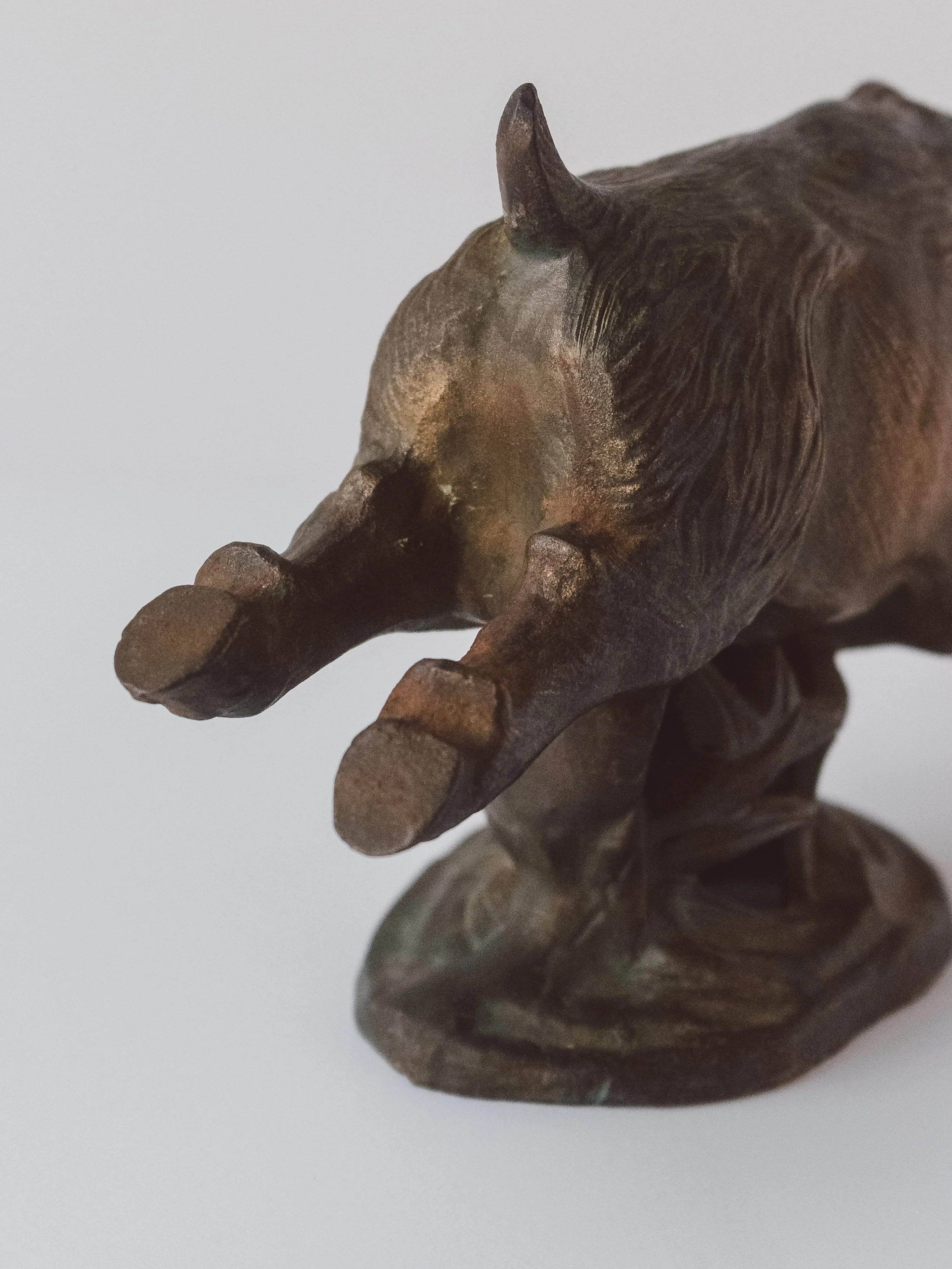 Image 6 of 8
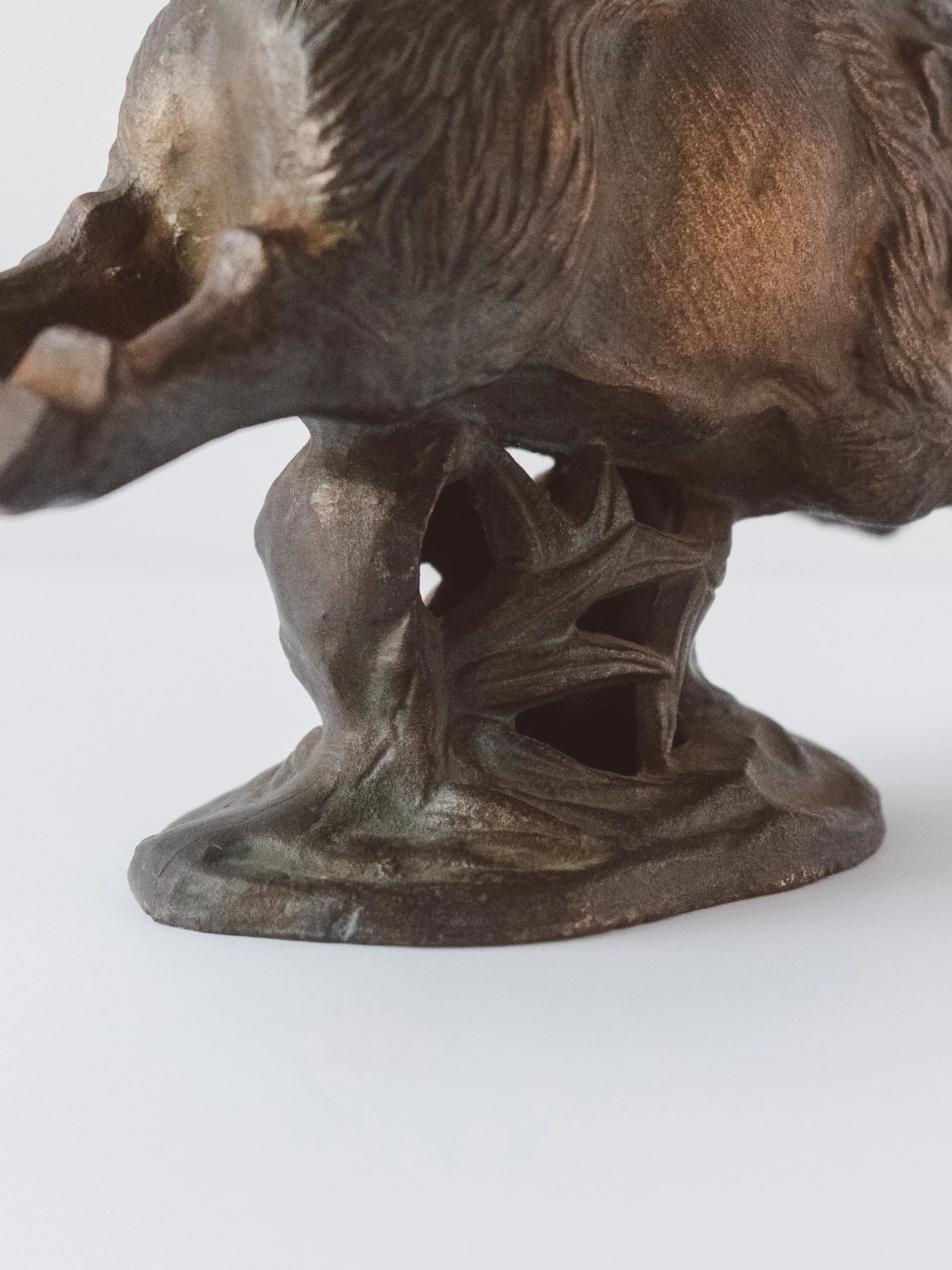 Image 7 of 8
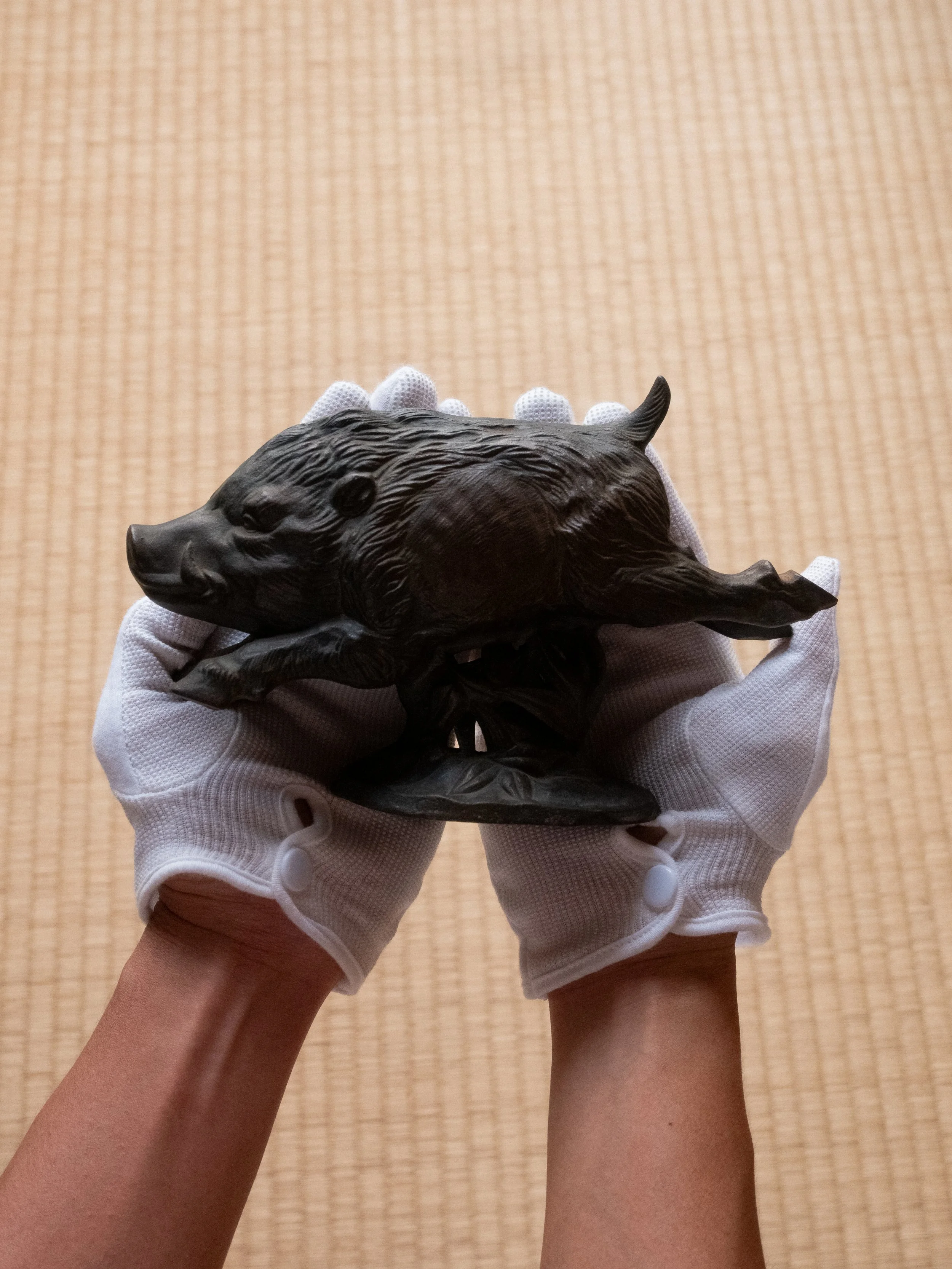 Image 8 of 8