【 The Concept 】
A horse that carries whatever you give it. The body is cast iron — nine centimeters long, eight centimeters tall, and heavier than anything else its size in this archive. A cylindrical well is sunk into the back where the saddle would sit, open at the top, deep enough to hold a pen, a dry flower, or a handful of wooden picks upright. The horse does not comment on what is placed inside it. It stands, legs planted, head forward, and bears the load.
The legs are not legs. They are walls — two broad, flat slabs where each pair of legs has been fused into a single plane. Front legs merged into one wide pillar. Back legs merged into another. No gap between left and right, no daylight passing through. They exist to prevent the object from tipping over when loaded, and they succeed: 385 grams of iron on two solid walls is not going anywhere. The head carries a bridle carved in low relief, with lines running from the muzzle to the cheeks and a band crossing the forehead. Across the chest, tassels and small bells are cast into the surface. Around the cylindrical well, a band of geometric cross-hatching and dot patterns wraps like a textile saddle blanket translated into metal.
This figure belongs to a regional tradition in which horses were not livestock but family. They lived inside the same house as the people who worked them, separated by a doorway but sharing the same roof and the same heat. The decorated harness on this figure is not ceremonial armor. It is festival dress — the finery a farmer put on a working horse once a year to thank it for not dying.
【 The Function 】
385 grams in a 9-centimeter frame. The densest object in MINGEI 1926's archive by a wide margin — more than three times the weight of the celadon tiger, which is five centimeters longer. Pick it up and the surprise is immediate: it is far heavier than it looks. Set it down and it stays. Nothing on a desk moves this horse. It functions as three things simultaneously: a holder (the well accepts pens, picks, or stems), a paperweight (the mass anchors whatever is beneath or beside it), and a sculpture (the form is complete even when the well is empty). In its original context, objects like this sat on office desks and kitchen counters throughout the decades when iron teapots were being replaced by electric kettles, and the ironware industry survived by making everything else.
【 The Texture 】
Matte black iron with the granular surface texture of sand-cast metal — the same finish that covers the wind chime elsewhere in this archive, produced by the same regional tradition. The surface absorbs light rather than reflecting it, giving the object a visual weight that matches its physical weight. No part of the horse is shiny. The black is not paint. It is a chemical bond: lacquer applied to iron at extreme heat, fusing permanently with the metal surface. In the decades since manufacture, the edges of the ears, the tip of the muzzle, and the rim of the cylindrical well have worn through to the bare iron beneath, showing a dull silver-grey where fingers have repeatedly touched. Small points of rust have surfaced in the creases of the harness decoration. These are not flaws. They are the record of use — proof that this horse carried things for someone, on some desk, for a long time.
【 Presence 】
It is the heaviest object per centimeter in the archive, and the only one with a hole in it. Every other piece is sealed, complete, closed. This one is open. It has a void at its center that asks to be filled, and the act of filling it — dropping a pen into the well, tucking a sprig of dried lavender between the iron walls — turns the owner into a participant. You are dressing the horse. You are loading the bearer. The festival tradition this figure references involved farmers decorating their working horses with bright cloth and hundreds of tiny bells before walking them to a shrine. Each time you place something in the well on this horse's back, you are performing a small, unconscious version of the same ritual: adorning the animal that serves you, because it has earned it.
Sourced from a private collection in the Kansai region, Japan.
【 The Concept 】
A horse that carries whatever you give it. The body is cast iron — nine centimeters long, eight centimeters tall, and heavier than anything else its size in this archive. A cylindrical well is sunk into the back where the saddle would sit, open at the top, deep enough to hold a pen, a dry flower, or a handful of wooden picks upright. The horse does not comment on what is placed inside it. It stands, legs planted, head forward, and bears the load.
The legs are not legs. They are walls — two broad, flat slabs where each pair of legs has been fused into a single plane. Front legs merged into one wide pillar. Back legs merged into another. No gap between left and right, no daylight passing through. They exist to prevent the object from tipping over when loaded, and they succeed: 385 grams of iron on two solid walls is not going anywhere. The head carries a bridle carved in low relief, with lines running from the muzzle to the cheeks and a band crossing the forehead. Across the chest, tassels and small bells are cast into the surface. Around the cylindrical well, a band of geometric cross-hatching and dot patterns wraps like a textile saddle blanket translated into metal.
This figure belongs to a regional tradition in which horses were not livestock but family. They lived inside the same house as the people who worked them, separated by a doorway but sharing the same roof and the same heat. The decorated harness on this figure is not ceremonial armor. It is festival dress — the finery a farmer put on a working horse once a year to thank it for not dying.
【 The Function 】
385 grams in a 9-centimeter frame. The densest object in MINGEI 1926's archive by a wide margin — more than three times the weight of the celadon tiger, which is five centimeters longer. Pick it up and the surprise is immediate: it is far heavier than it looks. Set it down and it stays. Nothing on a desk moves this horse. It functions as three things simultaneously: a holder (the well accepts pens, picks, or stems), a paperweight (the mass anchors whatever is beneath or beside it), and a sculpture (the form is complete even when the well is empty). In its original context, objects like this sat on office desks and kitchen counters throughout the decades when iron teapots were being replaced by electric kettles, and the ironware industry survived by making everything else.
【 The Texture 】
Matte black iron with the granular surface texture of sand-cast metal — the same finish that covers the wind chime elsewhere in this archive, produced by the same regional tradition. The surface absorbs light rather than reflecting it, giving the object a visual weight that matches its physical weight. No part of the horse is shiny. The black is not paint. It is a chemical bond: lacquer applied to iron at extreme heat, fusing permanently with the metal surface. In the decades since manufacture, the edges of the ears, the tip of the muzzle, and the rim of the cylindrical well have worn through to the bare iron beneath, showing a dull silver-grey where fingers have repeatedly touched. Small points of rust have surfaced in the creases of the harness decoration. These are not flaws. They are the record of use — proof that this horse carried things for someone, on some desk, for a long time.
【 Presence 】
It is the heaviest object per centimeter in the archive, and the only one with a hole in it. Every other piece is sealed, complete, closed. This one is open. It has a void at its center that asks to be filled, and the act of filling it — dropping a pen into the well, tucking a sprig of dried lavender between the iron walls — turns the owner into a participant. You are dressing the horse. You are loading the bearer. The festival tradition this figure references involved farmers decorating their working horses with bright cloth and hundreds of tiny bells before walking them to a shrine. Each time you place something in the well on this horse's back, you are performing a small, unconscious version of the same ritual: adorning the animal that serves you, because it has earned it.
Sourced from a private collection in the Kansai region, Japan.


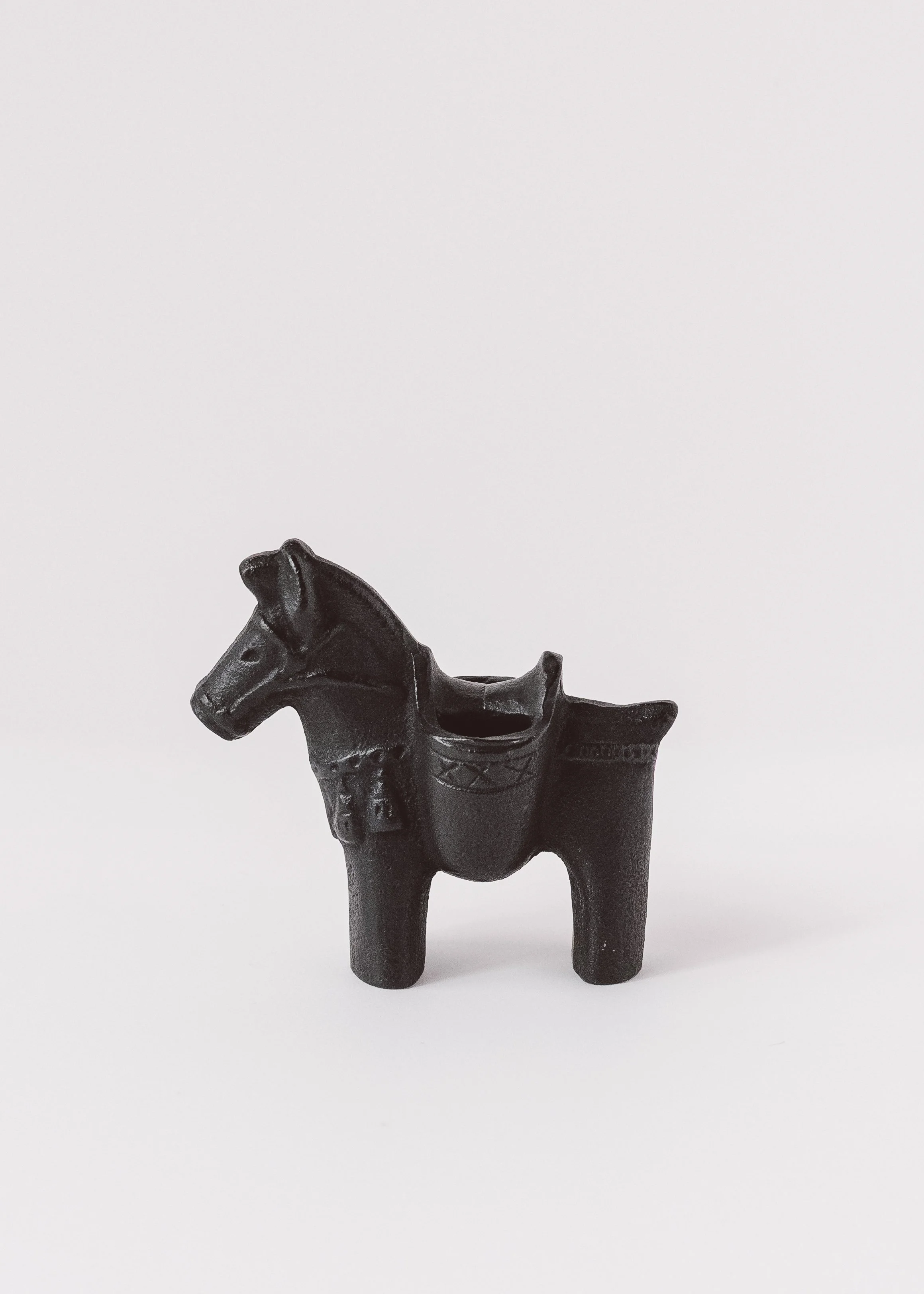 Image 1 of 9
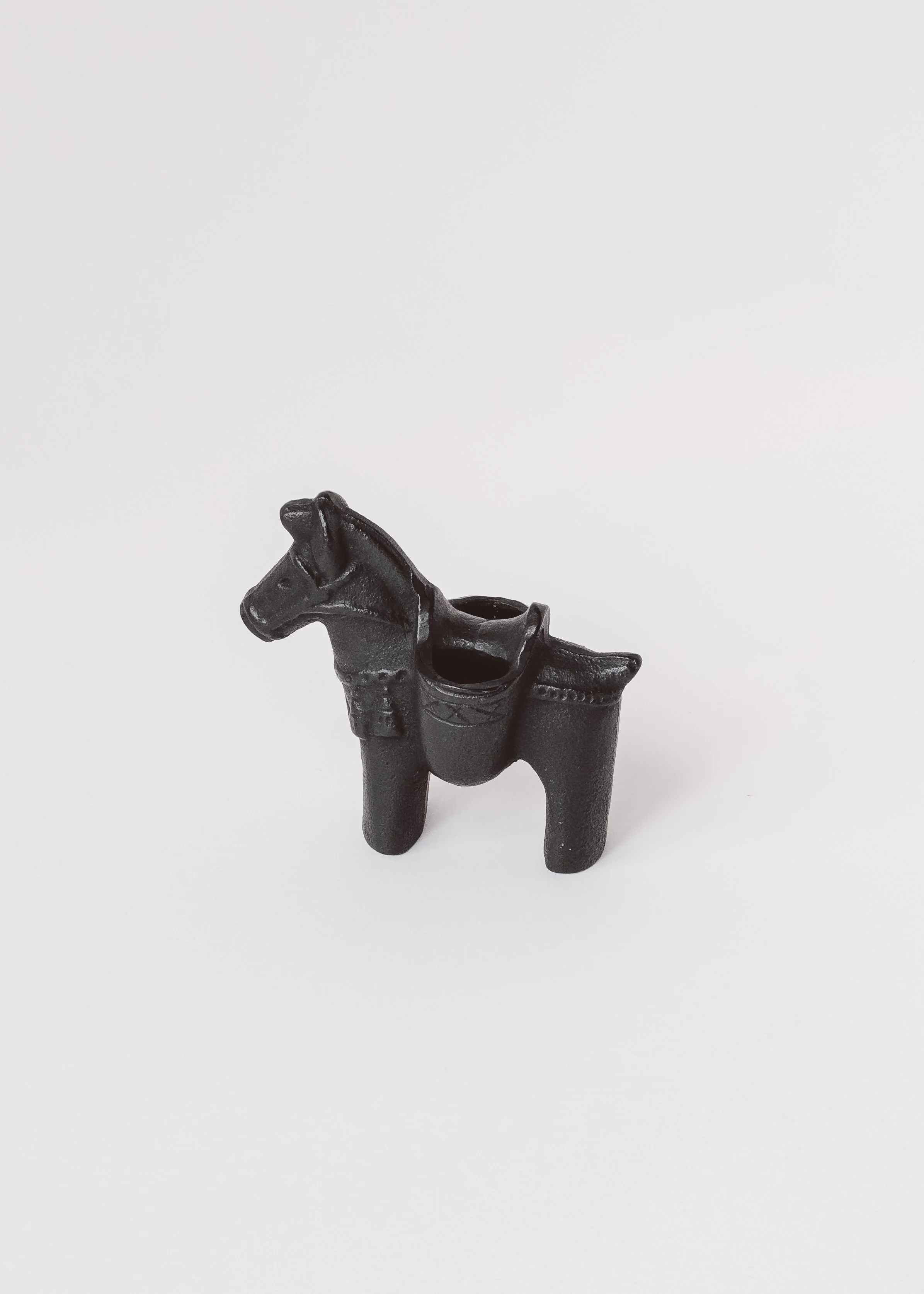 Image 2 of 9
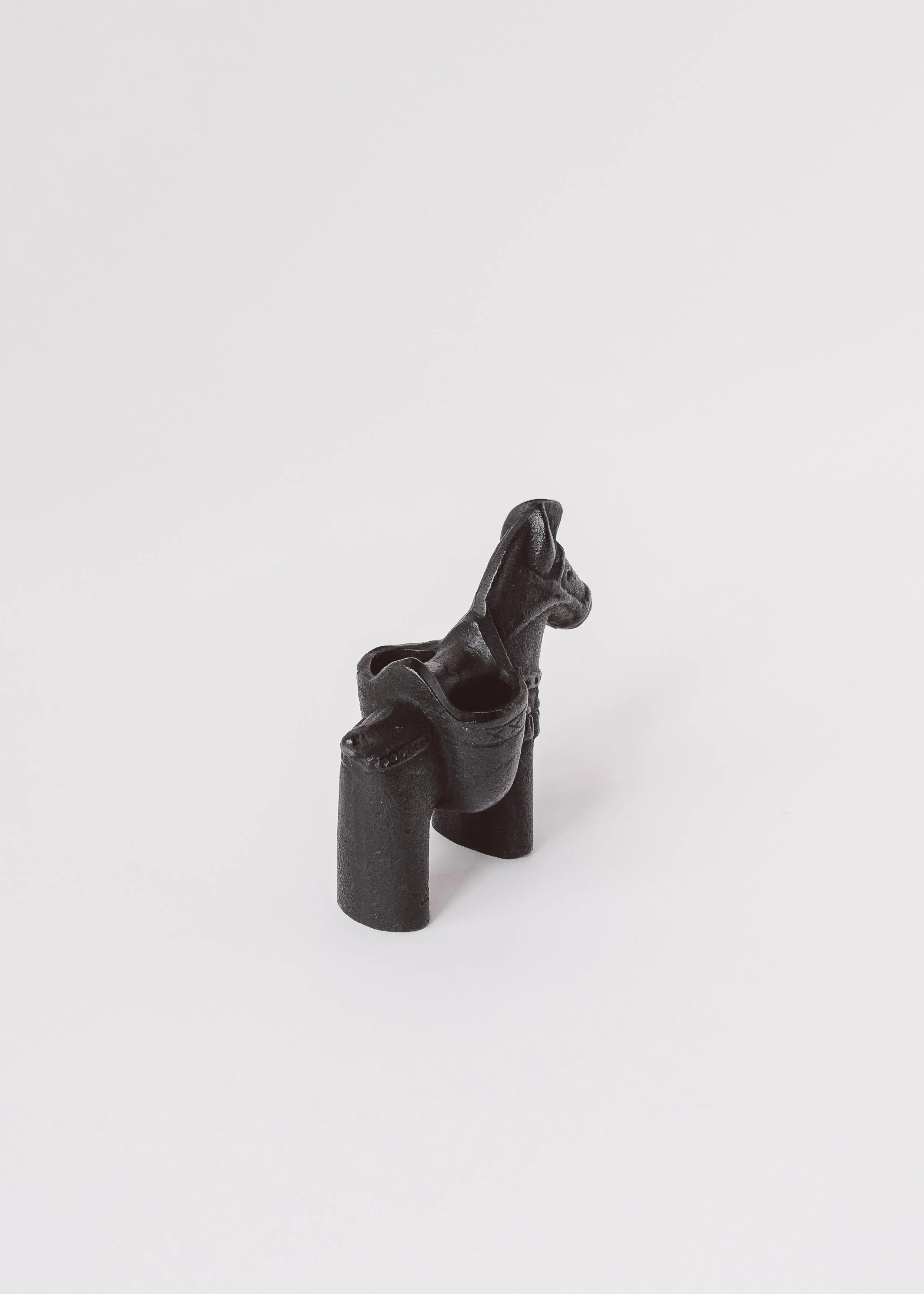 Image 3 of 9
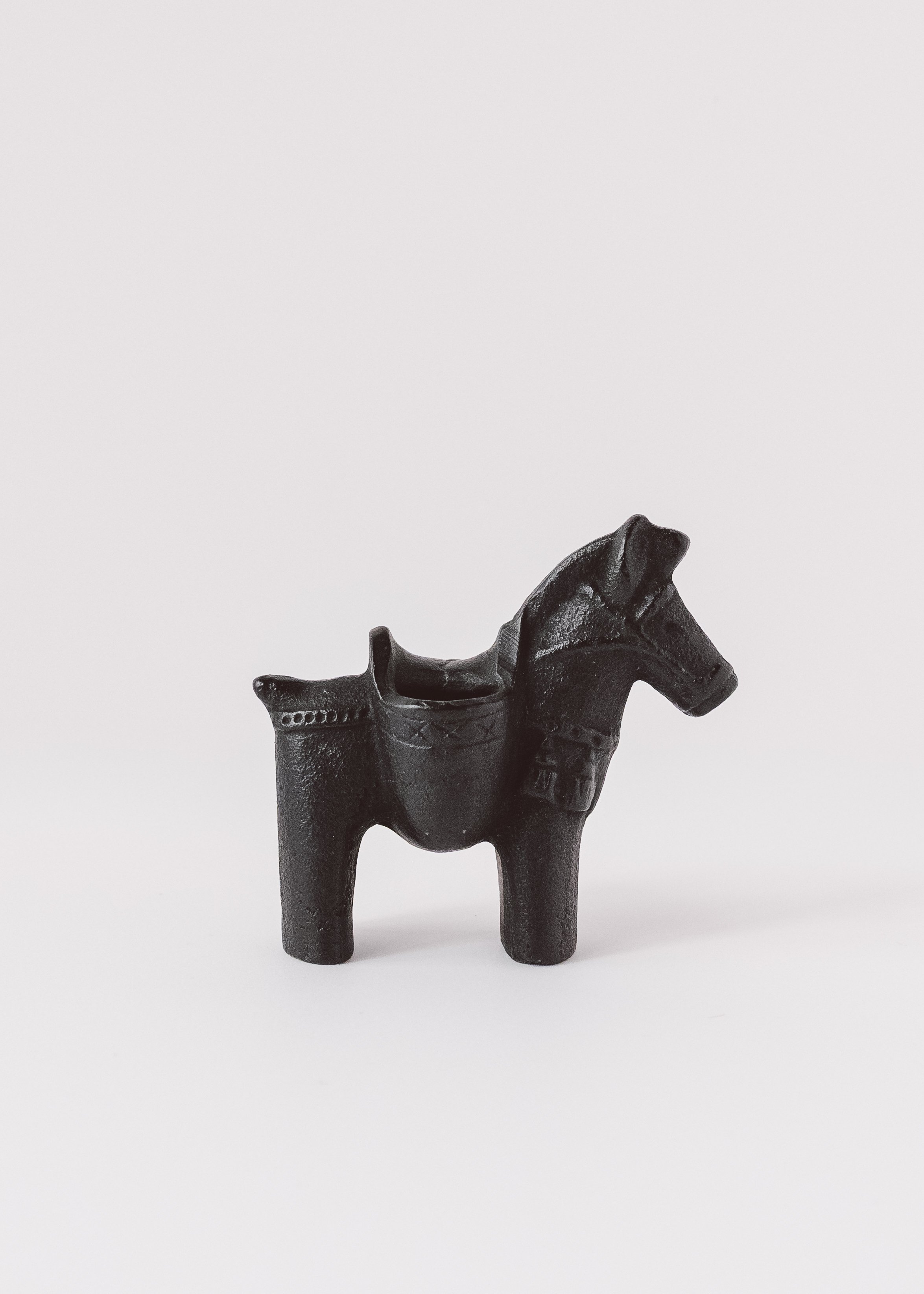 Image 4 of 9
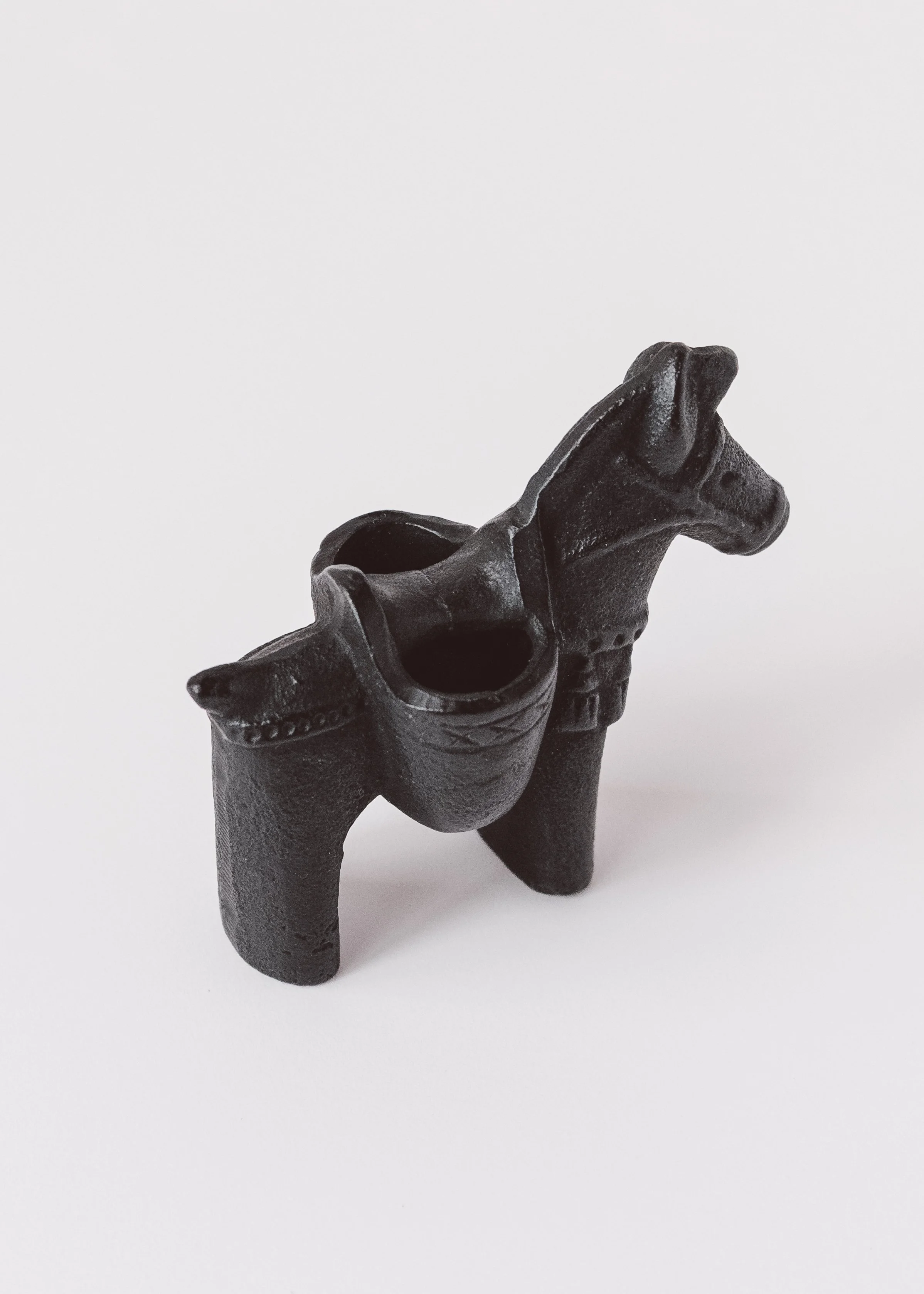 Image 5 of 9
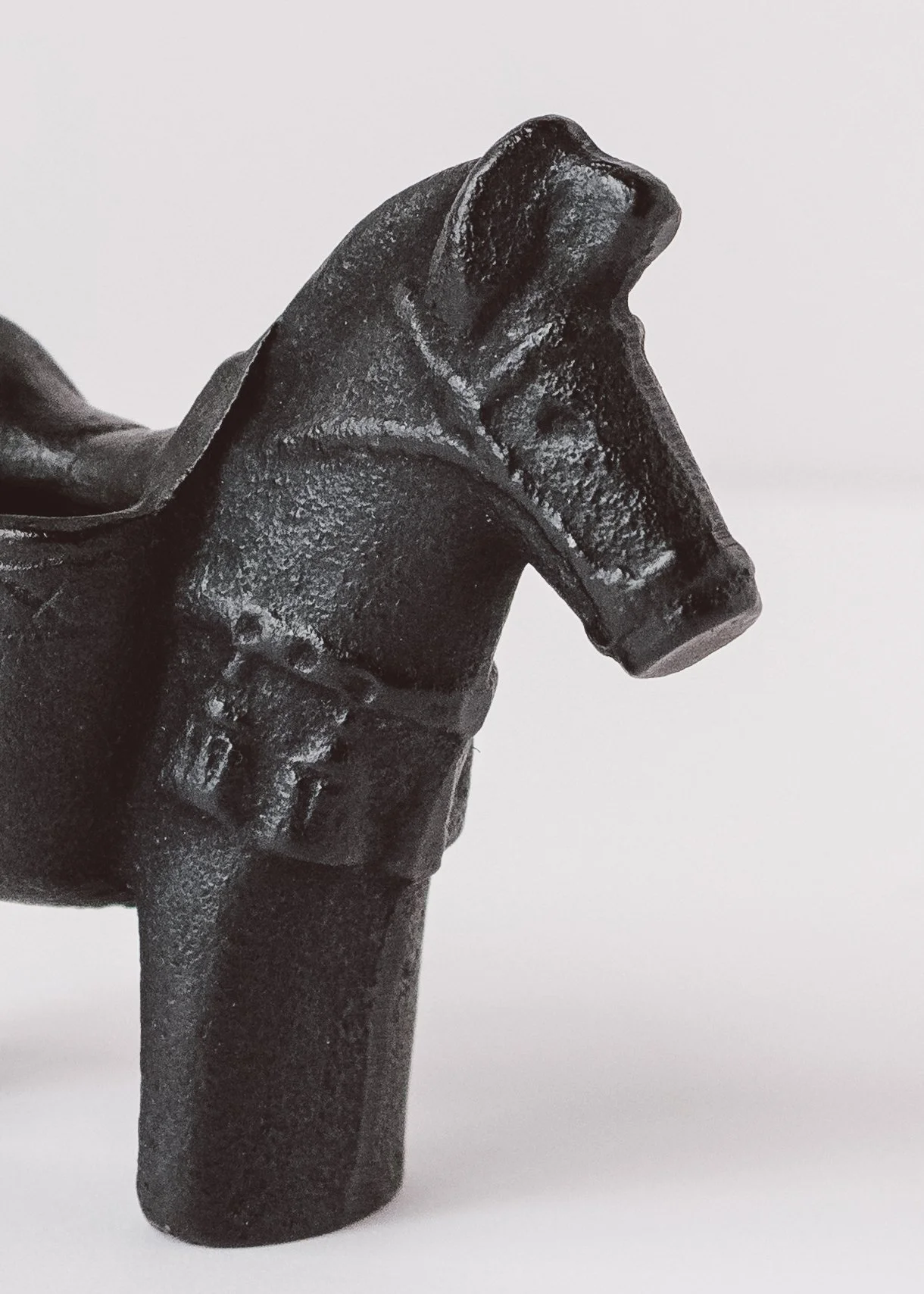 Image 6 of 9
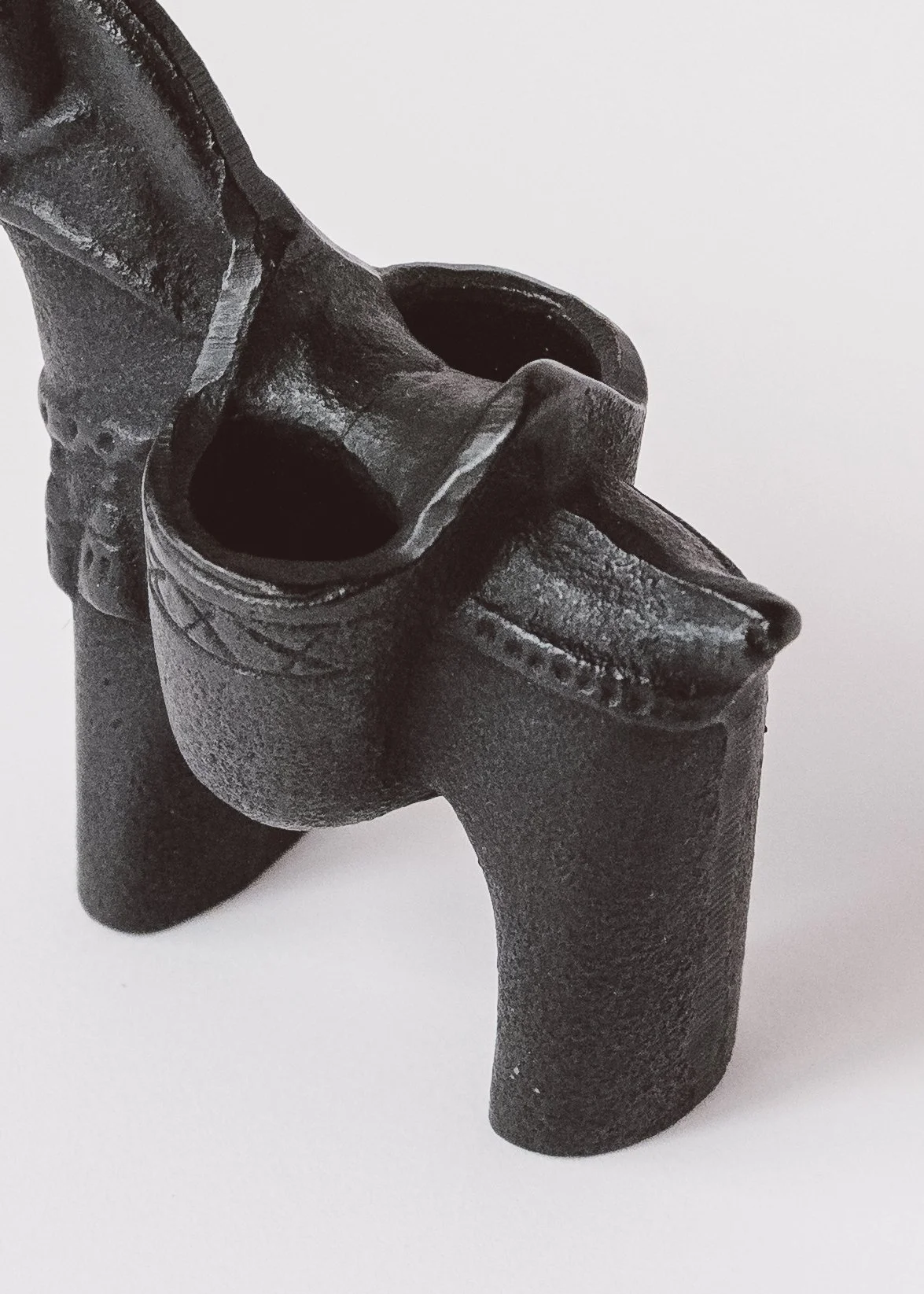 Image 7 of 9
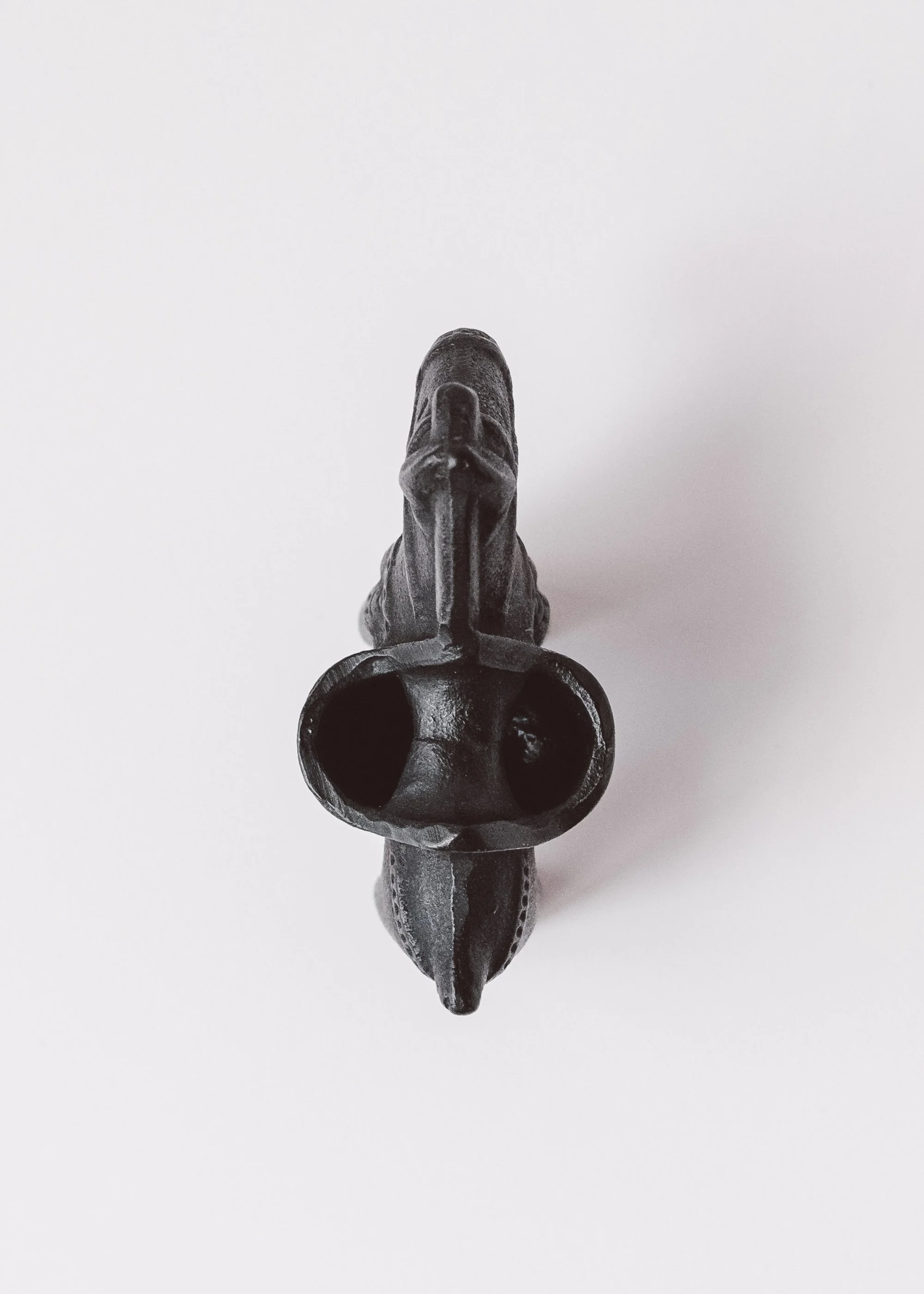 Image 8 of 9
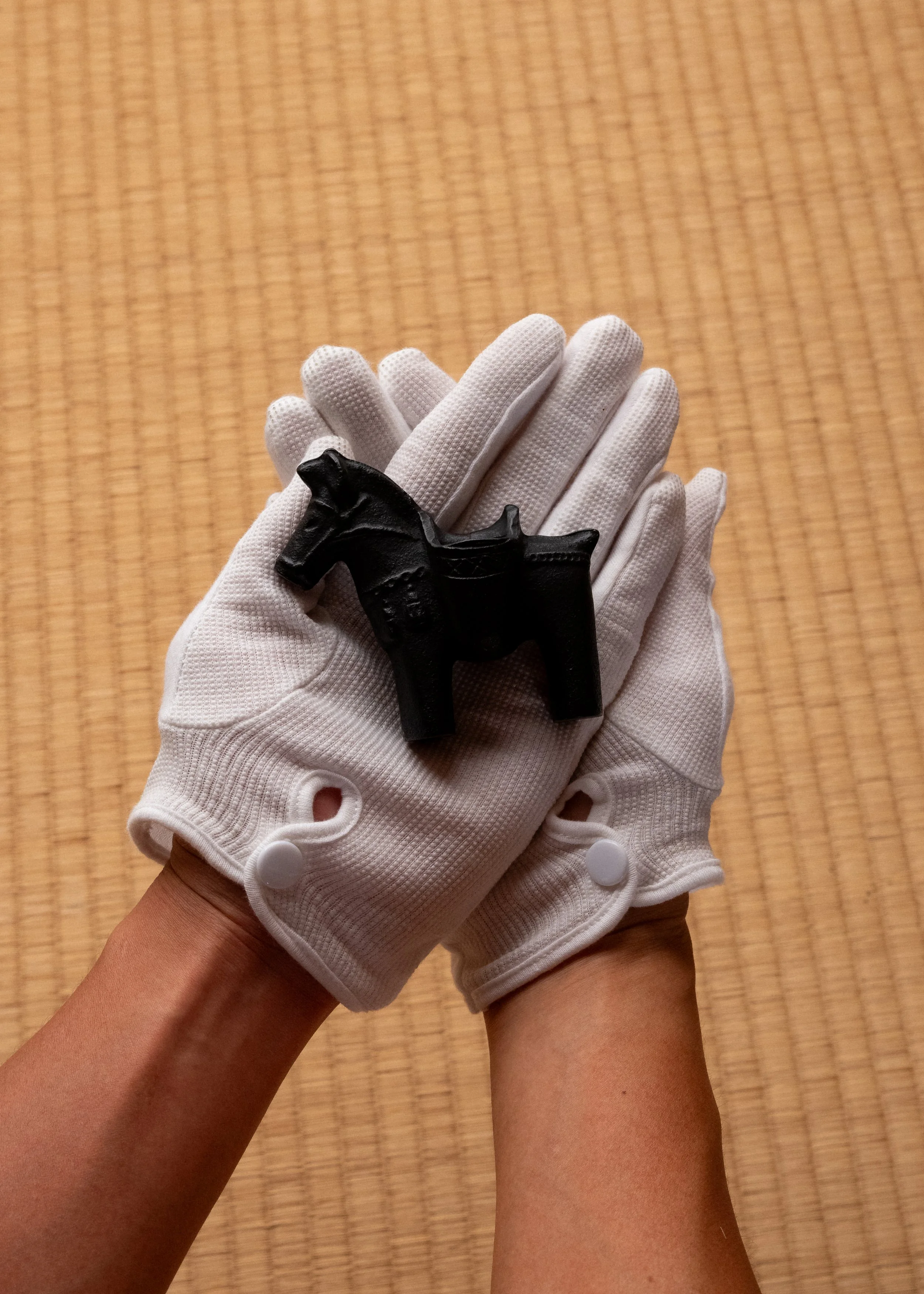 Image 9 of 9