【 The Concept 】
Two hand brooms, a large and a small, and the first working tools to enter the archive. Everything else here is an image of something — a carved bird, a cast Buddha, a painted dog holding a fish. These are not images of anything. They are what they are: broomcorn gathered, bound and splayed into a fan, made to be held in the hand and swept across a table, a shelf, the shoulder of a coat.
That is the whole argument of the pair. Where GILDED THRONG renders a thing in gold and CARVED CHARGE renders one in wood, a besom renders nothing — its beauty is not depiction but use, the quiet rightness of an object shaped by exactly what it has to do. This is yō-no-bi, the "beauty of use" at the centre of the folk-craft idea: that a plain tool, made well and by hand, arrives at grace without ever aiming at it.
And a broom in Japan was never only a tool. To sweep is to clear away more than dust — to harae, to purify, to put a space back in order; a broom set by the door has long stood as a small ward against what should not stay, and, in old household lore, as a charm for an easy birth, a thing that sweeps the way clear. A working object and a quiet blessing, in the same bound sheaf of grass.
【 The Function 】
Neither is large: the bigger measures about 27 centimetres, the smaller about 21, and — a small honest oddity — the little one is very slightly the heavier of the two, its grass packed that much denser. Both are broomcorn, the tall grass grown for exactly this, its fibres fine and springy enough to lift dust without scratching a lacquered top or a woollen sleeve. Each ends in a corded loop at the crown, meant for a nail by the door, so that between uses the tool hangs as its own quiet ornament rather than lying in a drawer.
【 The Texture 】
The grass is the colour of ripening straw with a green still in it — pale, matte, not yet gone gold — and it holds the light softly along its length before scattering it at the frayed, splayed tips. Down the bound handle the fibres are drawn tight into a hard, ridged column; at the waist they release, and the broom opens into its fan.
The binding is where the maker signs the work without a signature. Bands of dyed cotton wind the head in tight, even coils — deep indigo on the larger broom, carried down to a stripe of red and one of black at the flare; red and black alone on the smaller. Against the pale grass the coloured threads read as clean horizontal rhythm, the one deliberate ornament on an object that is otherwise all function — and they are doing structural work as they decorate: each band sets the tension that gives the fan its spring.
Look closely and the grass is not uniform — a stray fibre stands proud here, a bundle sits fuller there. It is the honest unevenness of a natural material bound by hand, and it is the reason no two of these are ever quite the same.
【 Presence 】
Much of the archive asks to be looked at. This pair asks, quietly, to be used — though it will reward the wall just as well, two pale fans of grass banded in indigo and red, hung by the door where a broom has always belonged. Set the large beside the small and the pair reads as one idea at two sizes: the same honest tool, the same clean binding, scaled for the table and for the palm.
It is among the plainest things in the collection, and it carries the collection's whole belief in a single object — that something made simply, by hand, for use, is worth keeping.
Sourced from a private collection in the Shikoku region, Japan.
【 The Concept 】
Two hand brooms, a large and a small, and the first working tools to enter the archive. Everything else here is an image of something — a carved bird, a cast Buddha, a painted dog holding a fish. These are not images of anything. They are what they are: broomcorn gathered, bound and splayed into a fan, made to be held in the hand and swept across a table, a shelf, the shoulder of a coat.
That is the whole argument of the pair. Where GILDED THRONG renders a thing in gold and CARVED CHARGE renders one in wood, a besom renders nothing — its beauty is not depiction but use, the quiet rightness of an object shaped by exactly what it has to do. This is yō-no-bi, the "beauty of use" at the centre of the folk-craft idea: that a plain tool, made well and by hand, arrives at grace without ever aiming at it.
And a broom in Japan was never only a tool. To sweep is to clear away more than dust — to harae, to purify, to put a space back in order; a broom set by the door has long stood as a small ward against what should not stay, and, in old household lore, as a charm for an easy birth, a thing that sweeps the way clear. A working object and a quiet blessing, in the same bound sheaf of grass.
【 The Function 】
Neither is large: the bigger measures about 27 centimetres, the smaller about 21, and — a small honest oddity — the little one is very slightly the heavier of the two, its grass packed that much denser. Both are broomcorn, the tall grass grown for exactly this, its fibres fine and springy enough to lift dust without scratching a lacquered top or a woollen sleeve. Each ends in a corded loop at the crown, meant for a nail by the door, so that between uses the tool hangs as its own quiet ornament rather than lying in a drawer.
【 The Texture 】
The grass is the colour of ripening straw with a green still in it — pale, matte, not yet gone gold — and it holds the light softly along its length before scattering it at the frayed, splayed tips. Down the bound handle the fibres are drawn tight into a hard, ridged column; at the waist they release, and the broom opens into its fan.
The binding is where the maker signs the work without a signature. Bands of dyed cotton wind the head in tight, even coils — deep indigo on the larger broom, carried down to a stripe of red and one of black at the flare; red and black alone on the smaller. Against the pale grass the coloured threads read as clean horizontal rhythm, the one deliberate ornament on an object that is otherwise all function — and they are doing structural work as they decorate: each band sets the tension that gives the fan its spring.
Look closely and the grass is not uniform — a stray fibre stands proud here, a bundle sits fuller there. It is the honest unevenness of a natural material bound by hand, and it is the reason no two of these are ever quite the same.
【 Presence 】
Much of the archive asks to be looked at. This pair asks, quietly, to be used — though it will reward the wall just as well, two pale fans of grass banded in indigo and red, hung by the door where a broom has always belonged. Set the large beside the small and the pair reads as one idea at two sizes: the same honest tool, the same clean binding, scaled for the table and for the palm.
It is among the plainest things in the collection, and it carries the collection's whole belief in a single object — that something made simply, by hand, for use, is worth keeping.
Sourced from a private collection in the Shikoku region, Japan.


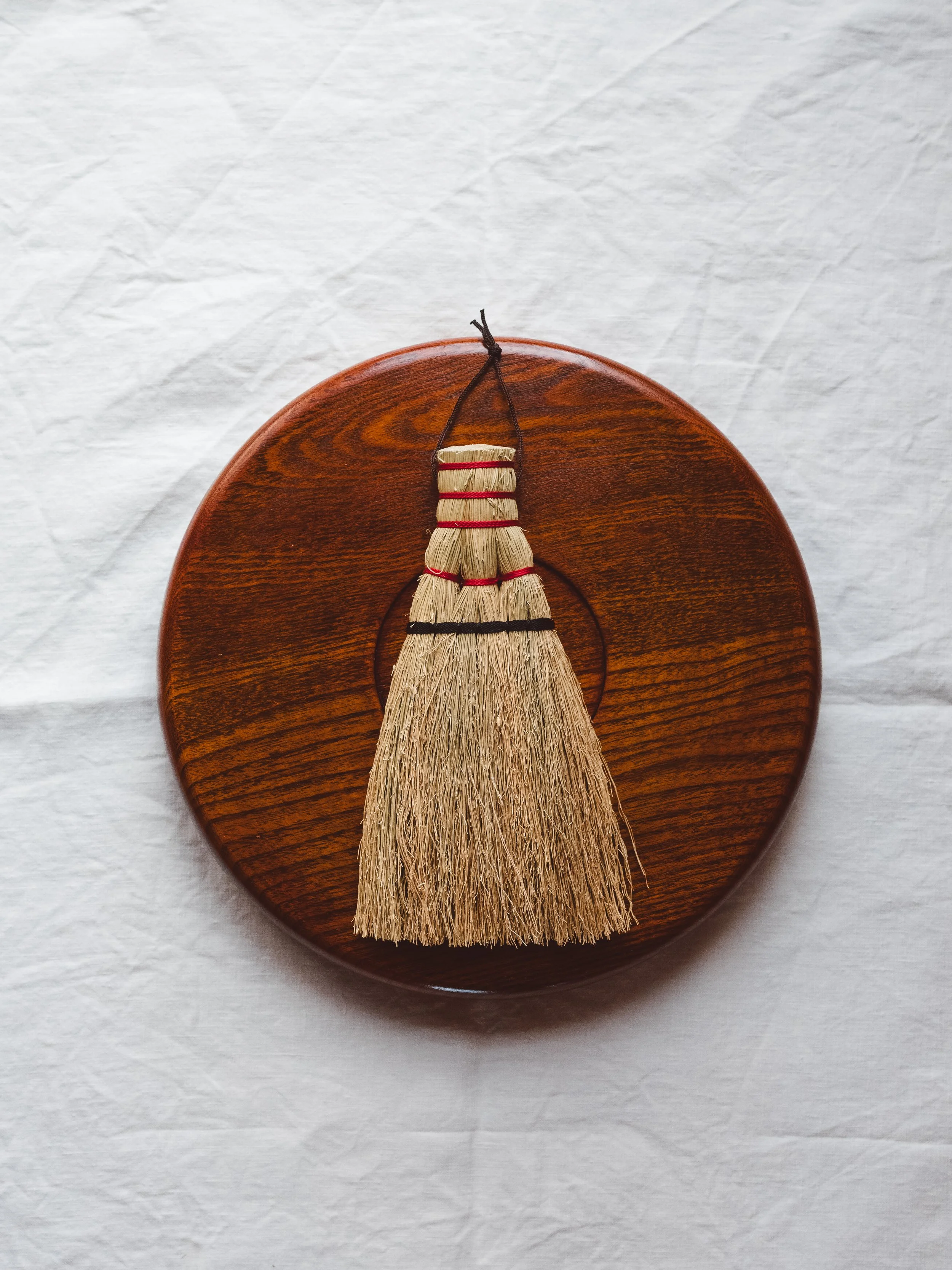 Image 1 of 5
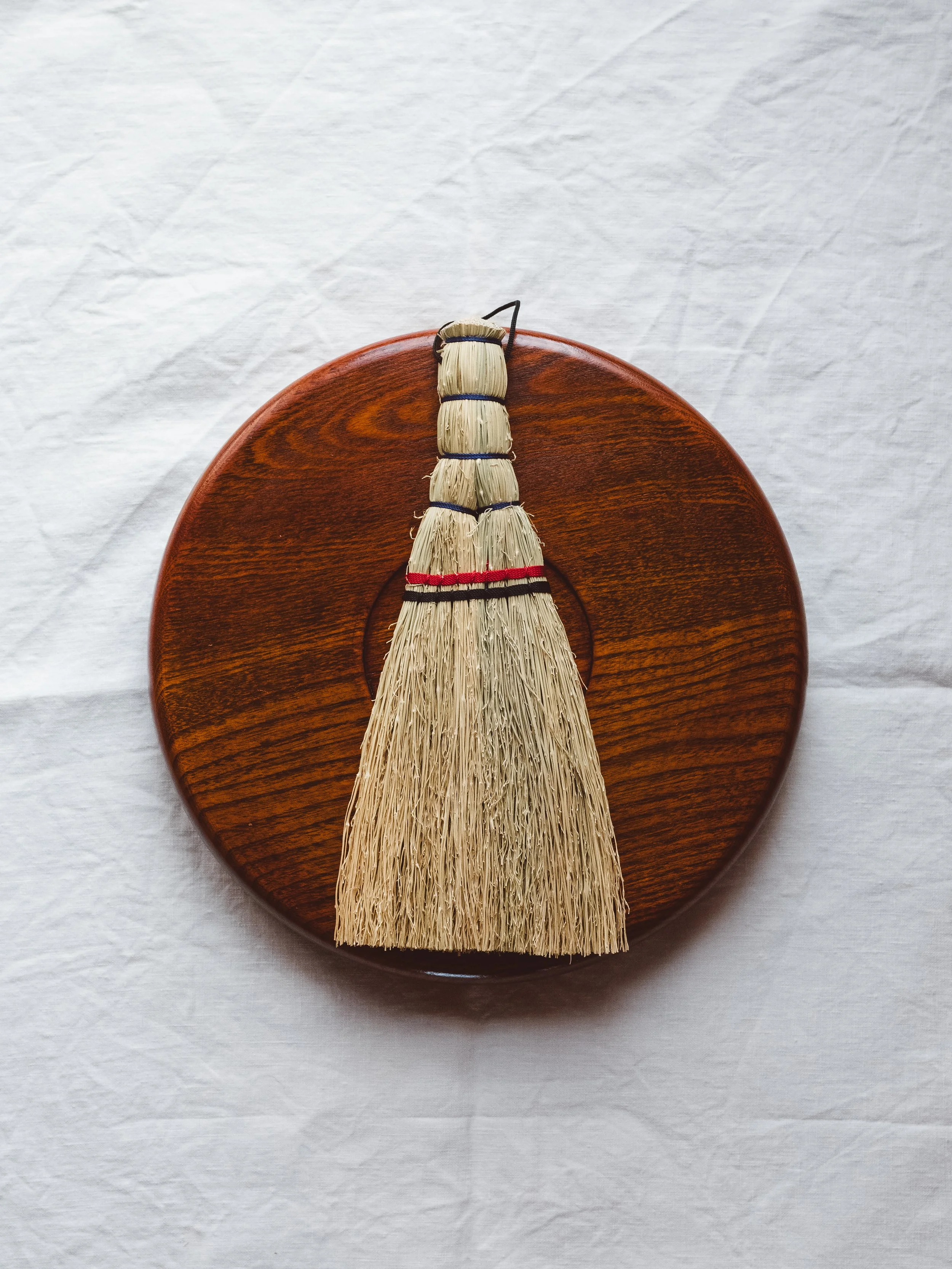 Image 2 of 5
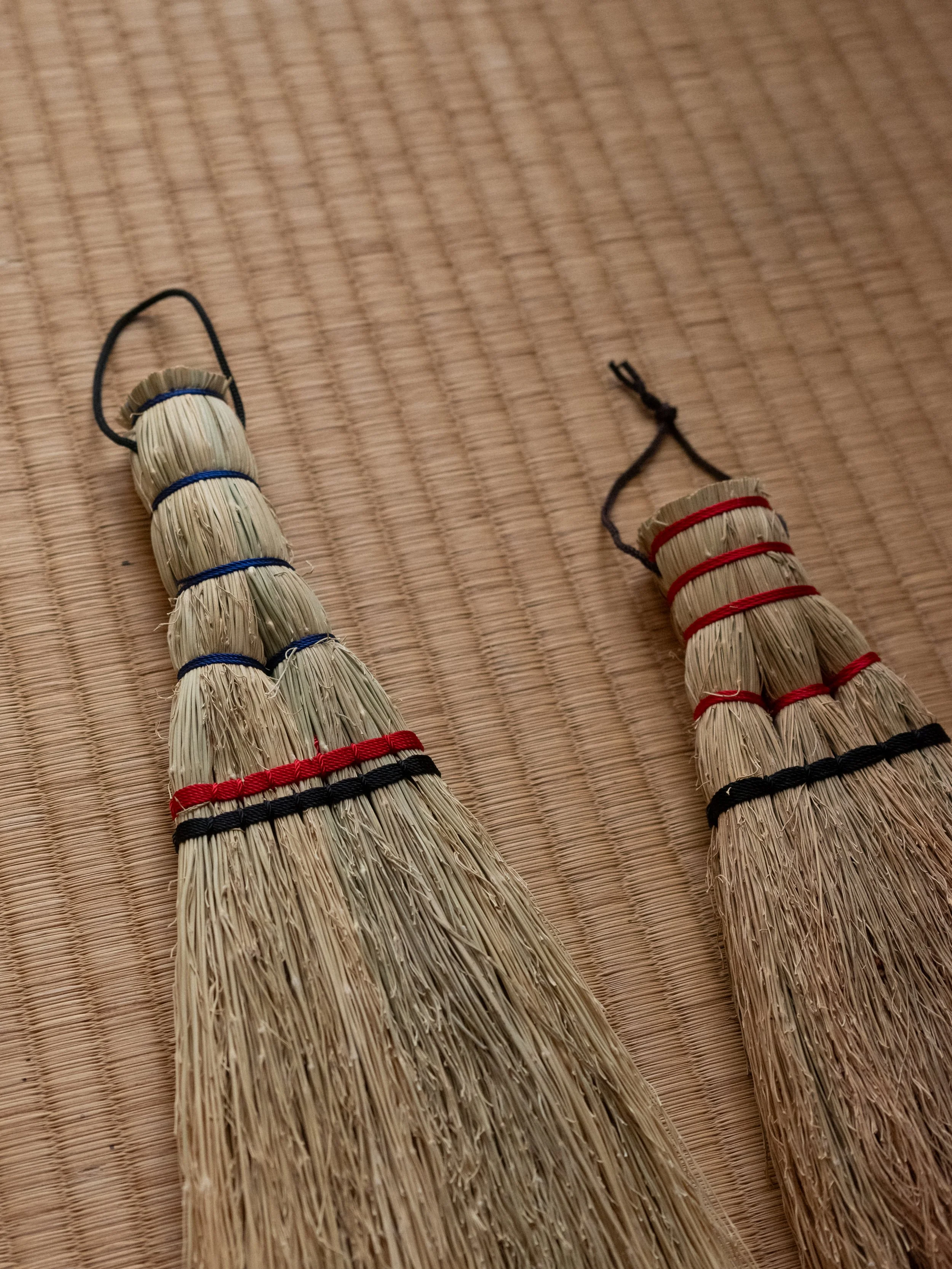 Image 3 of 5
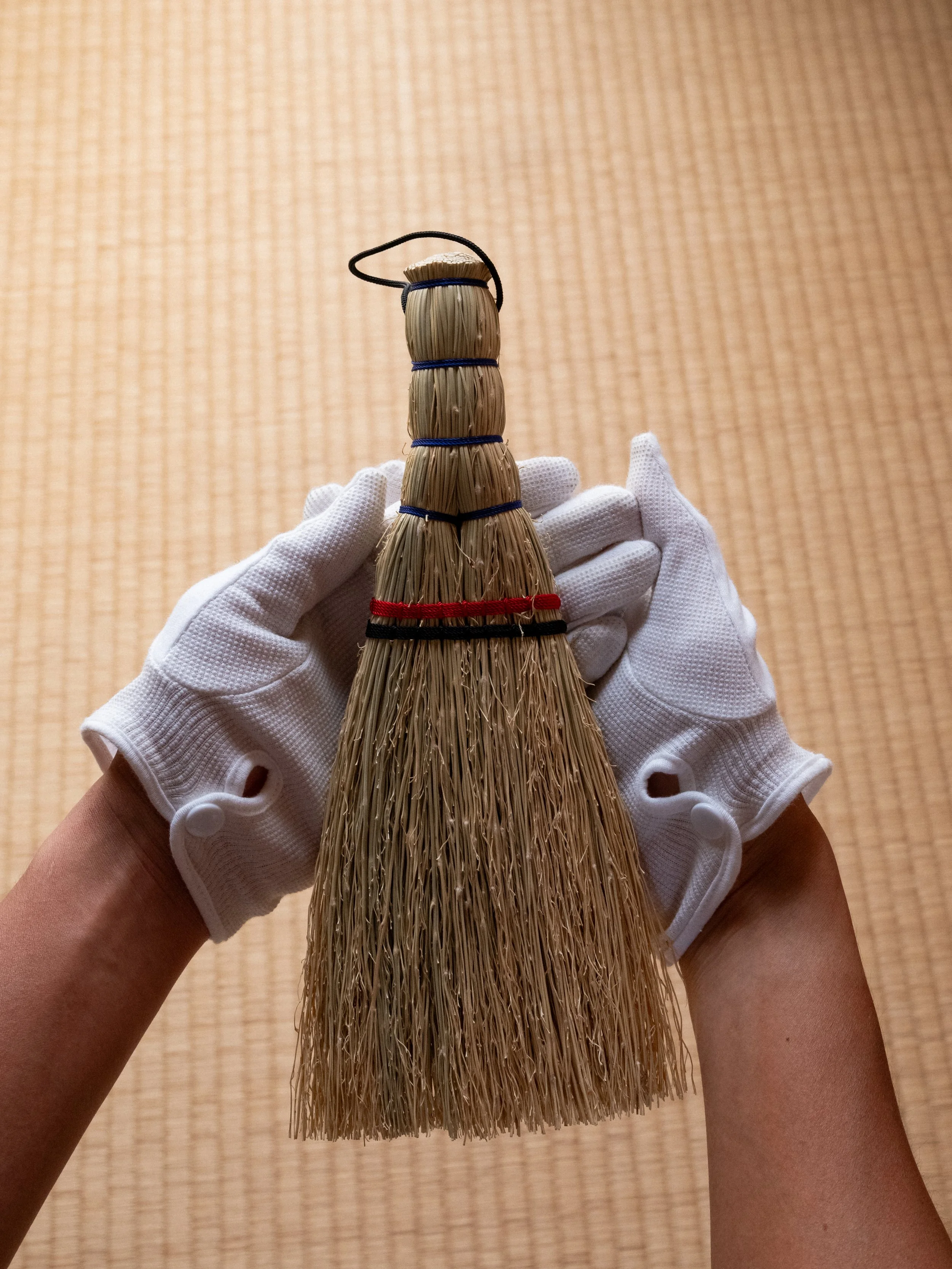 Image 4 of 5
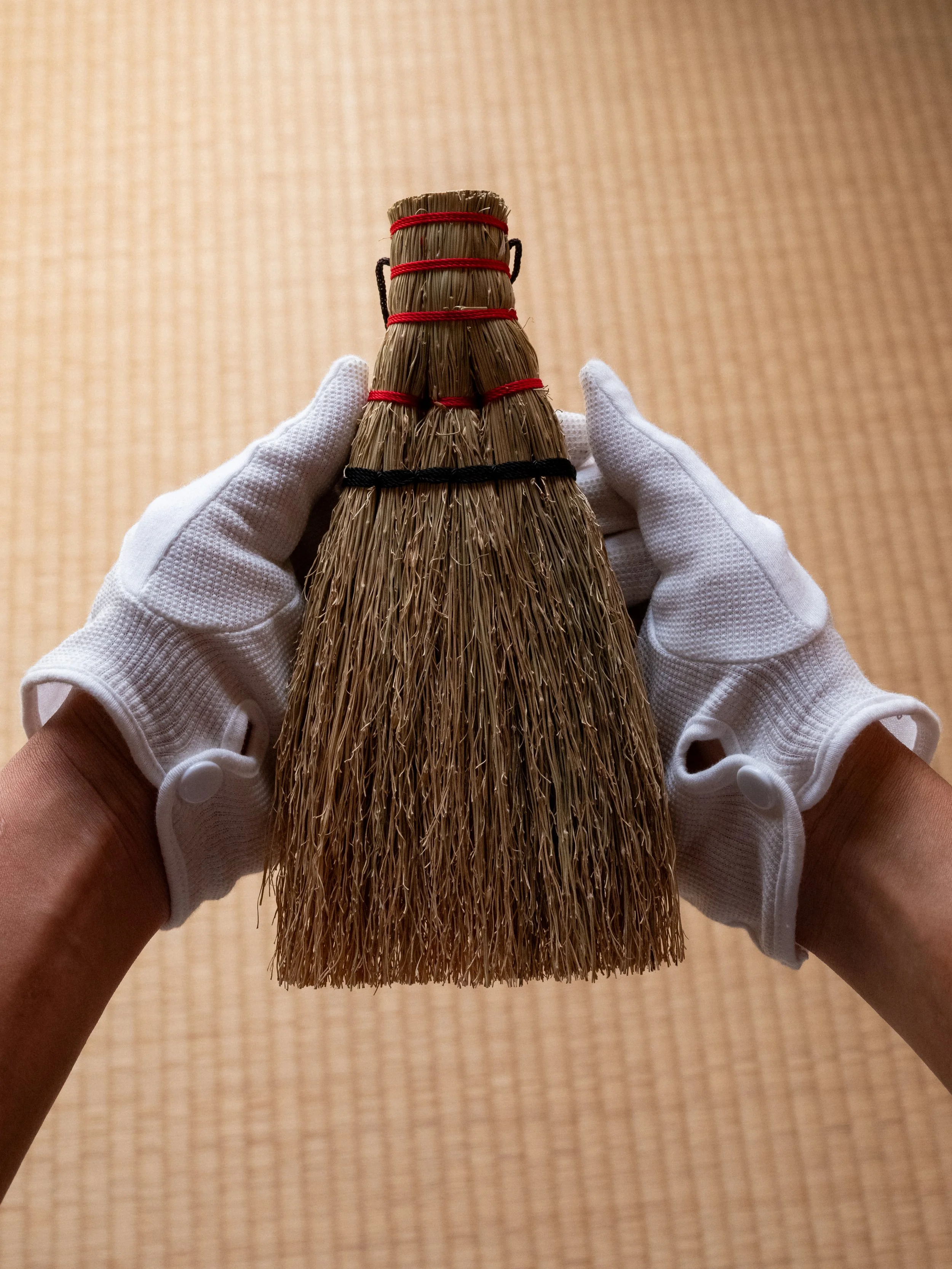 Image 5 of 5