【 The Concept 】
A bison that has been reduced to a hill. The back rises in a steep, continuous arch from the low-set head to the highest point of the shoulder hump, then drops sharply to a short tail. The silhouette, seen from the side, reads less as an animal than as a landform — a mound of earth that happens to have legs. Two broad supports stand beneath the body where legs would be — each one a single slab where left and right legs have been fused into one flat plane. The front pair merged into one wide wall. The back pair merged into another. The shape of individual legs is carved into the surface of each slab, but no gap separates them. This holds the mass low and immovable. The head hangs forward and down, barely above the plane of the feet. Two small horns angle outward from the skull. The eyes are two dots — tiny, round, placed far apart on a broad face, giving the figure an expression that is neither fierce nor blank but gently bewildered, as though the bison has just noticed you and is not sure what to make of it.
The surface is glazed. It is fired clay in a warm dark brown, smooth to the touch, with a gentle sheen that follows the curves of the body. A darker line — deeper brown, almost black — runs along the ridge of the spine from the crown of the head to the base of the tail, and similar dark accents mark the edges of the legs and the contours of the face. These lines are not painted. They are channels where pigment or slip has pooled in the carved grooves, producing a natural emphasis on the structural lines of the body.
This is the second bovine in the archive. Where CARVED CHARGE is angular, aggressive, and lunging forward, ARCHED BULK is round, still, and planted. One attacks. The other grazes.
【 The Function 】
278 grams, 14 centimeters tall, 14 centimeters long, 5 centimeters wide. Dense ceramic, heavy for its size, stable on two wide supports where each pair of legs has been fused into a single plane. The low center of gravity and broad supports make it nearly impossible to tip. In its original context, animal figures of this style were produced as household objects meant to bring the presence of nature into domestic interiors — small, solid reminders of landscape and wildness placed on bookshelves, side tables, and windowsills where the view outside offered none.
【 The Texture 】
Smooth, glossy, and warm. The surface is sealed under a transparent glaze that gives the entire figure a soft, continuous sheen. The hand slides over it without catching — no grain, no grit, no interruption. The brown is not uniform. It shifts from a pale ochre on the belly and inner legs to a deeper chocolate on the back and face, with the darkest concentration running along the spine ridge where the groove holds the most pigment. The smoothness amplifies the roundness of the form — light travels across the glazed surface in unbroken bands, reinforcing the impression of a single continuous mass rather than an assembly of parts.
【 Presence 】
It is round where everything else is angular. It is brown where everything else is black, gold, or celadon. It is still where everything else is posed. Place it on a shelf and it sits like a stone in a field — not arranged, not displayed, just there, as though it arrived on its own and found a spot. The tiny eyes and the downward-hanging head give it a quality of quiet absorption. It is not looking at you. It is not looking at anything in particular. It is looking at the ground in front of its own feet, the way a grazing animal looks at the ground: without urgency, without anxiety, without any intention of moving.
CARVED CHARGE is theater.
ARCHED BULK is landscape.
Sourced from a private collection in the Kansai region, Japan.
【 The Concept 】
A bison that has been reduced to a hill. The back rises in a steep, continuous arch from the low-set head to the highest point of the shoulder hump, then drops sharply to a short tail. The silhouette, seen from the side, reads less as an animal than as a landform — a mound of earth that happens to have legs. Two broad supports stand beneath the body where legs would be — each one a single slab where left and right legs have been fused into one flat plane. The front pair merged into one wide wall. The back pair merged into another. The shape of individual legs is carved into the surface of each slab, but no gap separates them. This holds the mass low and immovable. The head hangs forward and down, barely above the plane of the feet. Two small horns angle outward from the skull. The eyes are two dots — tiny, round, placed far apart on a broad face, giving the figure an expression that is neither fierce nor blank but gently bewildered, as though the bison has just noticed you and is not sure what to make of it.
The surface is glazed. It is fired clay in a warm dark brown, smooth to the touch, with a gentle sheen that follows the curves of the body. A darker line — deeper brown, almost black — runs along the ridge of the spine from the crown of the head to the base of the tail, and similar dark accents mark the edges of the legs and the contours of the face. These lines are not painted. They are channels where pigment or slip has pooled in the carved grooves, producing a natural emphasis on the structural lines of the body.
This is the second bovine in the archive. Where CARVED CHARGE is angular, aggressive, and lunging forward, ARCHED BULK is round, still, and planted. One attacks. The other grazes.
【 The Function 】
278 grams, 14 centimeters tall, 14 centimeters long, 5 centimeters wide. Dense ceramic, heavy for its size, stable on two wide supports where each pair of legs has been fused into a single plane. The low center of gravity and broad supports make it nearly impossible to tip. In its original context, animal figures of this style were produced as household objects meant to bring the presence of nature into domestic interiors — small, solid reminders of landscape and wildness placed on bookshelves, side tables, and windowsills where the view outside offered none.
【 The Texture 】
Smooth, glossy, and warm. The surface is sealed under a transparent glaze that gives the entire figure a soft, continuous sheen. The hand slides over it without catching — no grain, no grit, no interruption. The brown is not uniform. It shifts from a pale ochre on the belly and inner legs to a deeper chocolate on the back and face, with the darkest concentration running along the spine ridge where the groove holds the most pigment. The smoothness amplifies the roundness of the form — light travels across the glazed surface in unbroken bands, reinforcing the impression of a single continuous mass rather than an assembly of parts.
【 Presence 】
It is round where everything else is angular. It is brown where everything else is black, gold, or celadon. It is still where everything else is posed. Place it on a shelf and it sits like a stone in a field — not arranged, not displayed, just there, as though it arrived on its own and found a spot. The tiny eyes and the downward-hanging head give it a quality of quiet absorption. It is not looking at you. It is not looking at anything in particular. It is looking at the ground in front of its own feet, the way a grazing animal looks at the ground: without urgency, without anxiety, without any intention of moving.
CARVED CHARGE is theater.
ARCHED BULK is landscape.
Sourced from a private collection in the Kansai region, Japan.


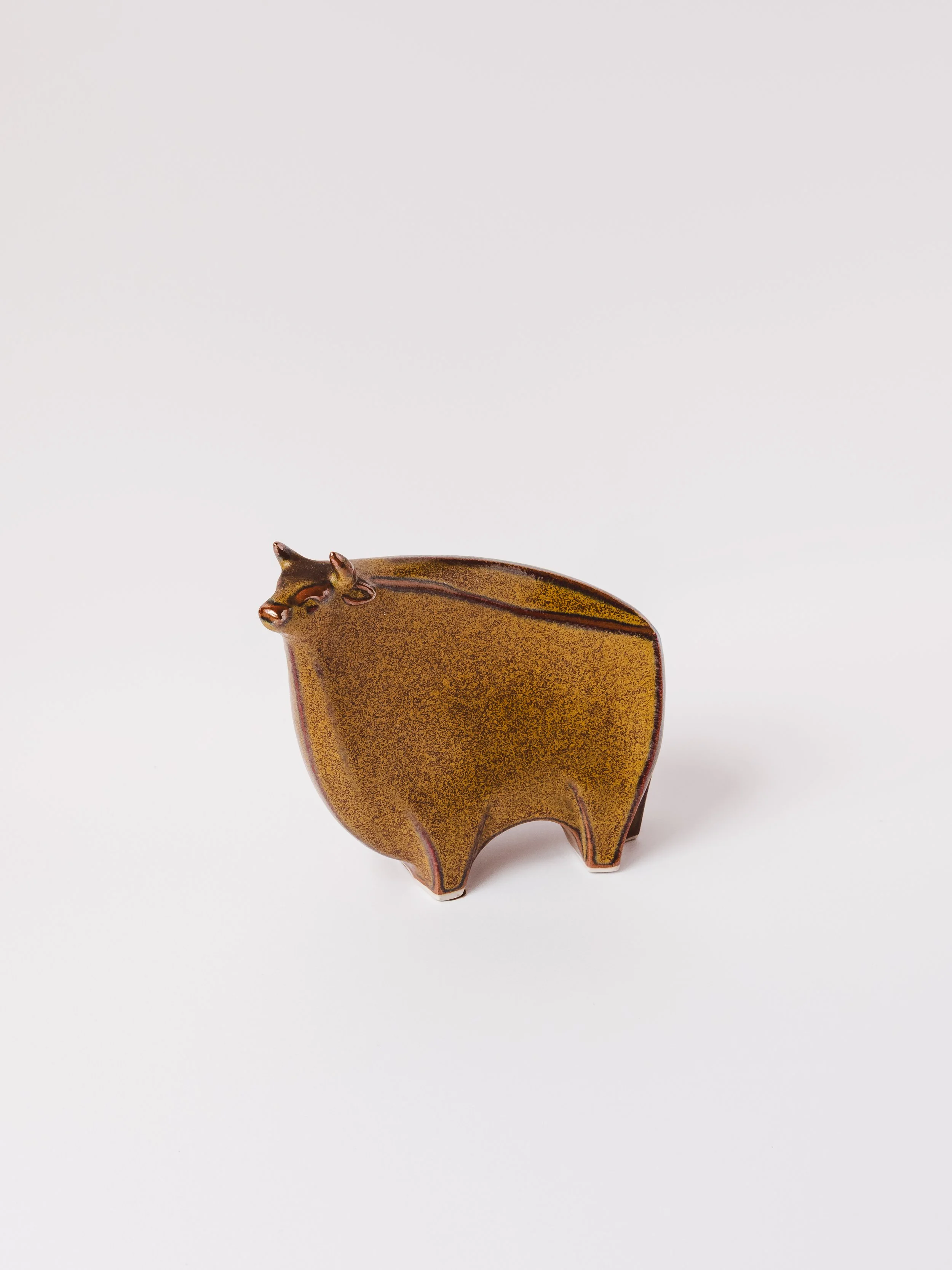 Image 1 of 11
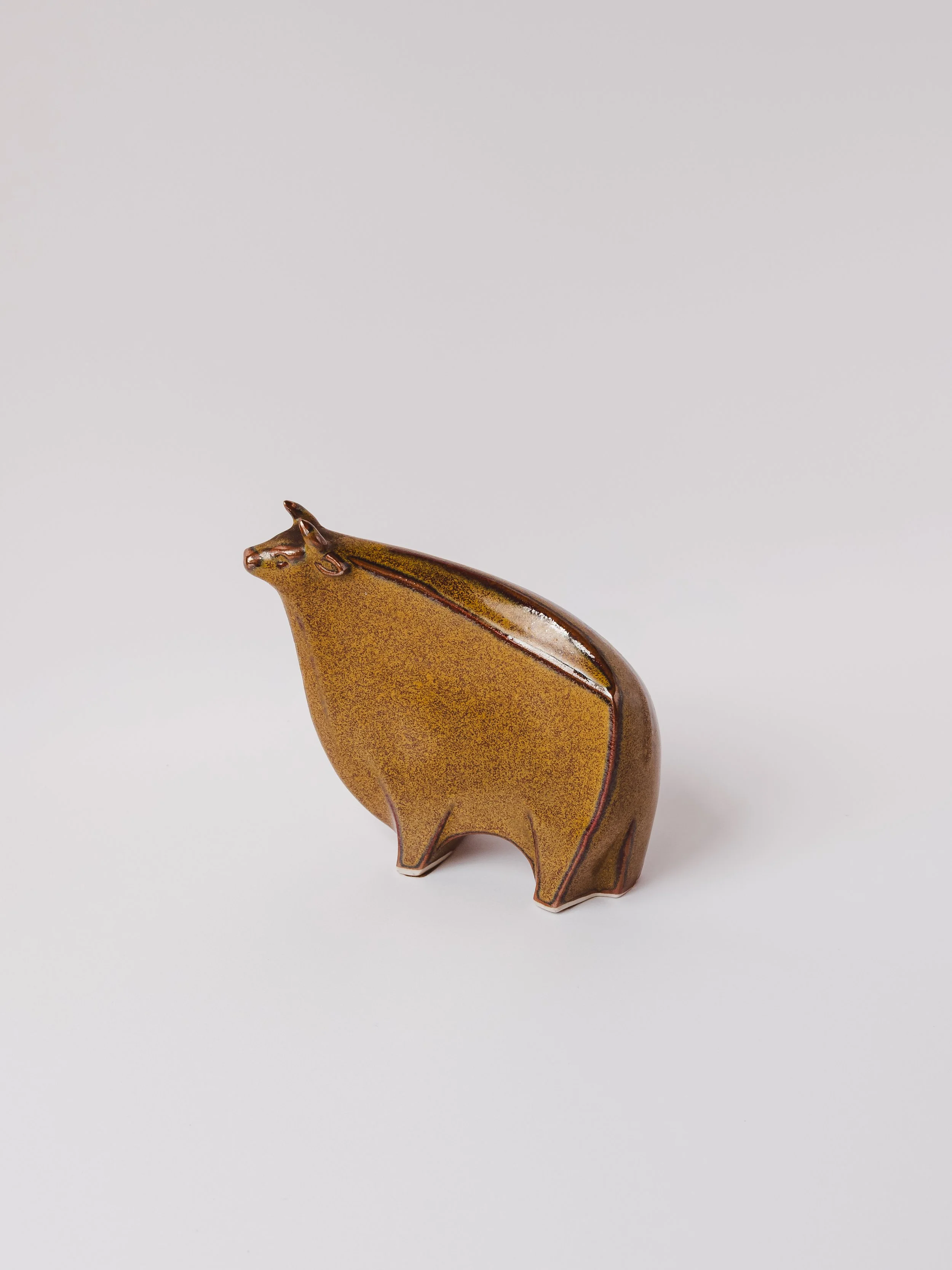 Image 2 of 11
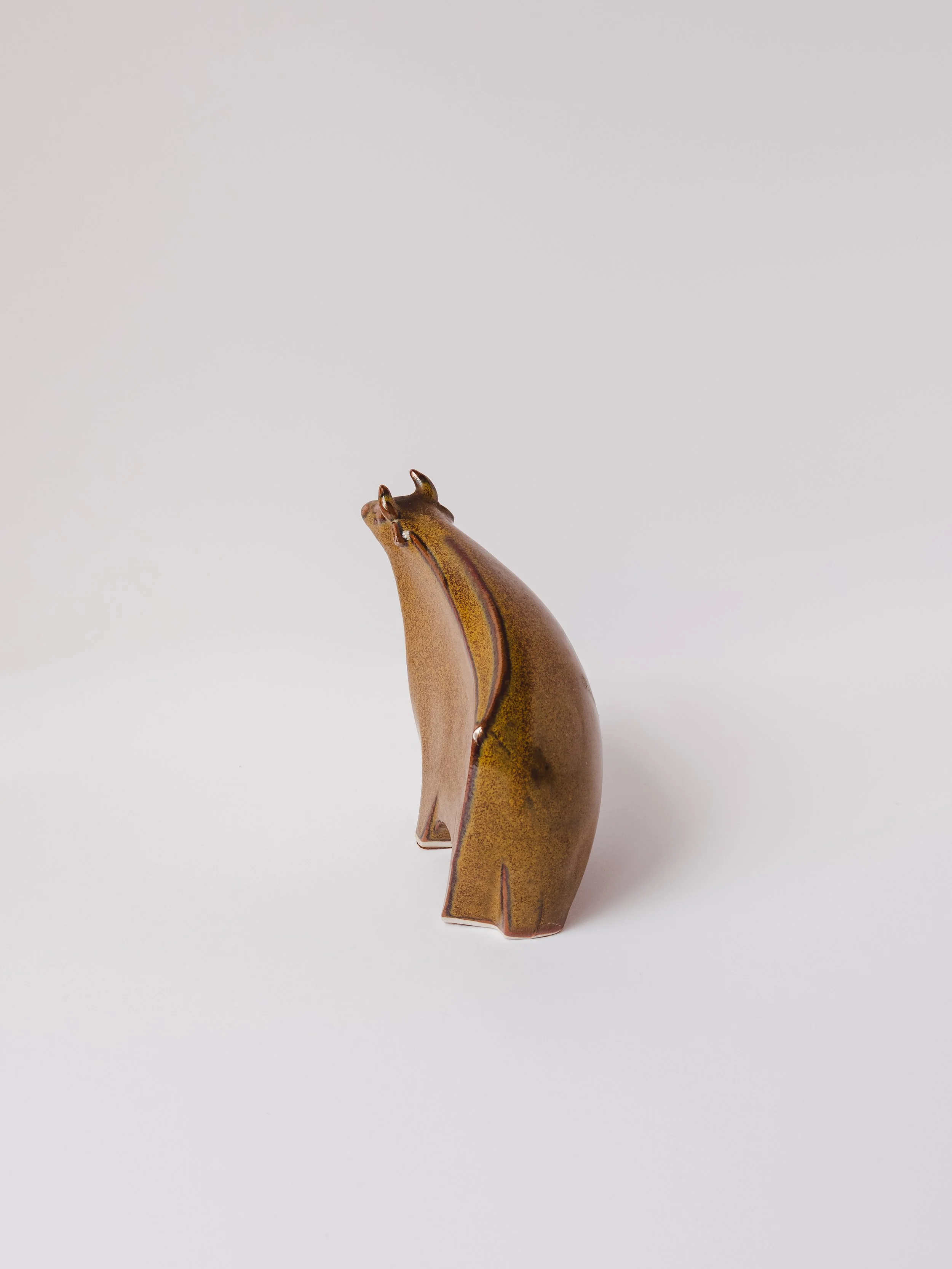 Image 3 of 11
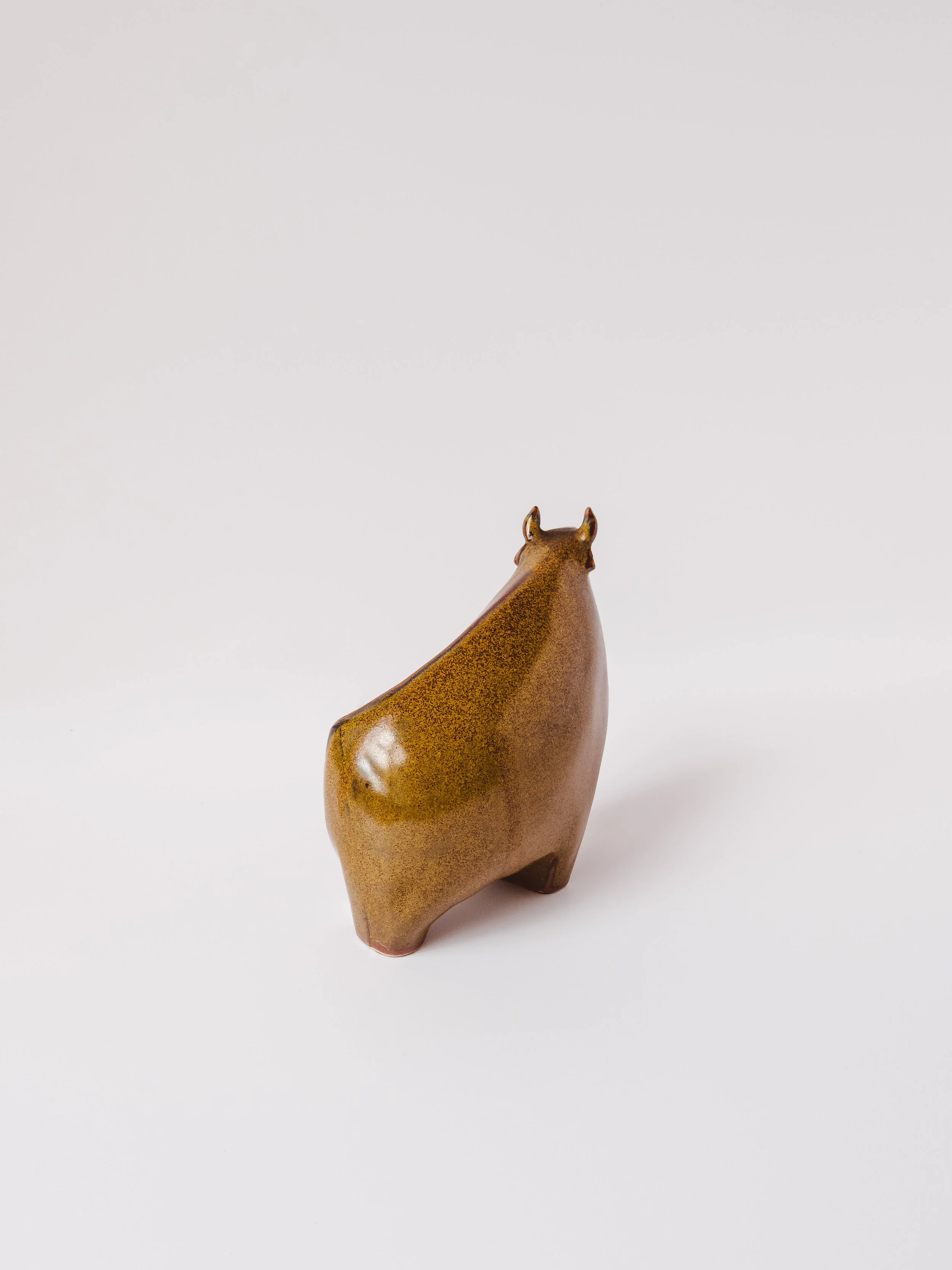 Image 4 of 11
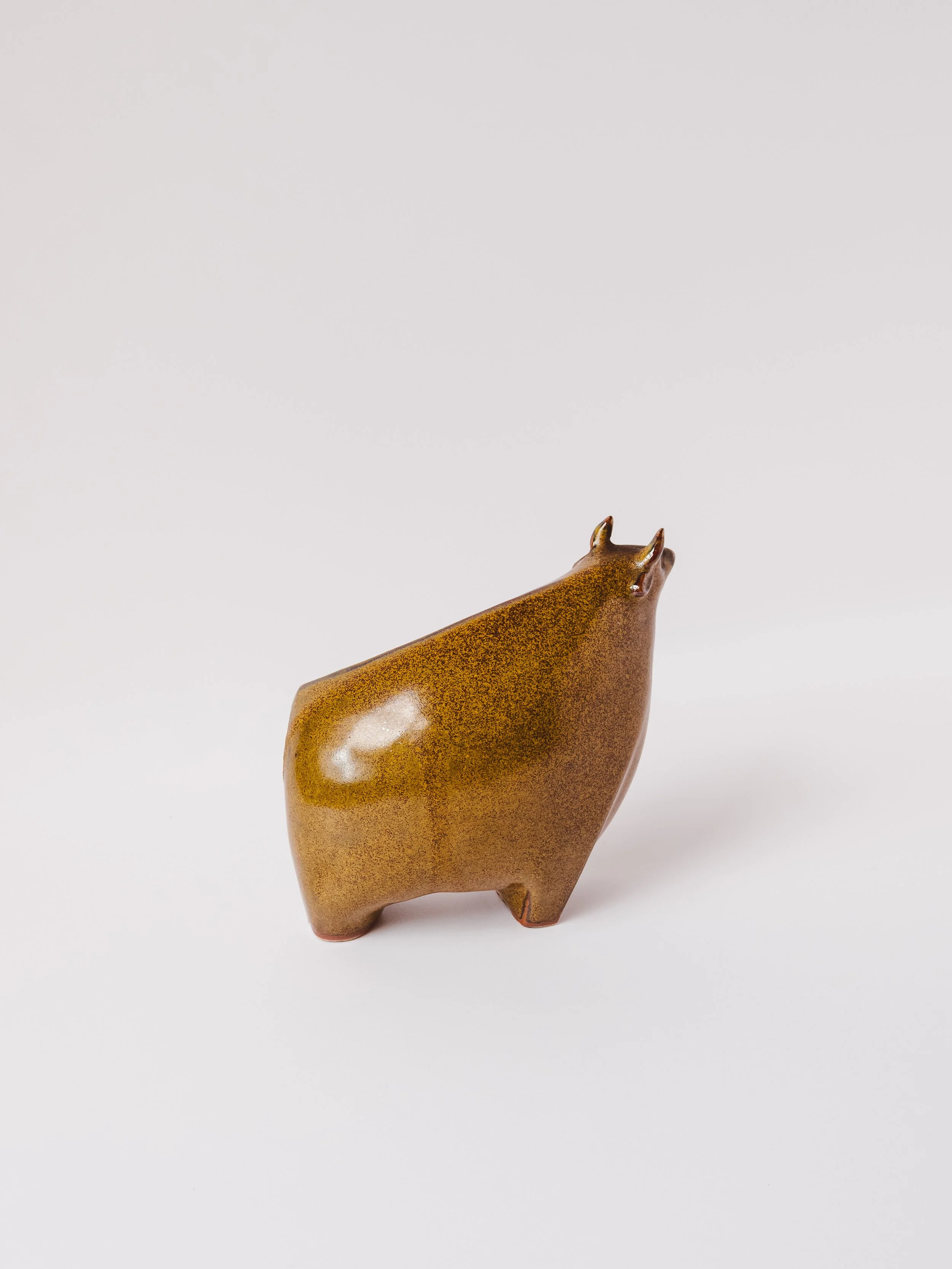 Image 5 of 11
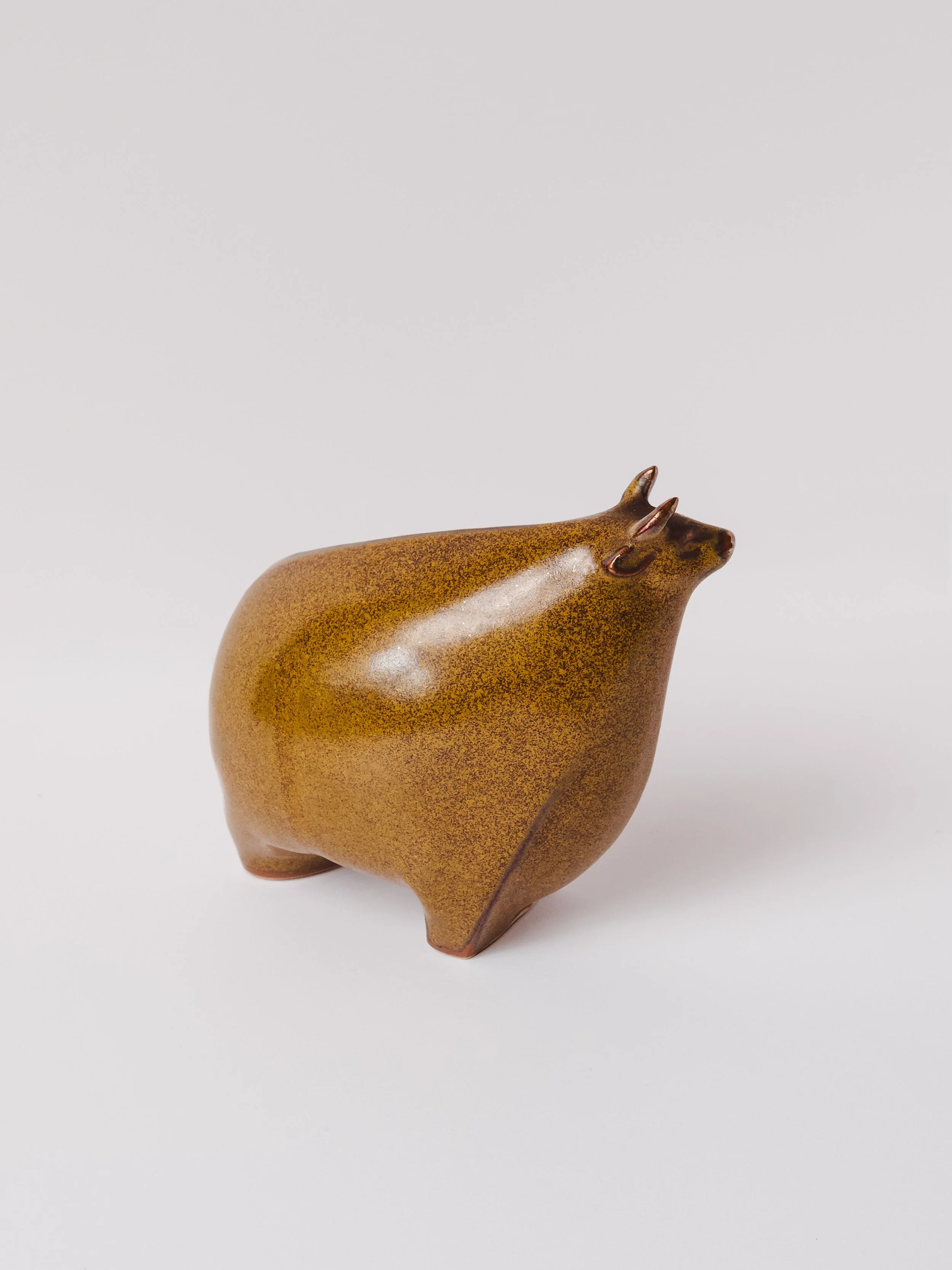 Image 6 of 11
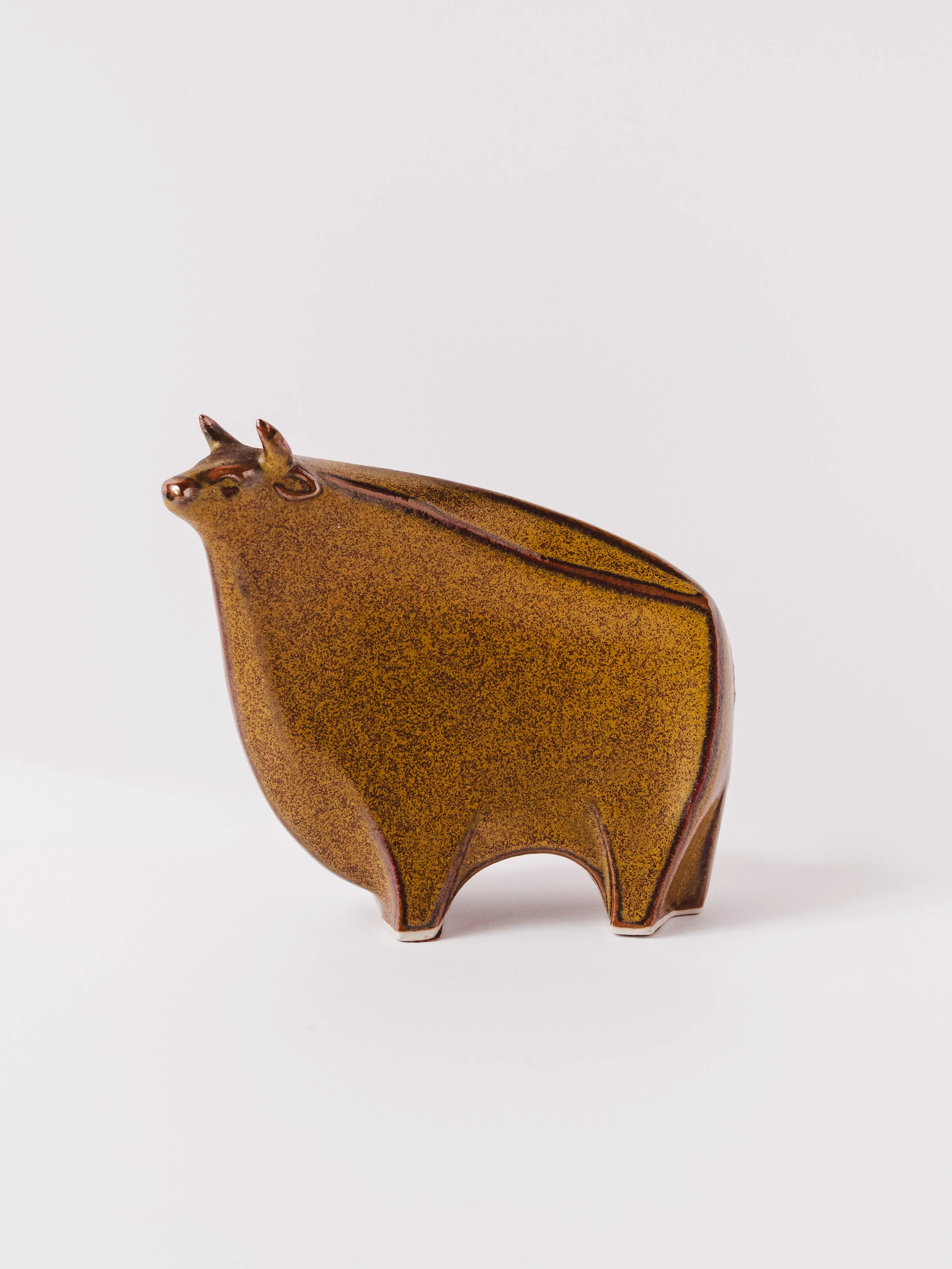 Image 7 of 11
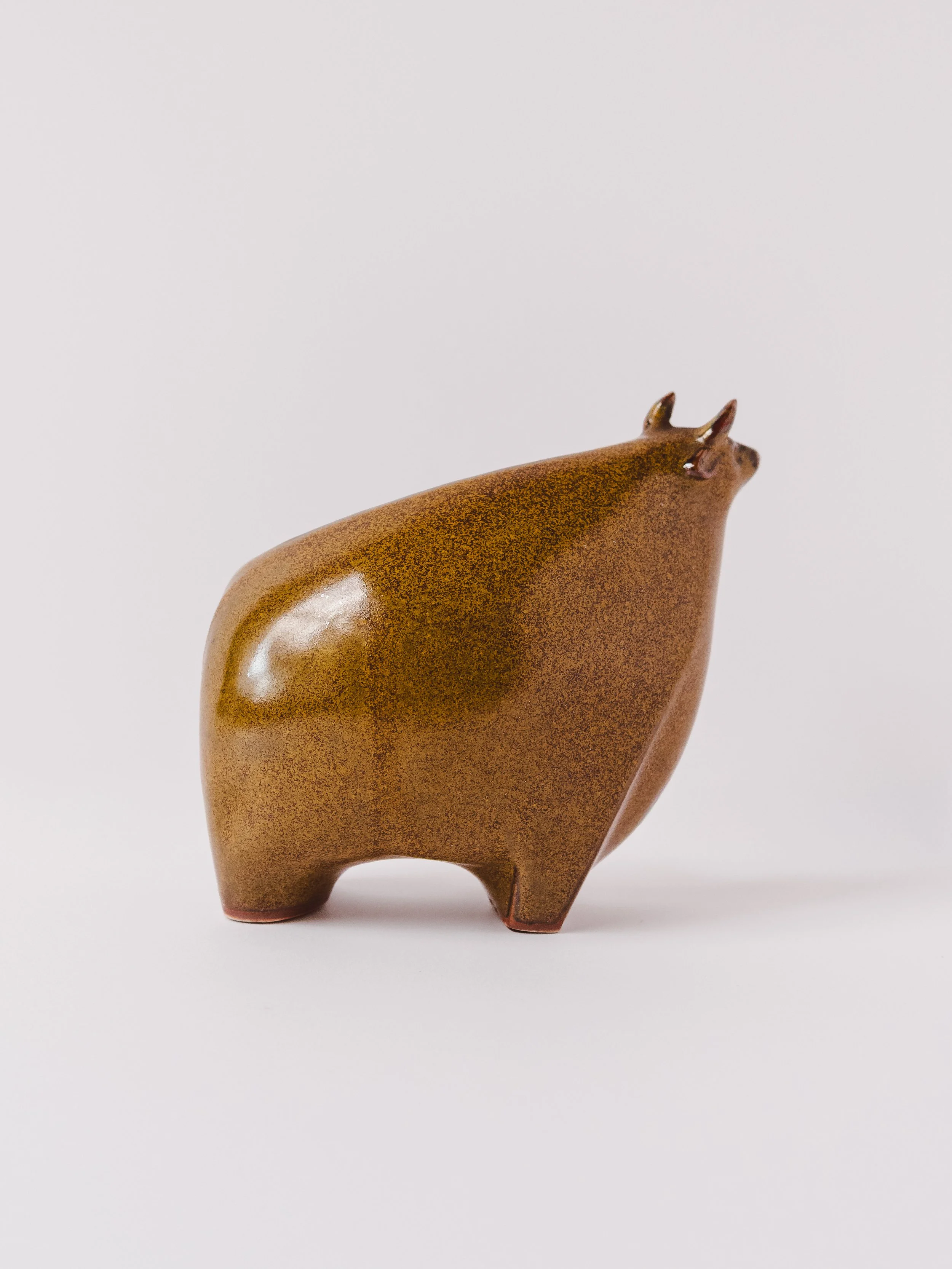 Image 8 of 11
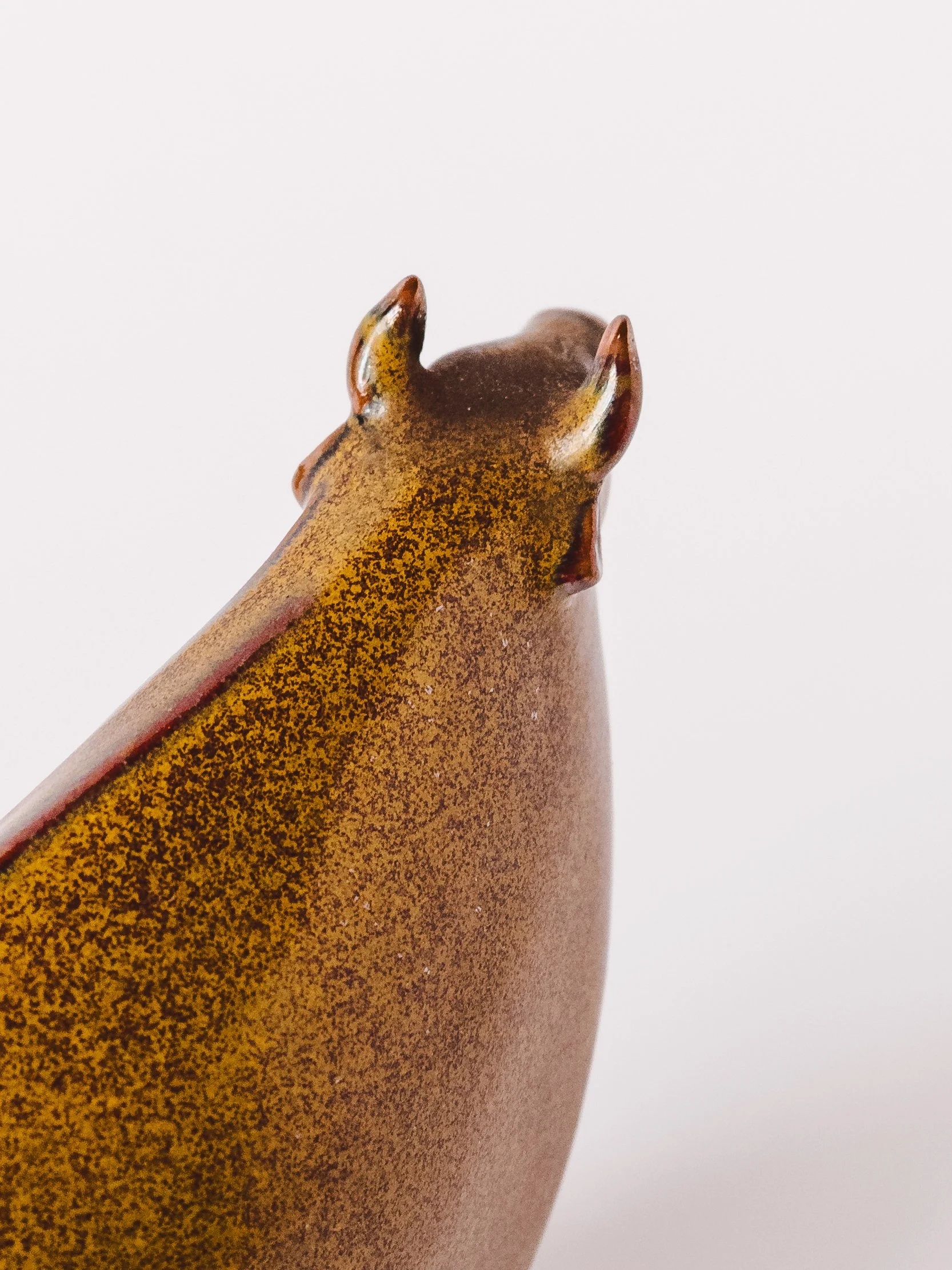 Image 9 of 11
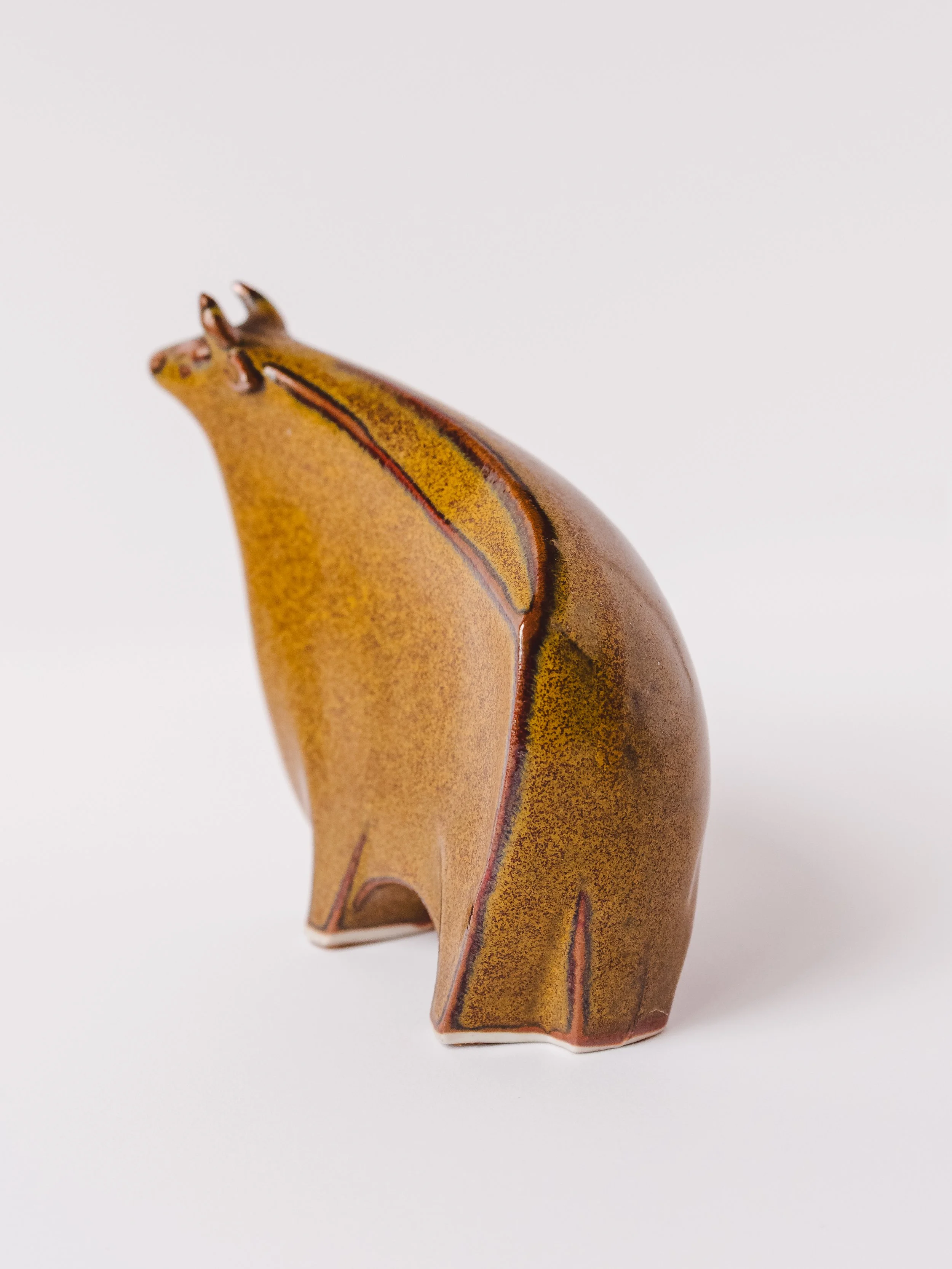 Image 10 of 11
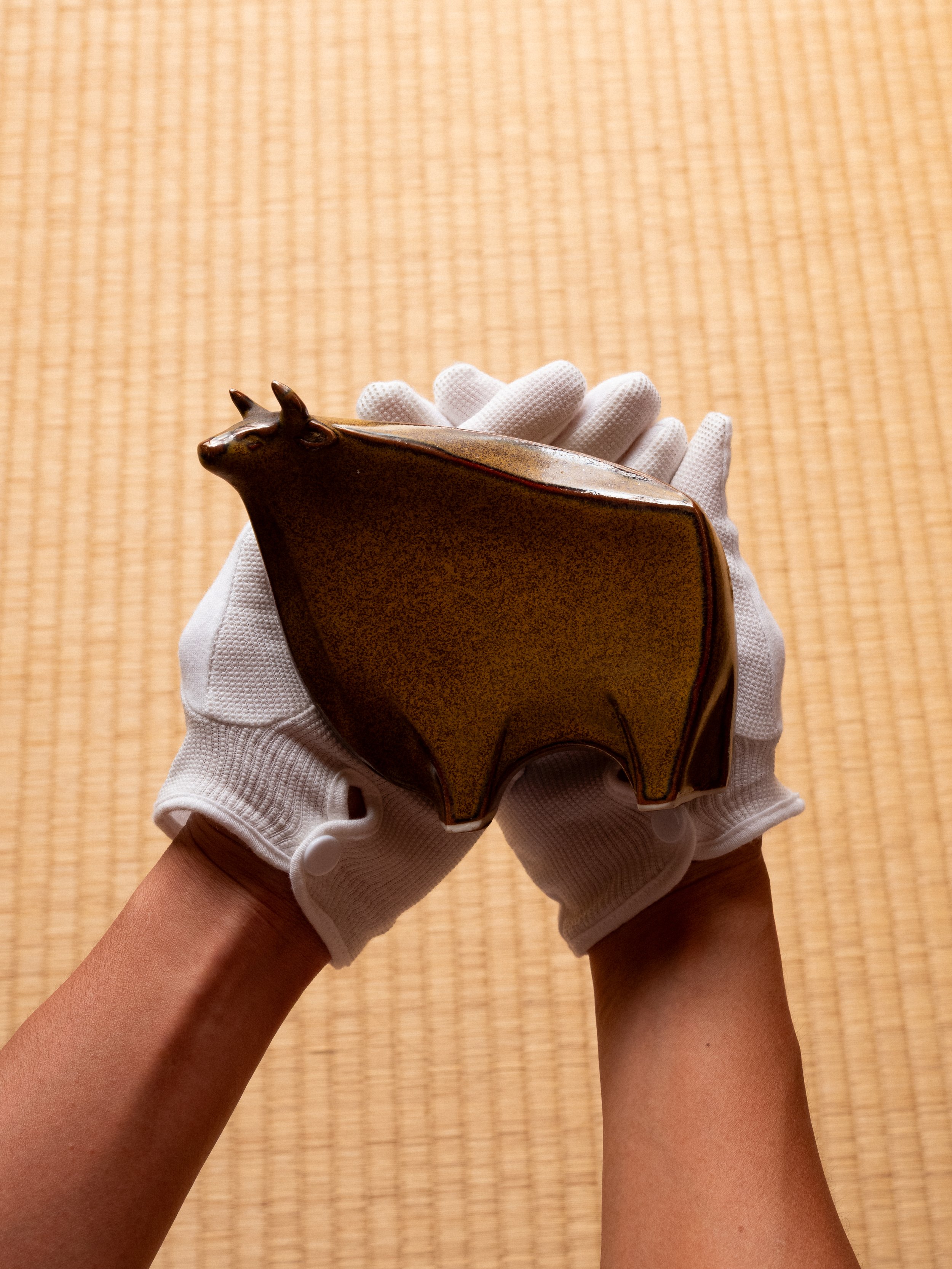 Image 11 of 11