【 The Concept 】
Most daruma are round at the bottom. Push them and they roll back. This one is not round. The base extends downward in a short cylinder, flat and final, like a tree stump cut clean. Push this one and it falls. It does not get back up. That changes what it means. A daruma that bounces back is about resilience. A daruma that stays where you put it is about conviction — the decision to stand in one place and not move until someone moves you. A craftsman in a mountain village near a hot spring set a block of timber on a lathe, spun it, and carved it into this shape. Then he painted a face on the front — not a calm face, not a kind face, but the face of someone who has decided exactly where to stand. Black eyebrows. Red cheeks. A beard that covers the chin. And on the belly, a single character in red: fortune.
【 The Function 】
A lathe-turned wooden figure. Thirteen centimeters tall, nine centimeters across. Solid wood — no hollow, no cavity, no moving parts. The base is a short cylinder that extends below the body, giving it a firm, permanent stance on any flat surface. At 566 grams it is heavier than it looks. The grain of the wood is left exposed across the face, the scalp, and the back, sealed under a thin coat that lets the annual rings show through. The maker's name is brushed in ink on the bottom alongside the name of the village where it was turned.
【 The Texture 】
Two languages on one surface. The wood speaks first — pale, striped, warm, turned smooth on a lathe until the grain wraps around the skull like lines on a topographic map. Then the ink and pigment speak — thick black strokes for the eyebrows and beard, bright red for the cheeks and the fortune character, all applied by hand with a brush that never went back to correct itself. The back is nearly bare: raw wood with a single black line snaking down the spine like the fold of a robe. The front is dense with information. The back is silence. Turn it around and the conversation changes.
【 Presence 】
The archive already housed a quiet monk who sat still and waited. This is not that. This is the loud version — the one with the red cheeks and the black beard and the character for fortune stamped on its belly. It does not rock. It does not roll. It stands on its flat base like a post driven into the ground, and the expression on its face suggests it has no intention of being anywhere else. The craftsman who made it won a national prize for his work and signed the bottom because he intended it to outlast him. It has. Set it on a desk and it becomes the thing in the room that has already chosen its spot.
Sourced from a private collection in northern Japan. Maker-signed on the base.
【 The Concept 】
Most daruma are round at the bottom. Push them and they roll back. This one is not round. The base extends downward in a short cylinder, flat and final, like a tree stump cut clean. Push this one and it falls. It does not get back up. That changes what it means. A daruma that bounces back is about resilience. A daruma that stays where you put it is about conviction — the decision to stand in one place and not move until someone moves you. A craftsman in a mountain village near a hot spring set a block of timber on a lathe, spun it, and carved it into this shape. Then he painted a face on the front — not a calm face, not a kind face, but the face of someone who has decided exactly where to stand. Black eyebrows. Red cheeks. A beard that covers the chin. And on the belly, a single character in red: fortune.
【 The Function 】
A lathe-turned wooden figure. Thirteen centimeters tall, nine centimeters across. Solid wood — no hollow, no cavity, no moving parts. The base is a short cylinder that extends below the body, giving it a firm, permanent stance on any flat surface. At 566 grams it is heavier than it looks. The grain of the wood is left exposed across the face, the scalp, and the back, sealed under a thin coat that lets the annual rings show through. The maker's name is brushed in ink on the bottom alongside the name of the village where it was turned.
【 The Texture 】
Two languages on one surface. The wood speaks first — pale, striped, warm, turned smooth on a lathe until the grain wraps around the skull like lines on a topographic map. Then the ink and pigment speak — thick black strokes for the eyebrows and beard, bright red for the cheeks and the fortune character, all applied by hand with a brush that never went back to correct itself. The back is nearly bare: raw wood with a single black line snaking down the spine like the fold of a robe. The front is dense with information. The back is silence. Turn it around and the conversation changes.
【 Presence 】
The archive already housed a quiet monk who sat still and waited. This is not that. This is the loud version — the one with the red cheeks and the black beard and the character for fortune stamped on its belly. It does not rock. It does not roll. It stands on its flat base like a post driven into the ground, and the expression on its face suggests it has no intention of being anywhere else. The craftsman who made it won a national prize for his work and signed the bottom because he intended it to outlast him. It has. Set it on a desk and it becomes the thing in the room that has already chosen its spot.
Sourced from a private collection in northern Japan. Maker-signed on the base.


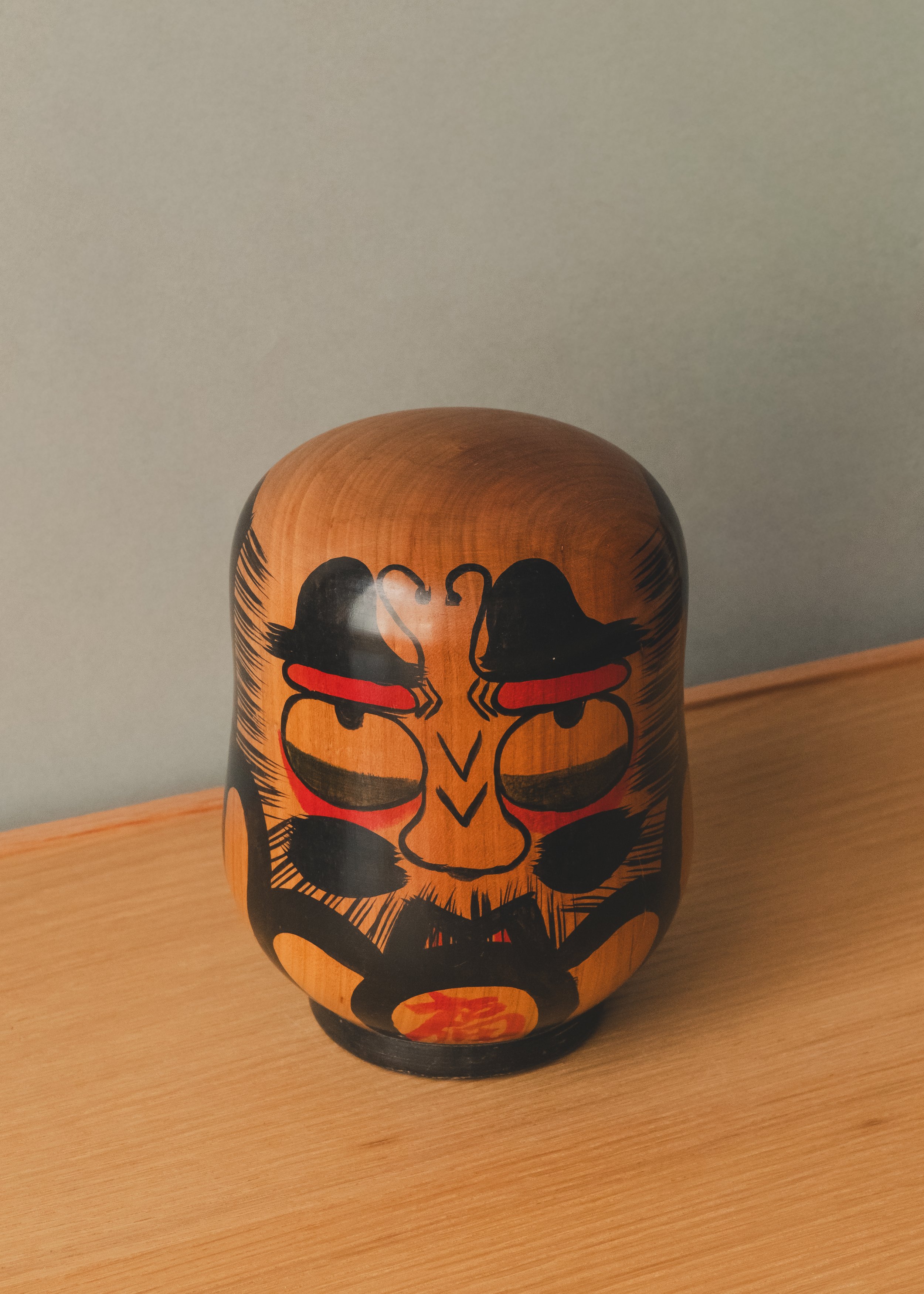 Image 1 of 11
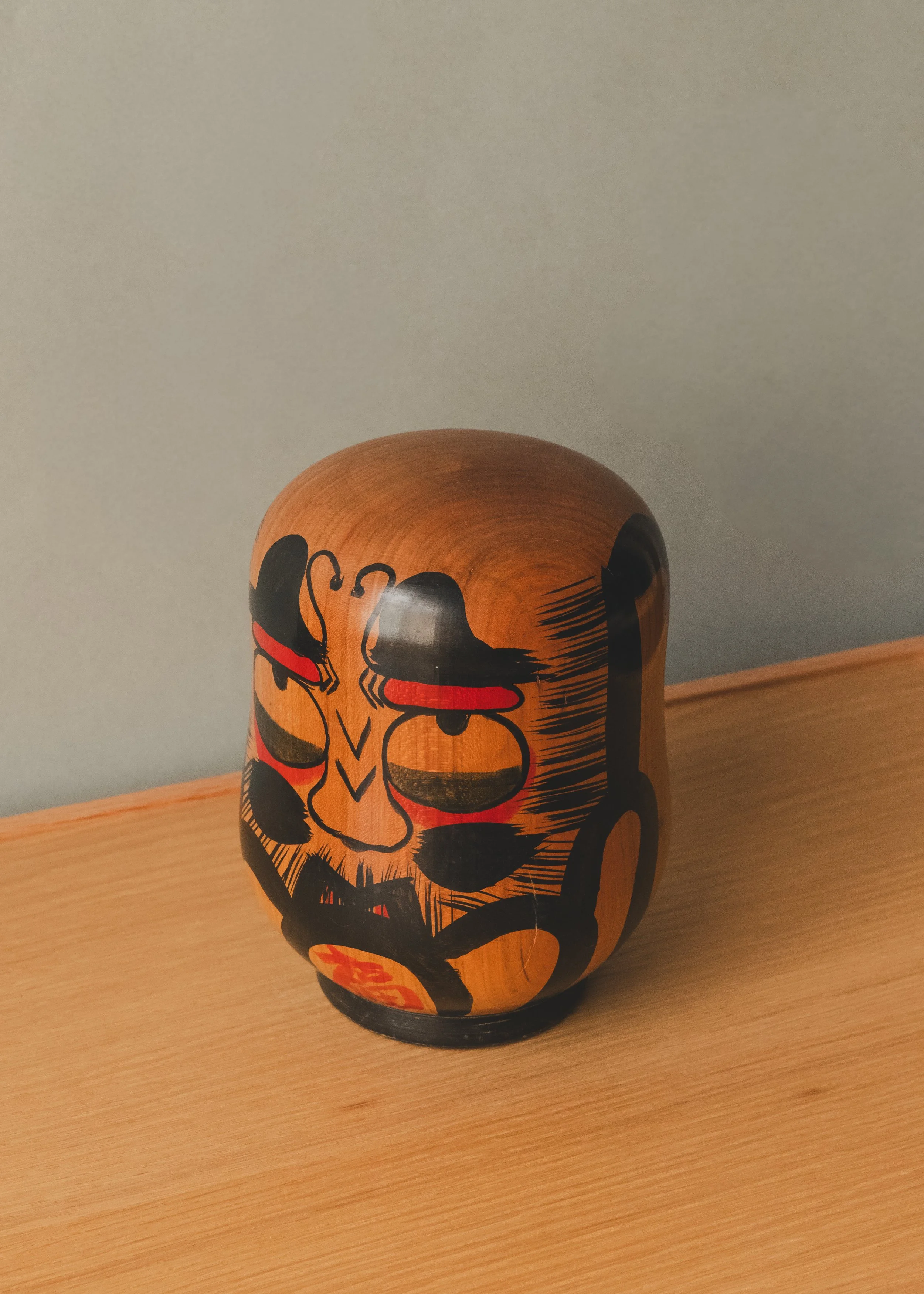 Image 2 of 11
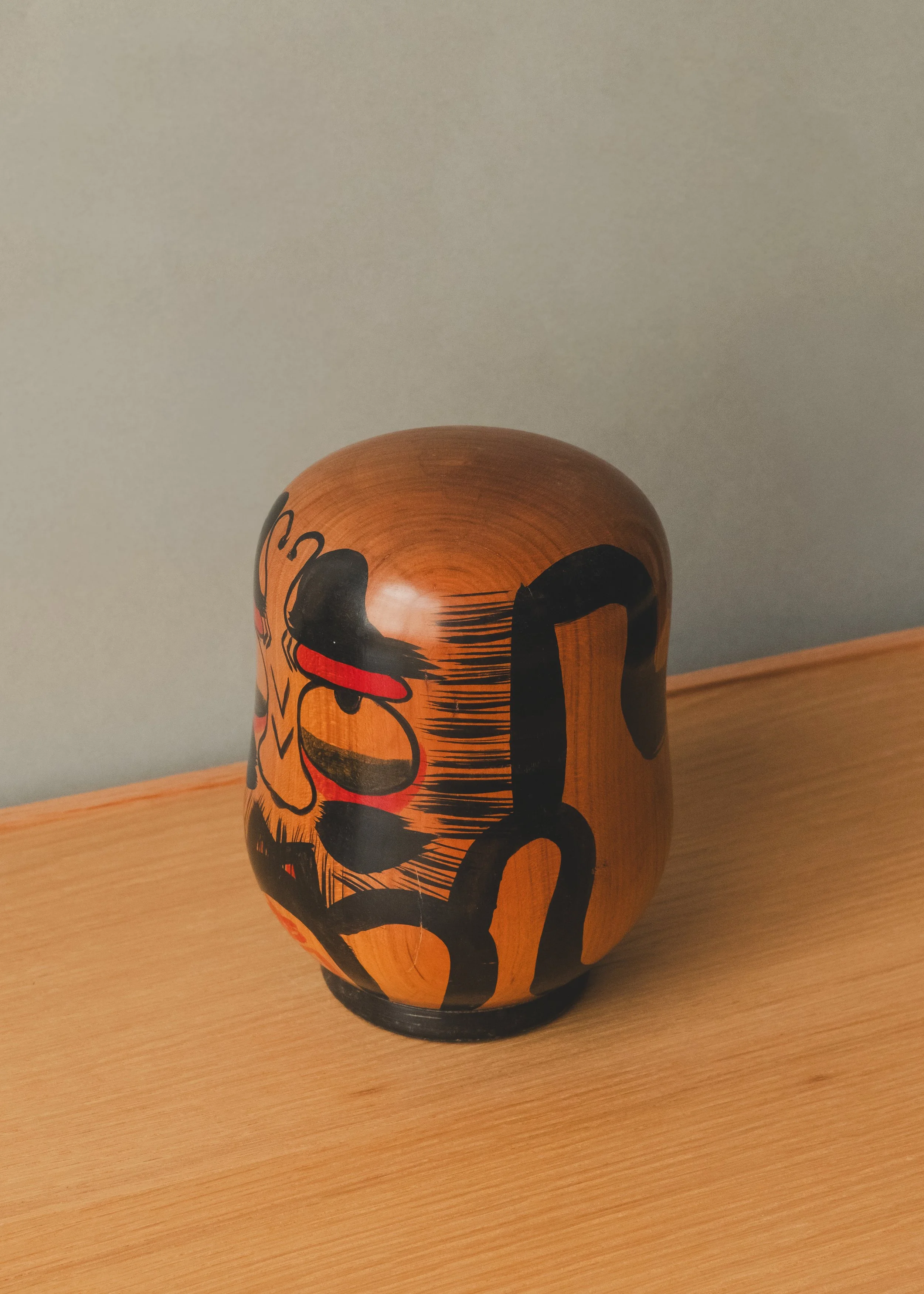 Image 3 of 11
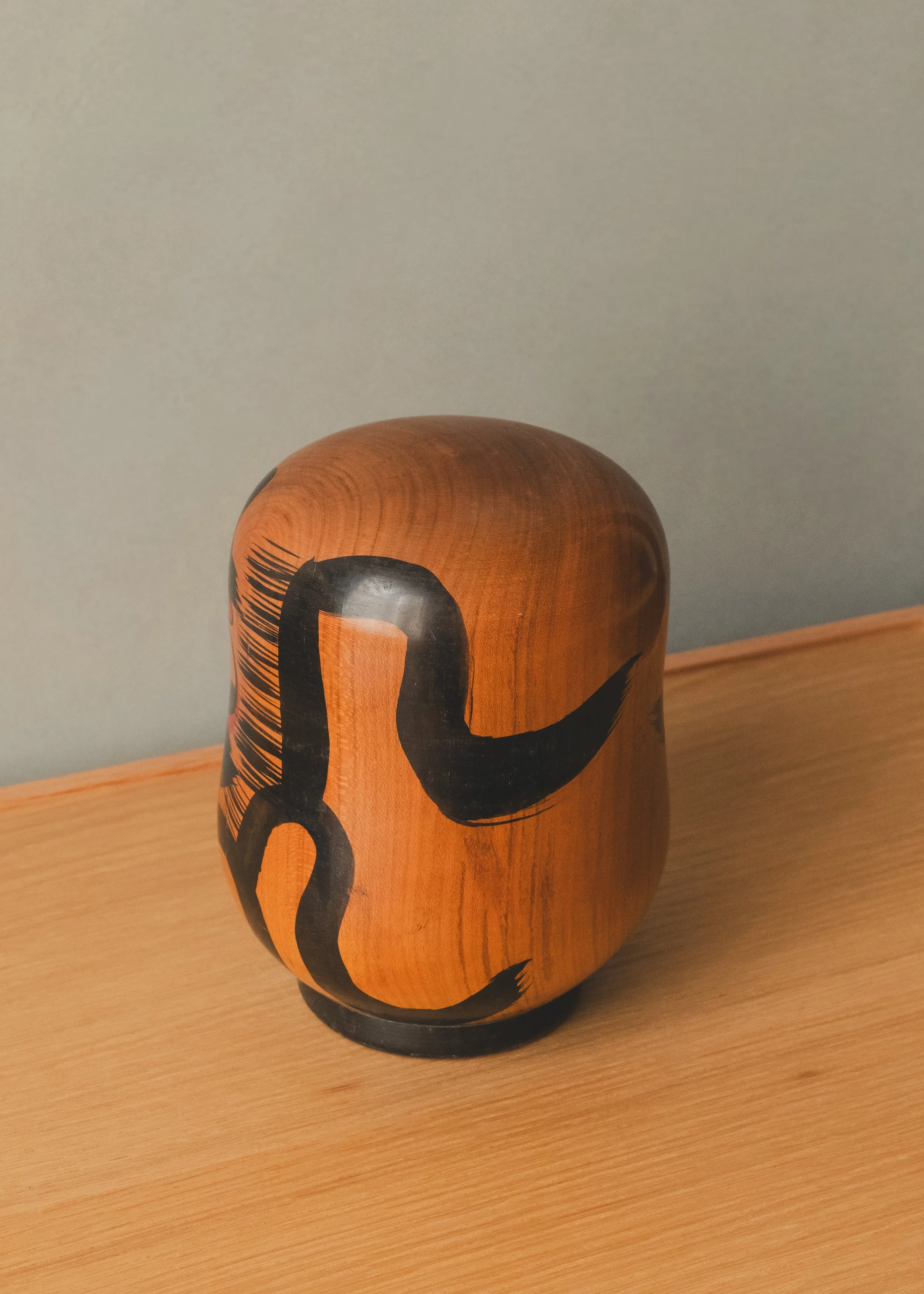 Image 4 of 11
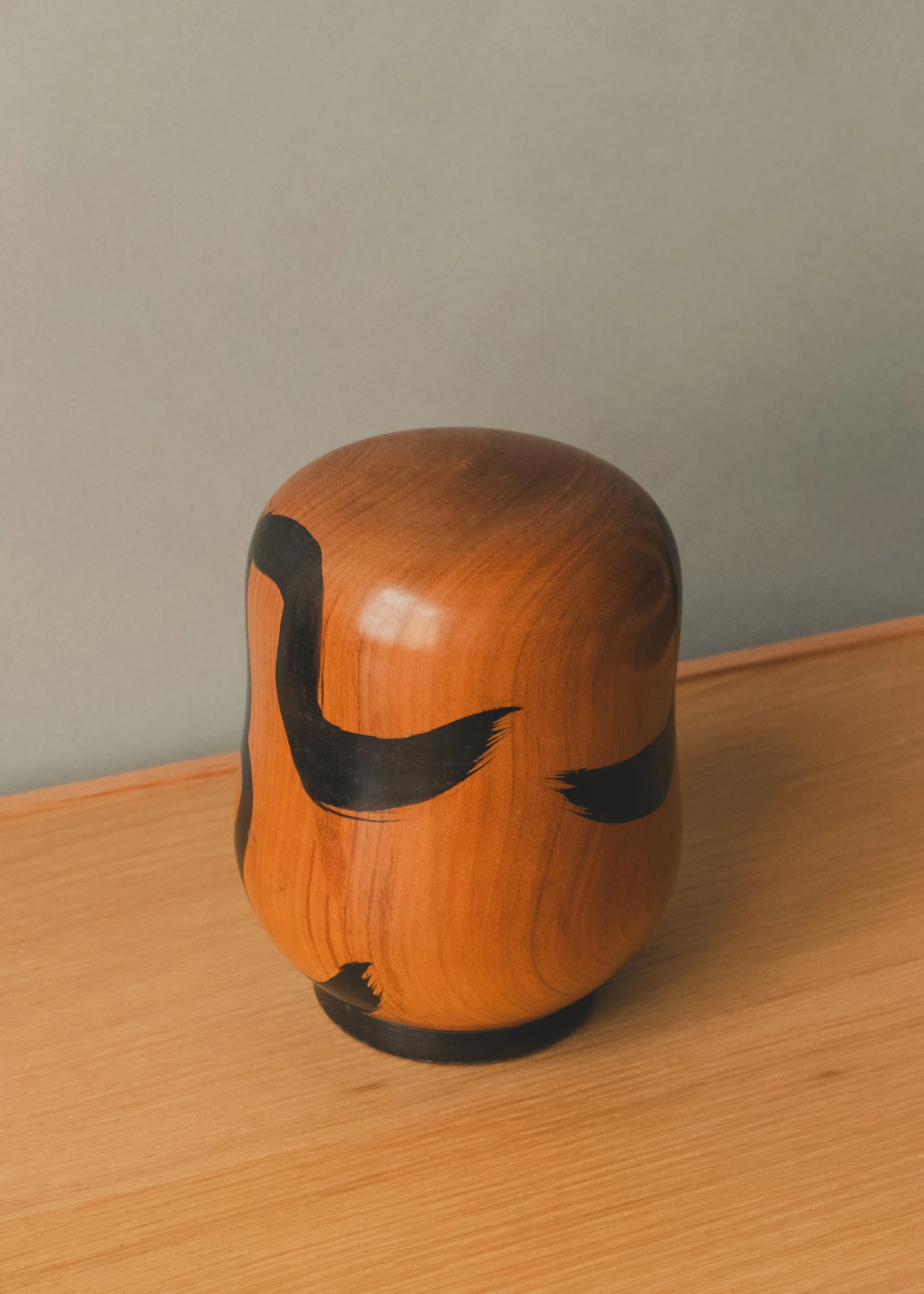 Image 5 of 11
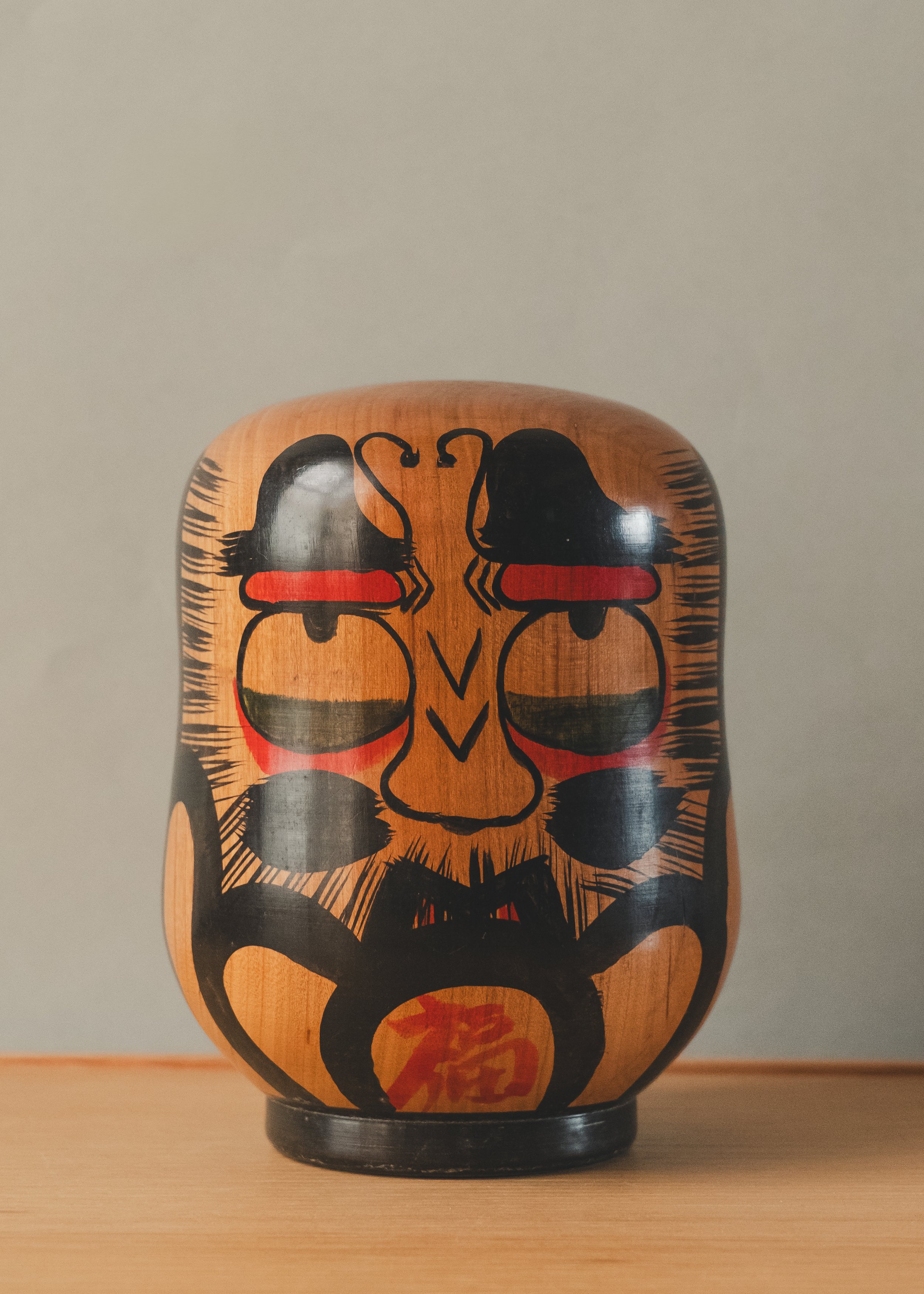 Image 6 of 11
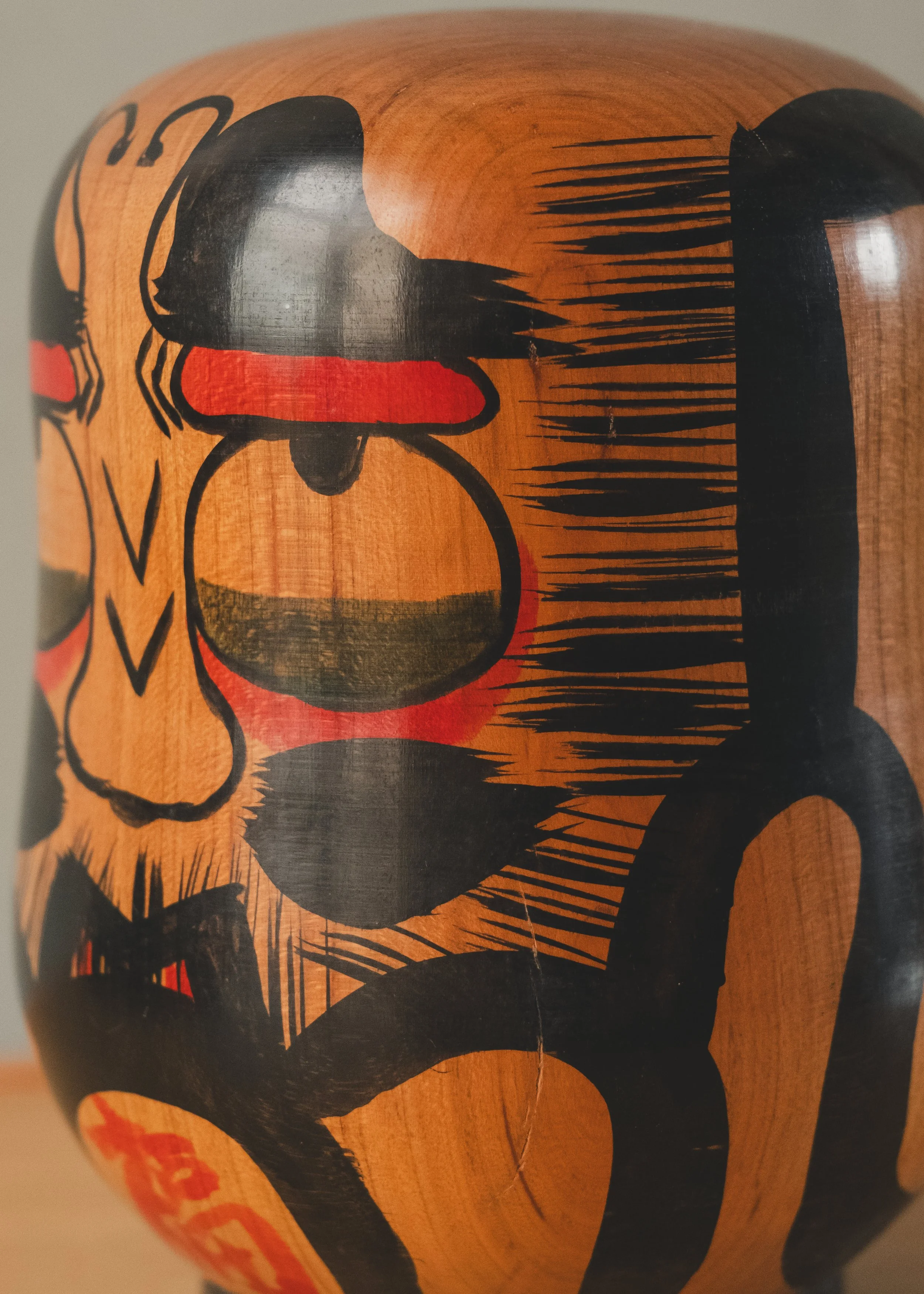 Image 7 of 11
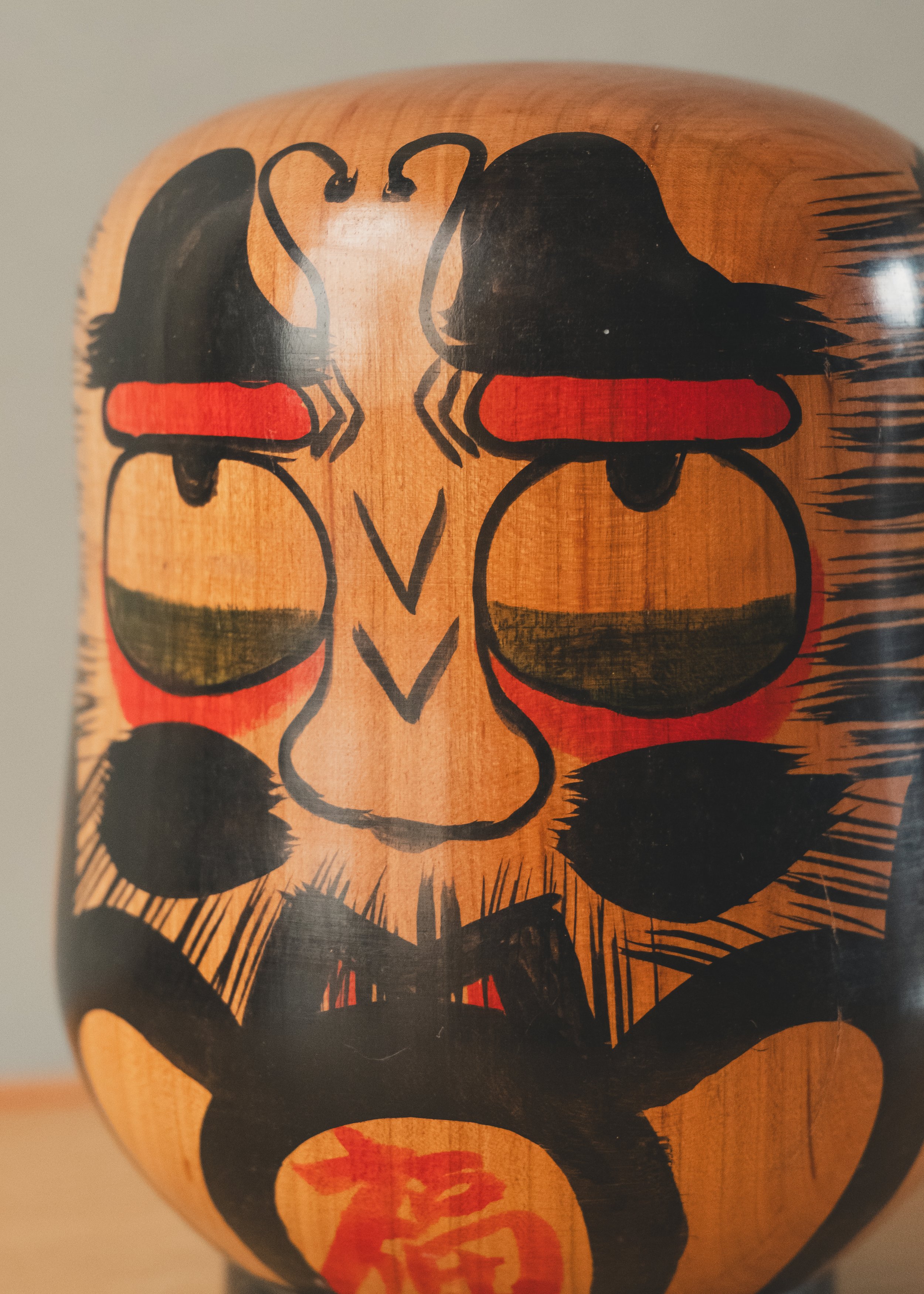 Image 8 of 11
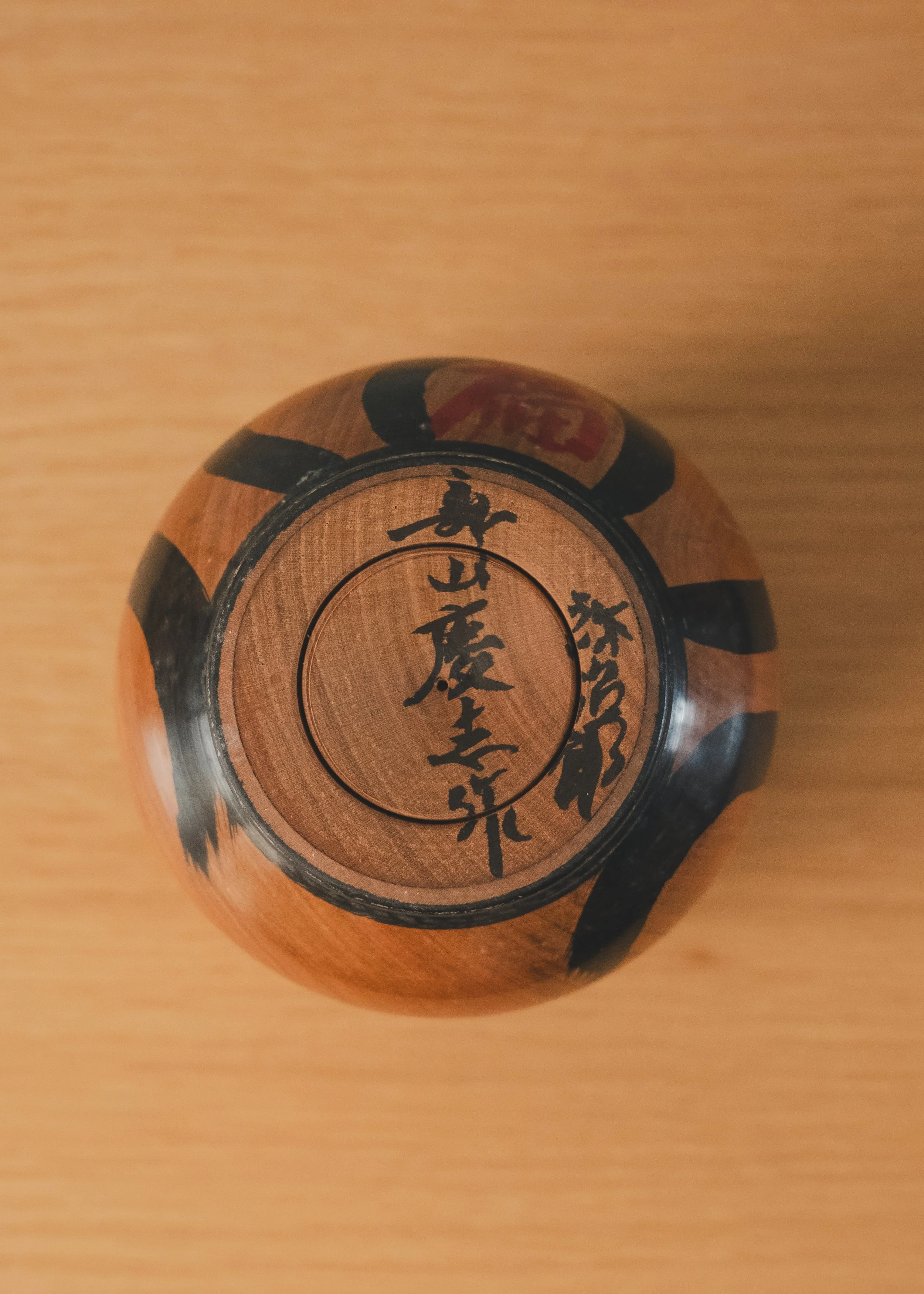 Image 9 of 11
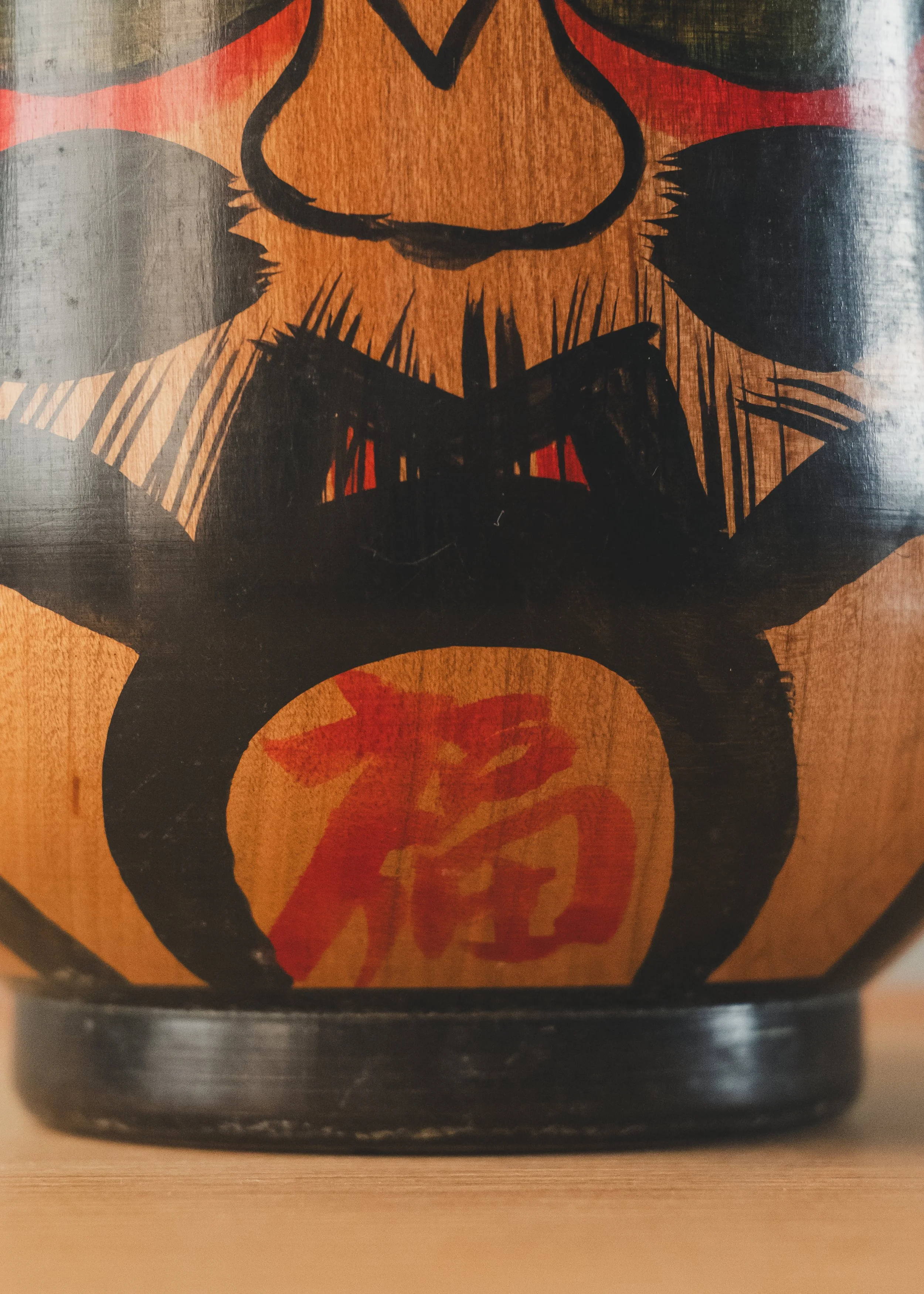 Image 10 of 11
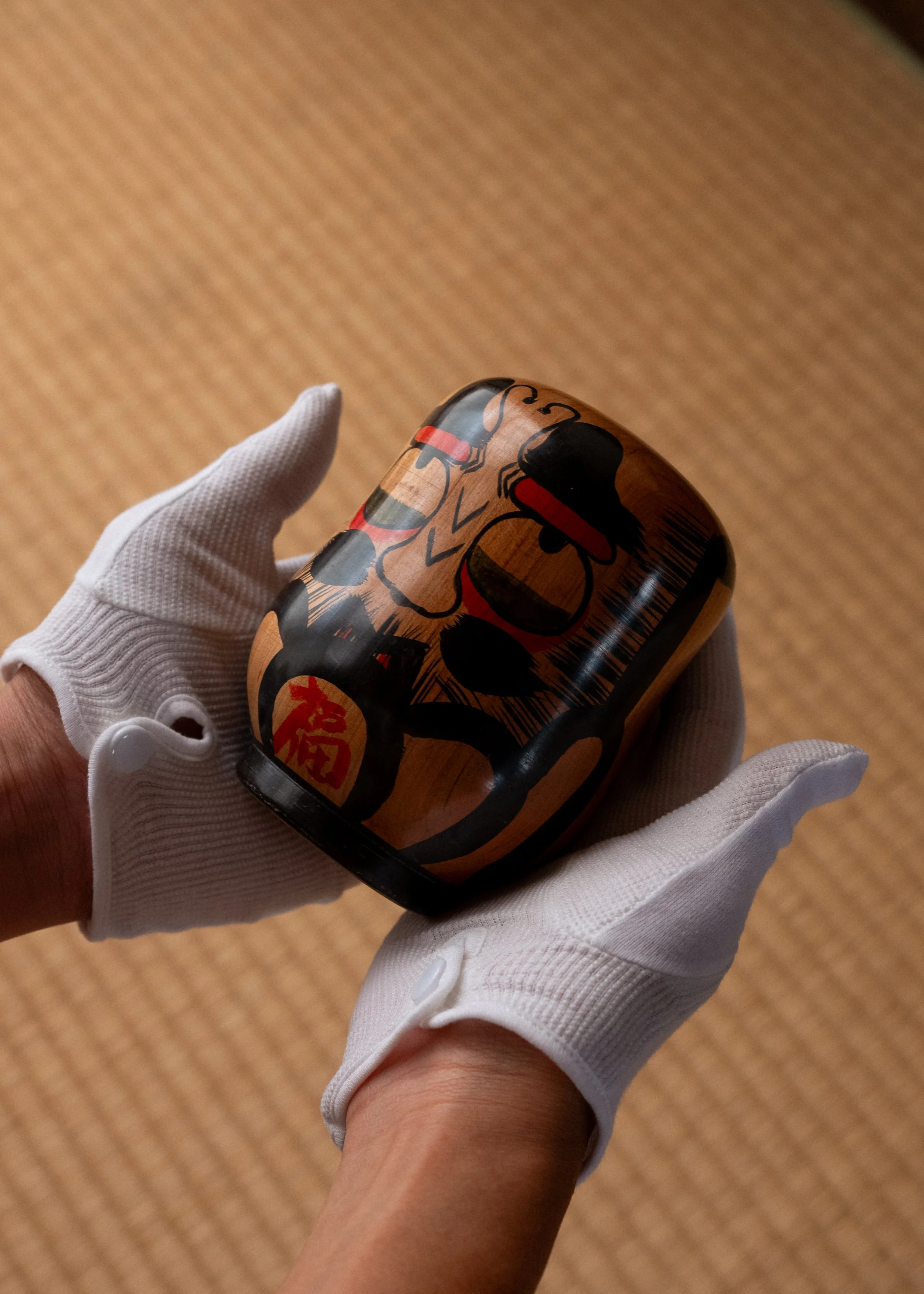 Image 11 of 11