【 The Concept 】
The horse is young. You can tell by the way it stands — head lowered, ears forward, weight balanced on all four legs as if it just learned how to use them. In the province where it was cast, horses were not pets or symbols. They were partners. They lived inside the house, in a room attached to the family's quarters, separated by a single wall. The iron that made this figure came from the same mountains where those horses grazed. A metalsmith poured it into a sand mold, let it cool, broke the mold, and painted the surface with lacquer and tea until it turned the color of deep water.
【 The Function 】
A paperweight in the shape of a young horse. Six centimeters long, four and a half centimeters tall, three centimeters wide. Sand-cast iron, finished in a dark blue-green patina. The legs are not four separate columns — they merge into two solid bases, front and back, widening toward the ground. The bottom is flat. At 111 grams it holds paper without sliding and sits on any surface without rocking. The mane runs in a single ridge from the crown to the shoulders. The tail curves against the flank.
【 The Texture 】
Sand-cast iron with the fine grit of metal poured into earth. The surface is not polished. It is covered in the texture of the mold — thousands of tiny sand impressions that scatter light instead of reflecting it. The color is dark, somewhere between midnight blue and black-green, applied in layers of lacquer and natural dye that were baked into the iron and partially wiped away. The ridges catch a dull sheen. The valleys stay dark. Over years of handling, the patina will deepen, the grit will smooth under the thumb, and the surface will develop the quiet black shine of iron that has been touched every day.
【 Presence 】
It fits in the palm of a hand and weighs just enough to remind you it is made of metal. The head is lowered. The ears are up. The legs are planted. It does not gallop or rear or turn. It stands and looks forward, the way a young horse stands when it sees its own shadow for the first time and has not yet decided what to do about it.
Sourced from a private collection in northern Japan. Original maker's box included.
【 The Concept 】
The horse is young. You can tell by the way it stands — head lowered, ears forward, weight balanced on all four legs as if it just learned how to use them. In the province where it was cast, horses were not pets or symbols. They were partners. They lived inside the house, in a room attached to the family's quarters, separated by a single wall. The iron that made this figure came from the same mountains where those horses grazed. A metalsmith poured it into a sand mold, let it cool, broke the mold, and painted the surface with lacquer and tea until it turned the color of deep water.
【 The Function 】
A paperweight in the shape of a young horse. Six centimeters long, four and a half centimeters tall, three centimeters wide. Sand-cast iron, finished in a dark blue-green patina. The legs are not four separate columns — they merge into two solid bases, front and back, widening toward the ground. The bottom is flat. At 111 grams it holds paper without sliding and sits on any surface without rocking. The mane runs in a single ridge from the crown to the shoulders. The tail curves against the flank.
【 The Texture 】
Sand-cast iron with the fine grit of metal poured into earth. The surface is not polished. It is covered in the texture of the mold — thousands of tiny sand impressions that scatter light instead of reflecting it. The color is dark, somewhere between midnight blue and black-green, applied in layers of lacquer and natural dye that were baked into the iron and partially wiped away. The ridges catch a dull sheen. The valleys stay dark. Over years of handling, the patina will deepen, the grit will smooth under the thumb, and the surface will develop the quiet black shine of iron that has been touched every day.
【 Presence 】
It fits in the palm of a hand and weighs just enough to remind you it is made of metal. The head is lowered. The ears are up. The legs are planted. It does not gallop or rear or turn. It stands and looks forward, the way a young horse stands when it sees its own shadow for the first time and has not yet decided what to do about it.
Sourced from a private collection in northern Japan. Original maker's box included.


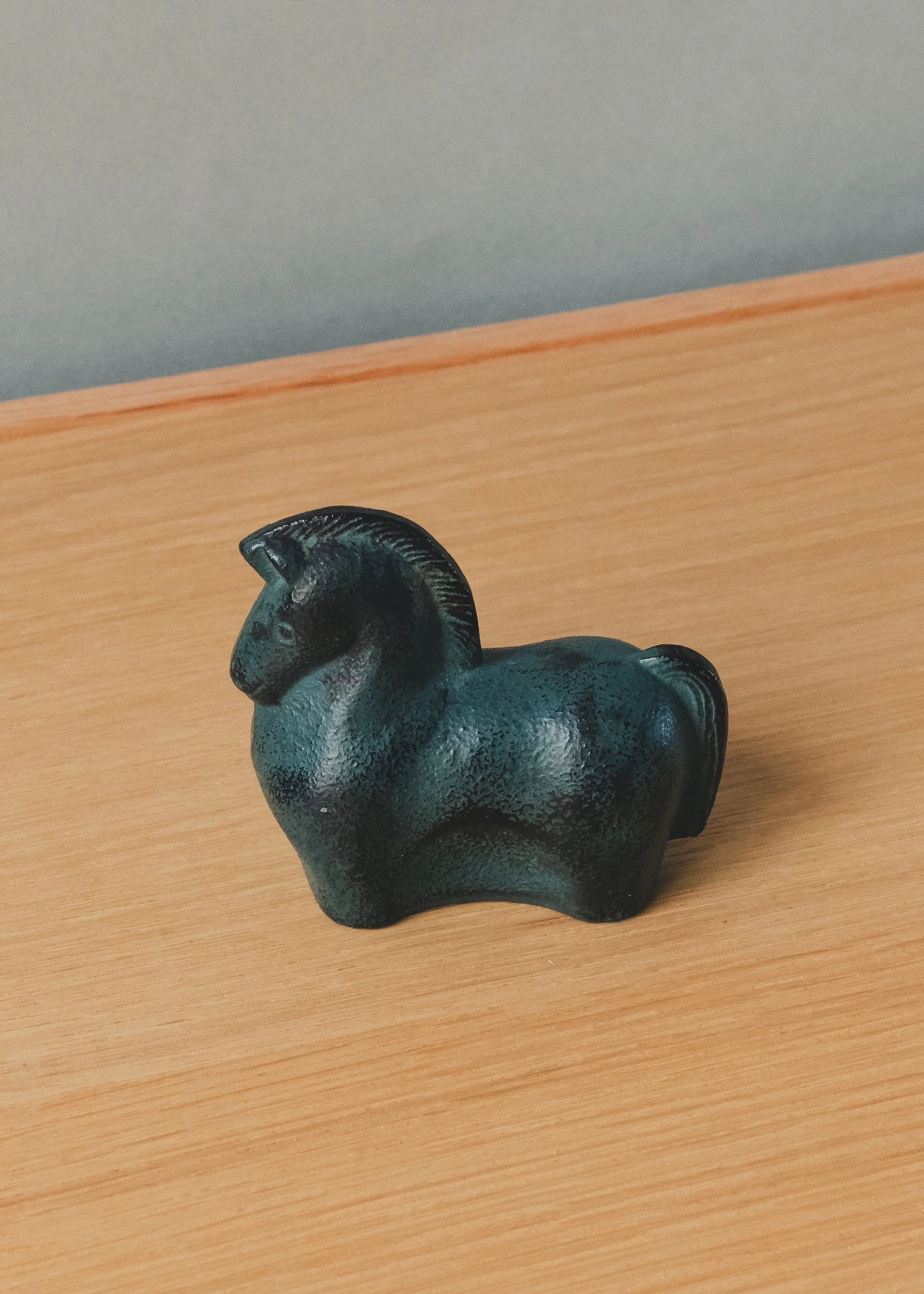 Image 1 of 9
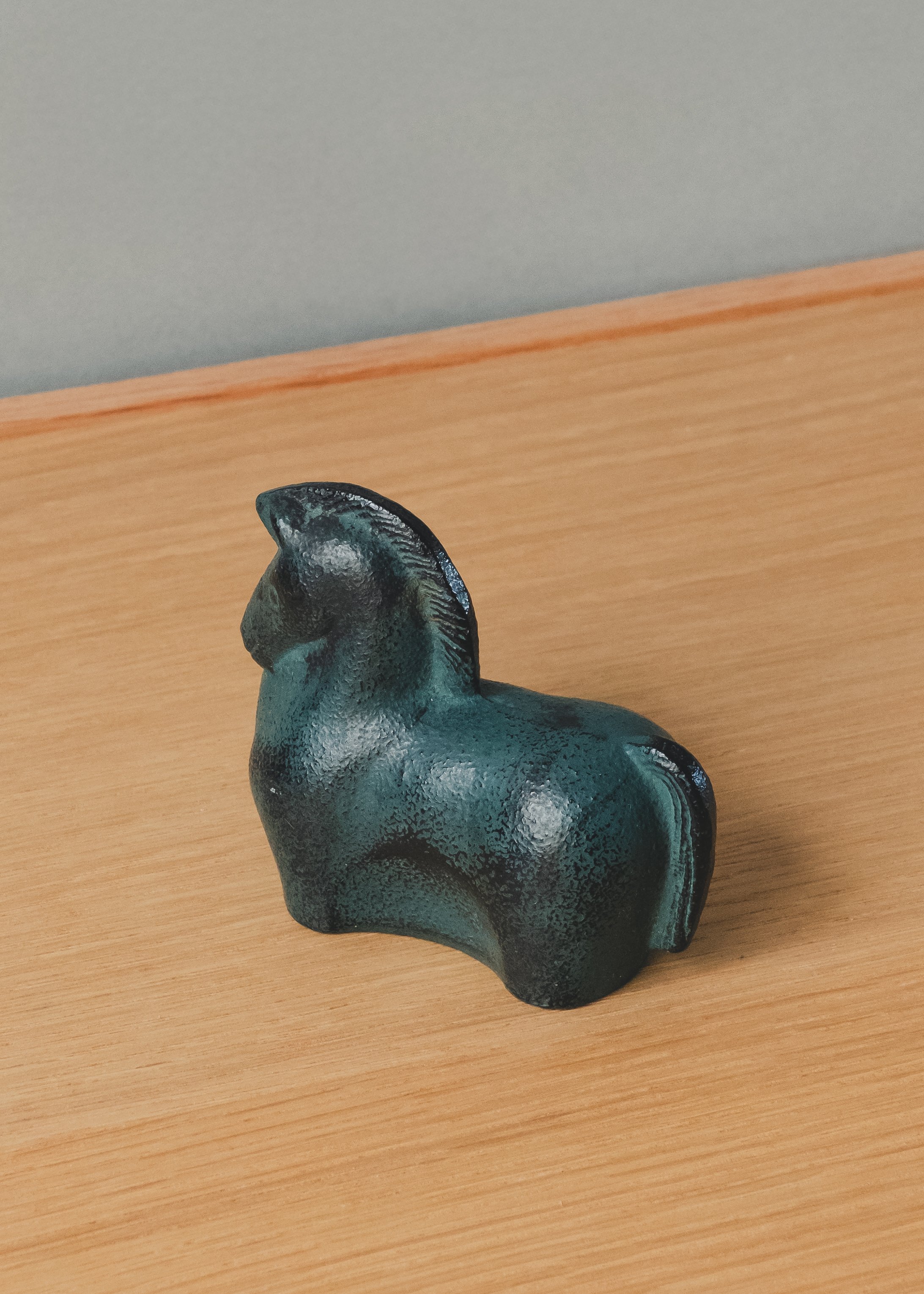 Image 2 of 9
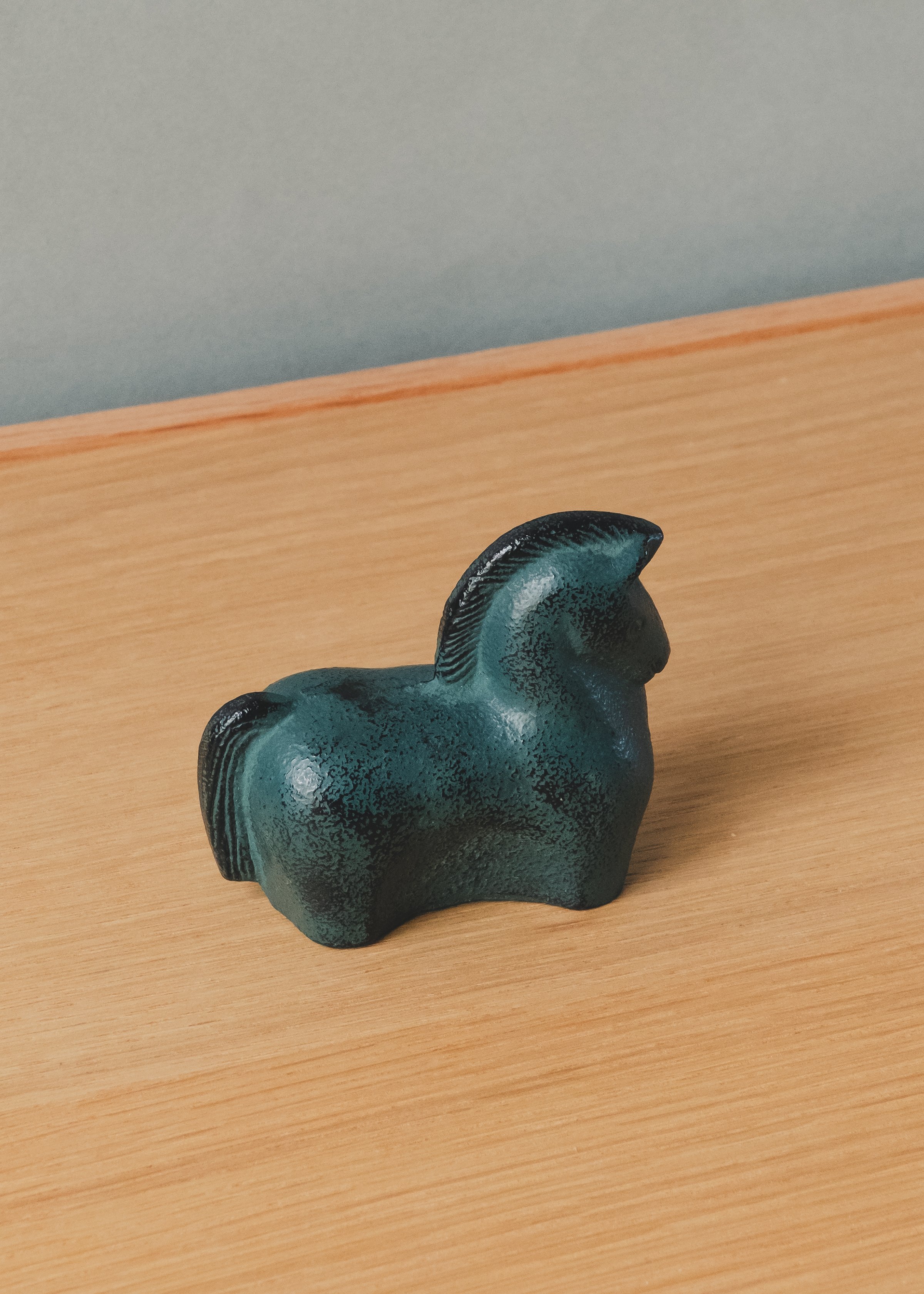 Image 3 of 9
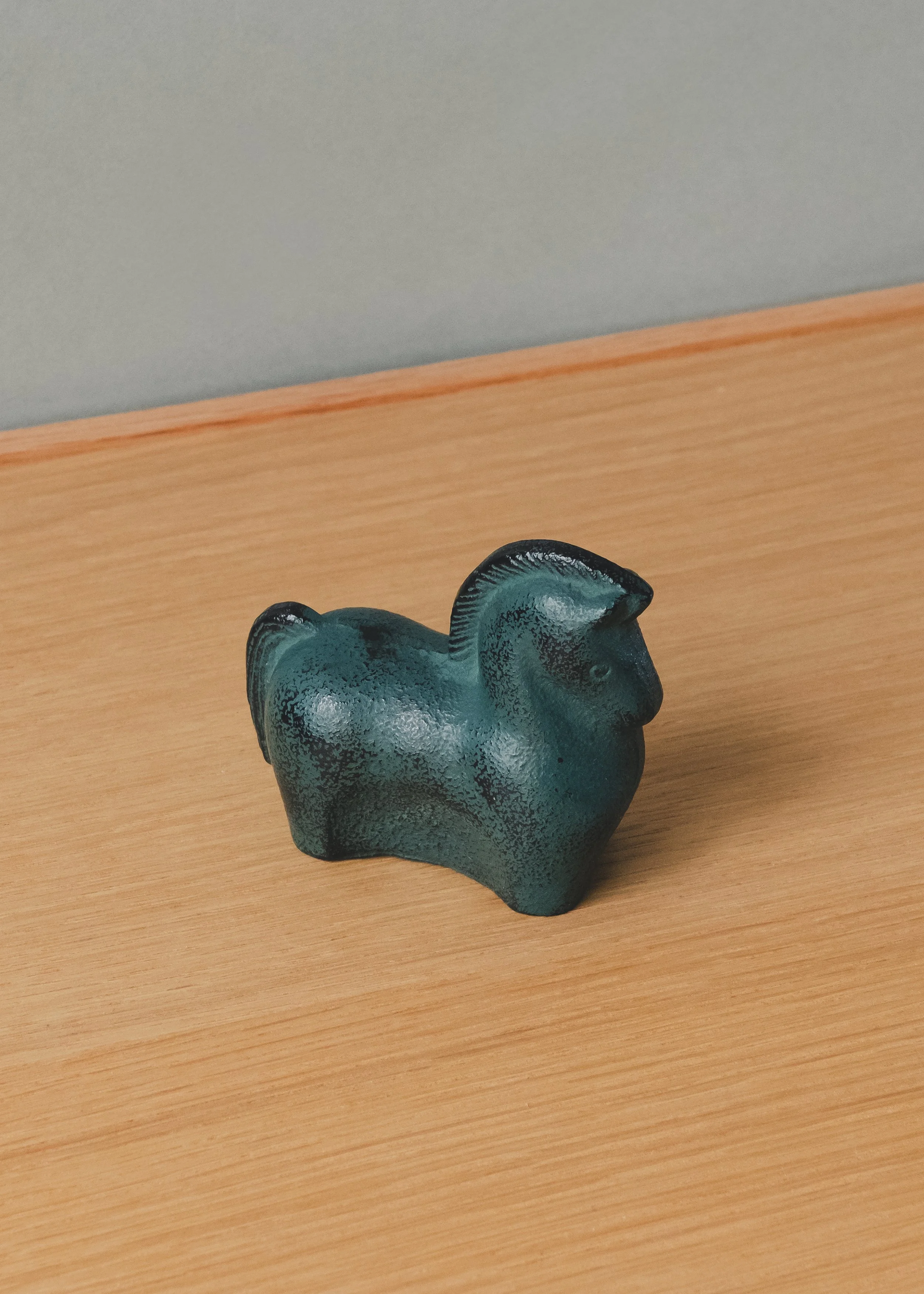 Image 4 of 9
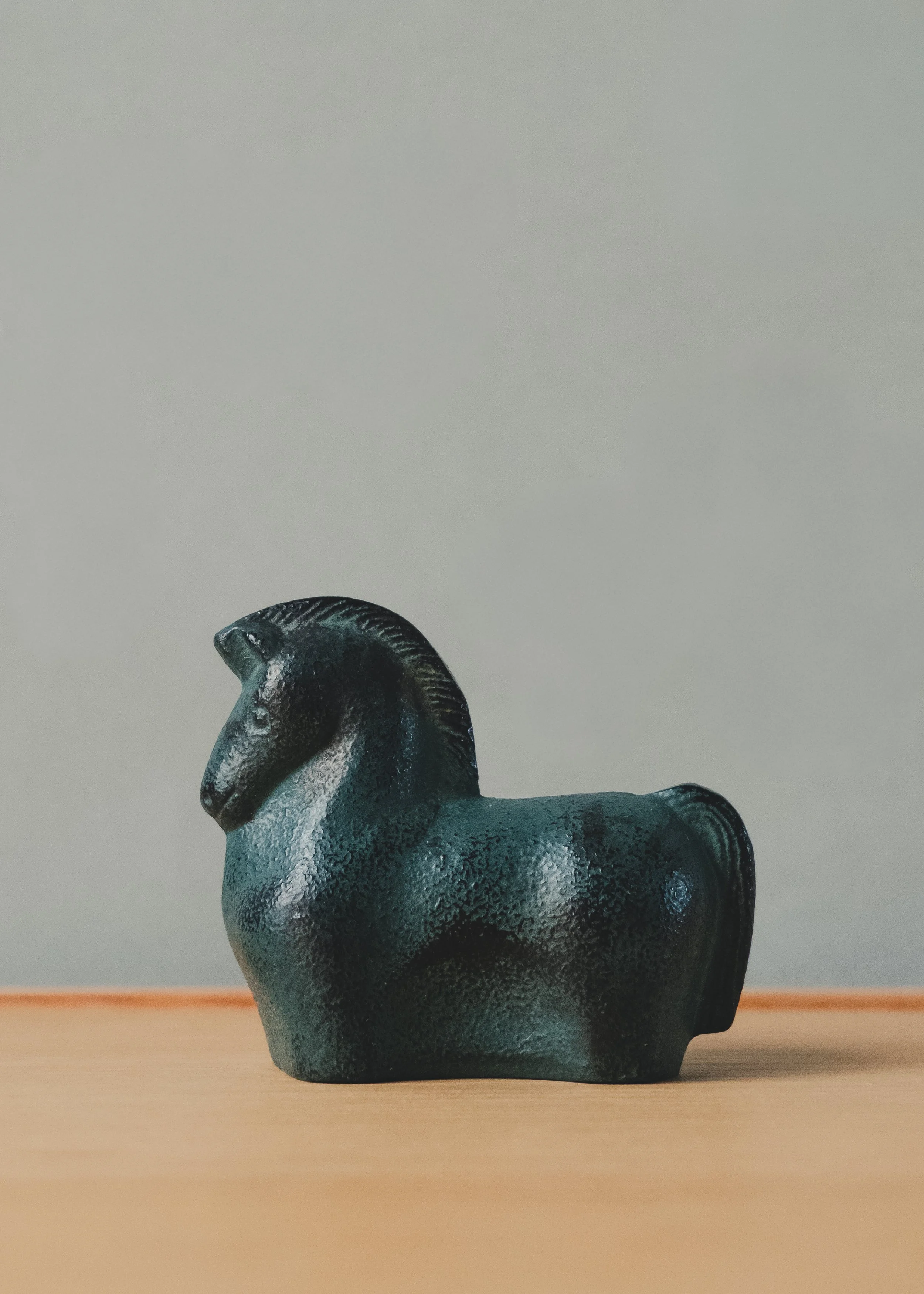 Image 5 of 9
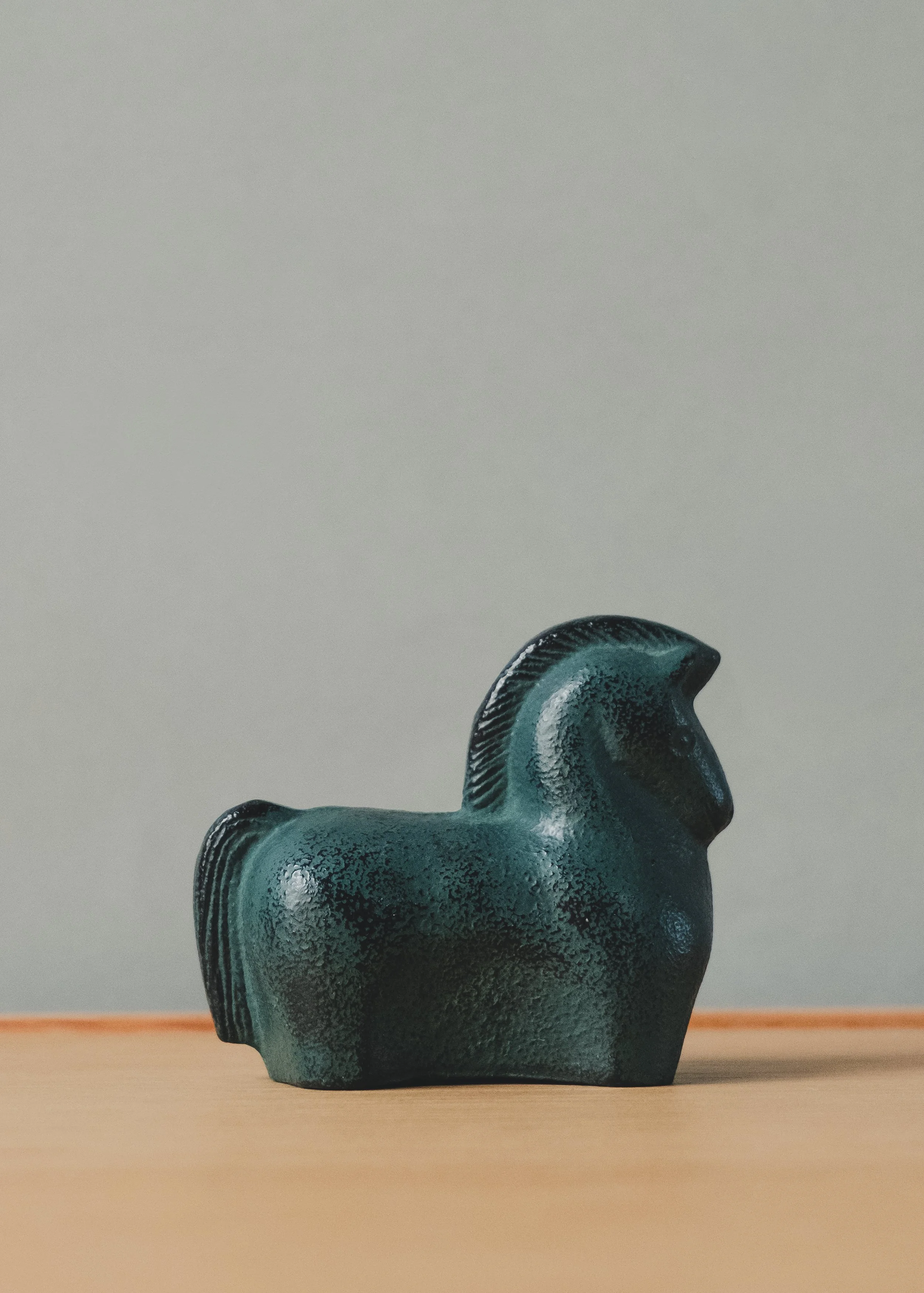 Image 6 of 9
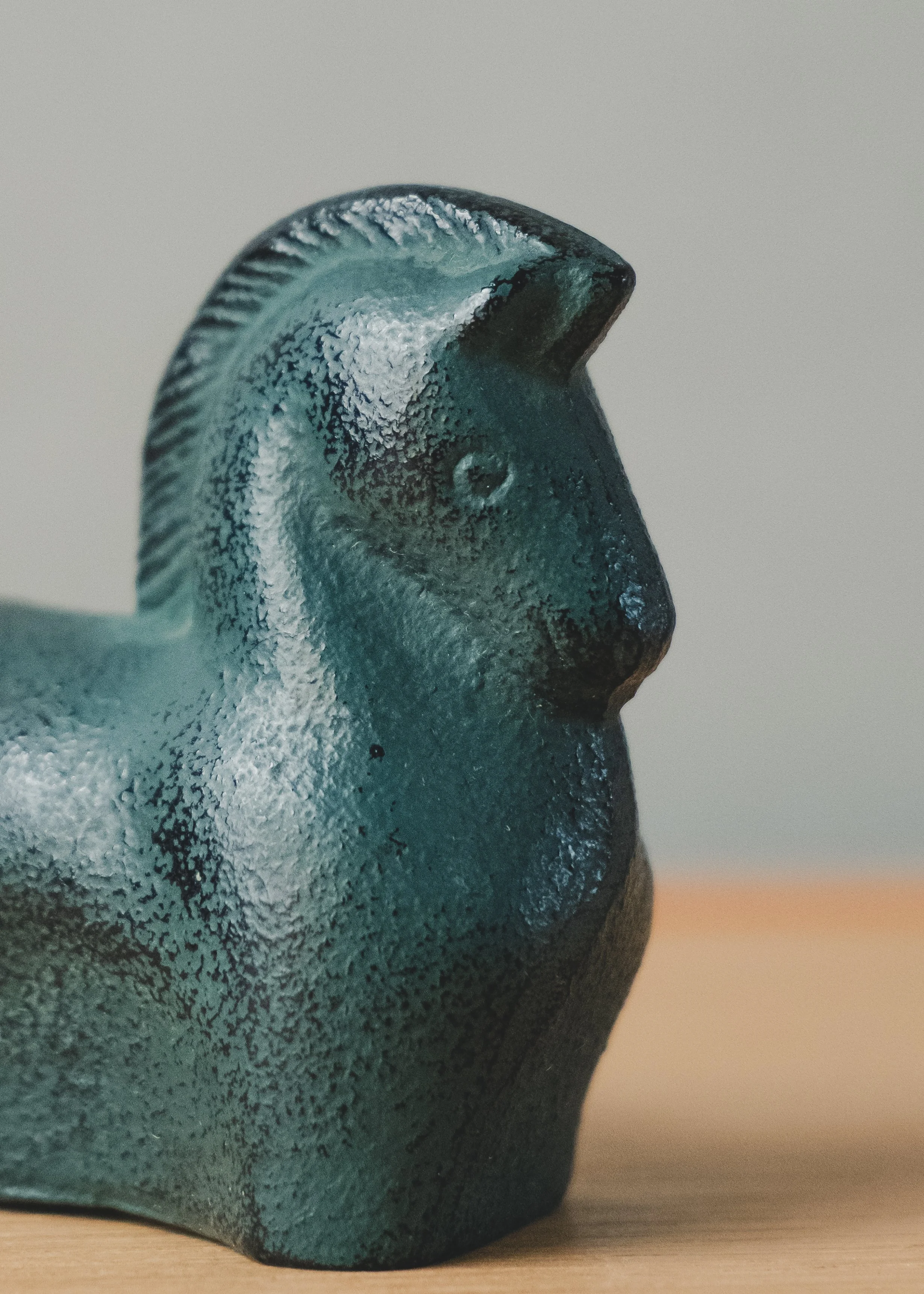 Image 7 of 9
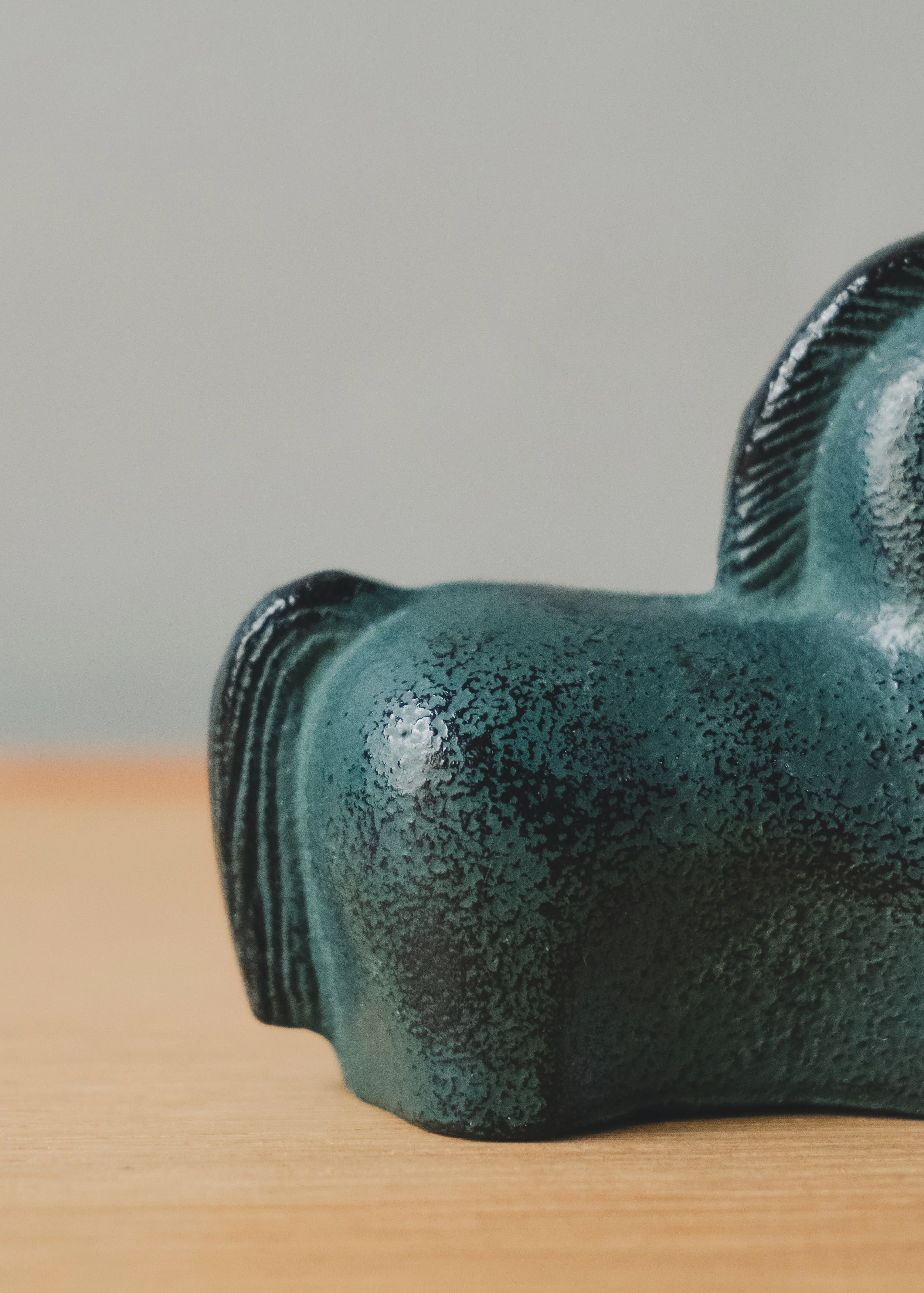 Image 8 of 9
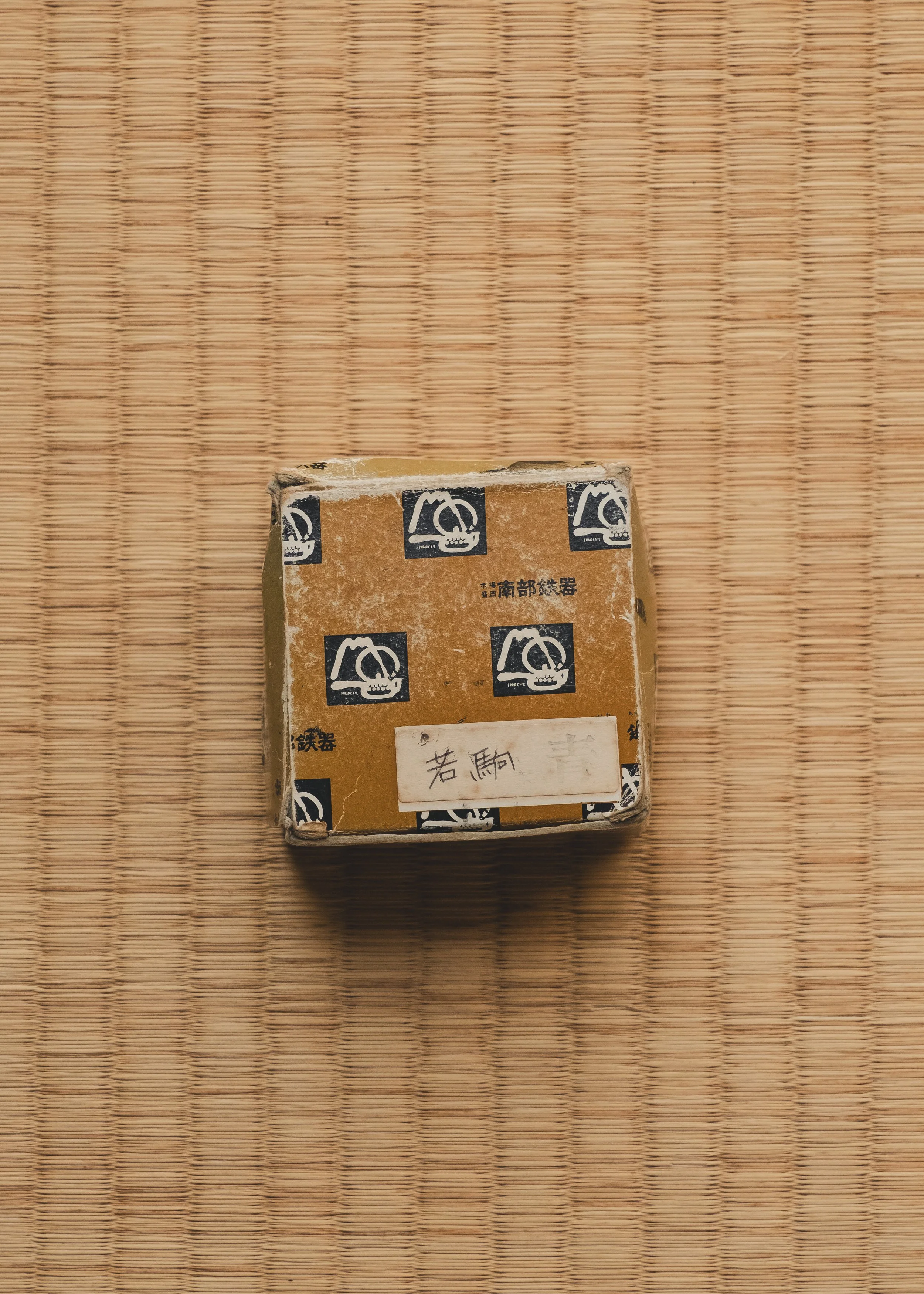 Image 9 of 9